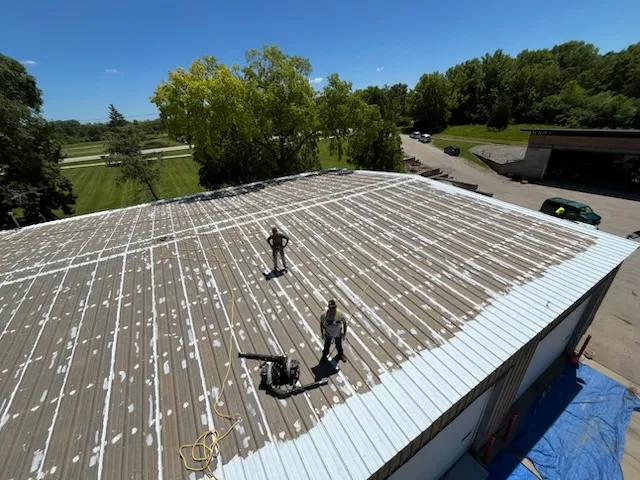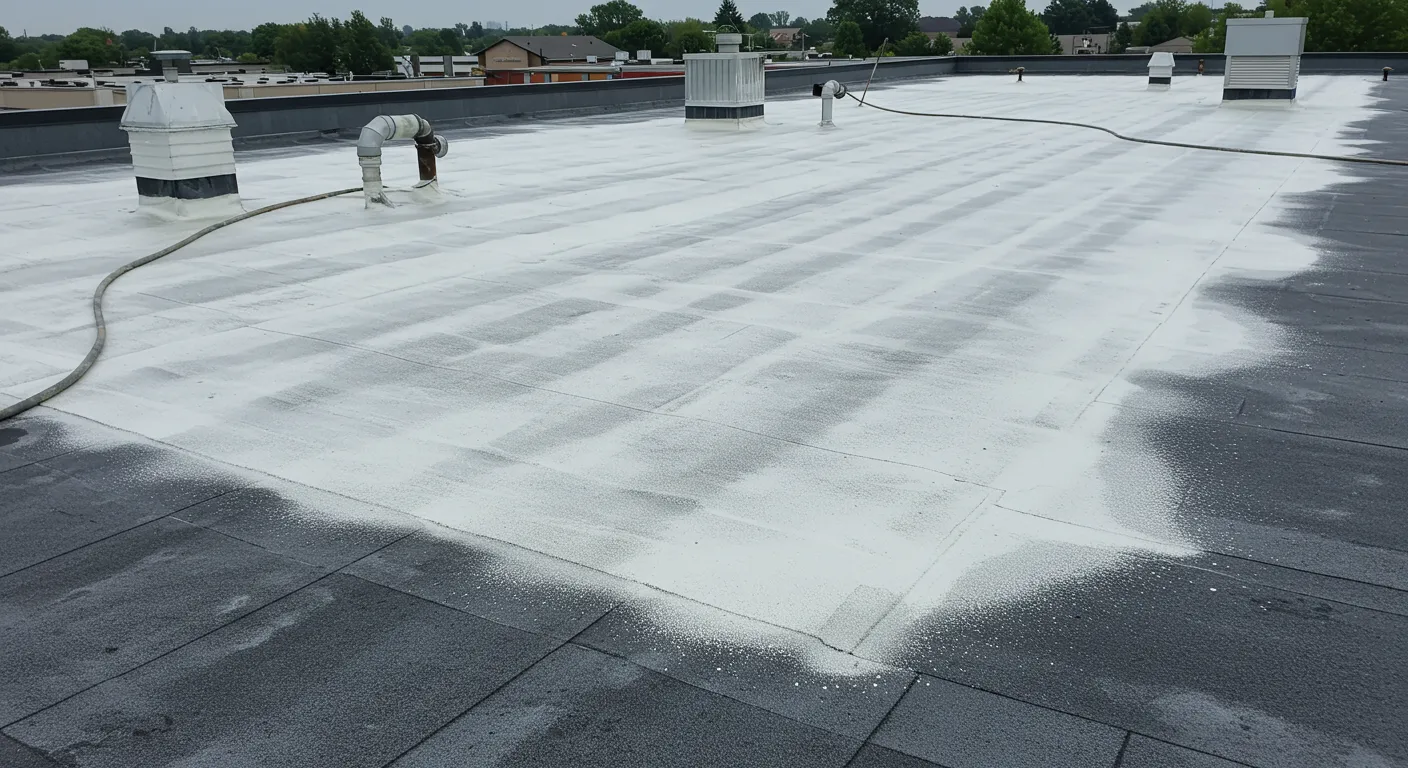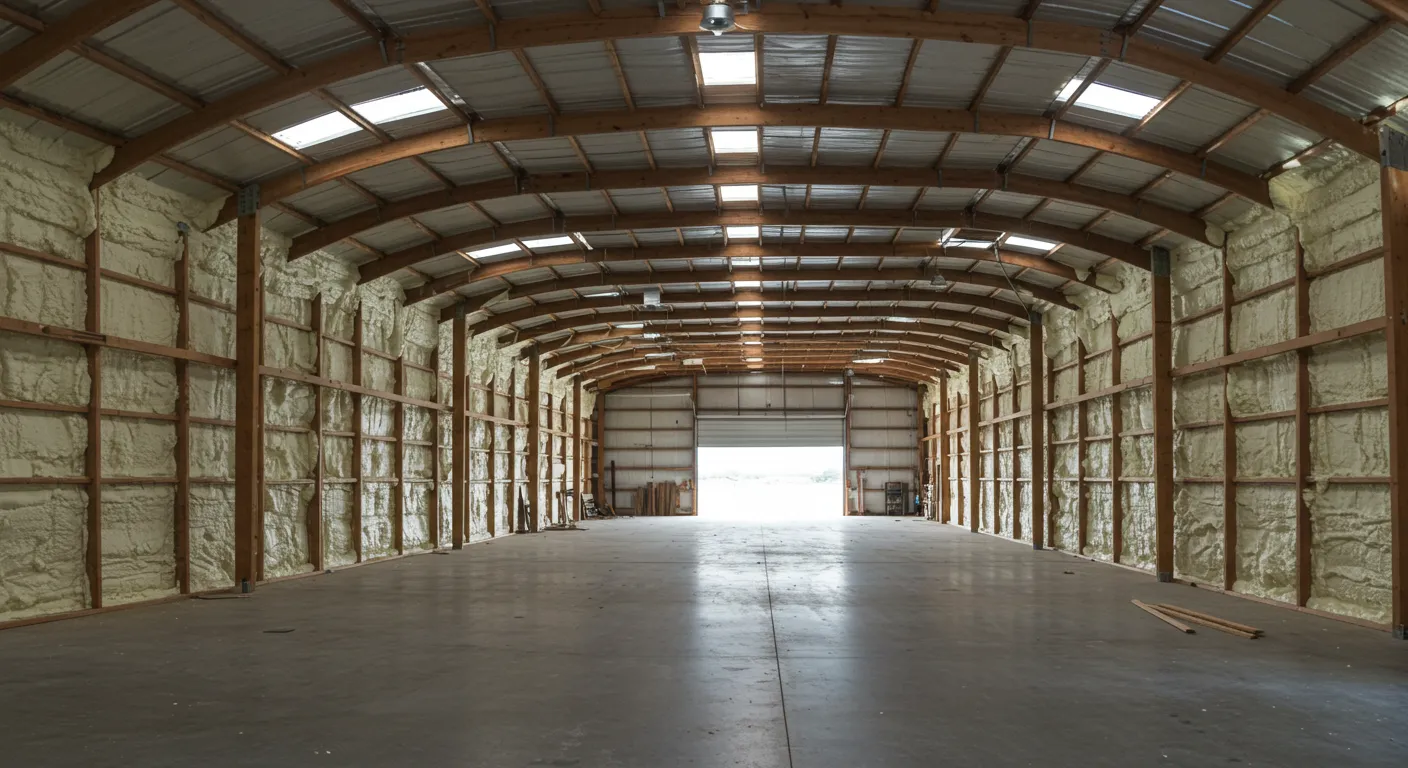
Why Is Your Pole Barn in Carpentersville, IL Too Hot in Summer and Cold in Winter?
Pole barn insulation services can help address the extreme temperature swings common in Carpentersville, IL pole barns. Bare steel panels…


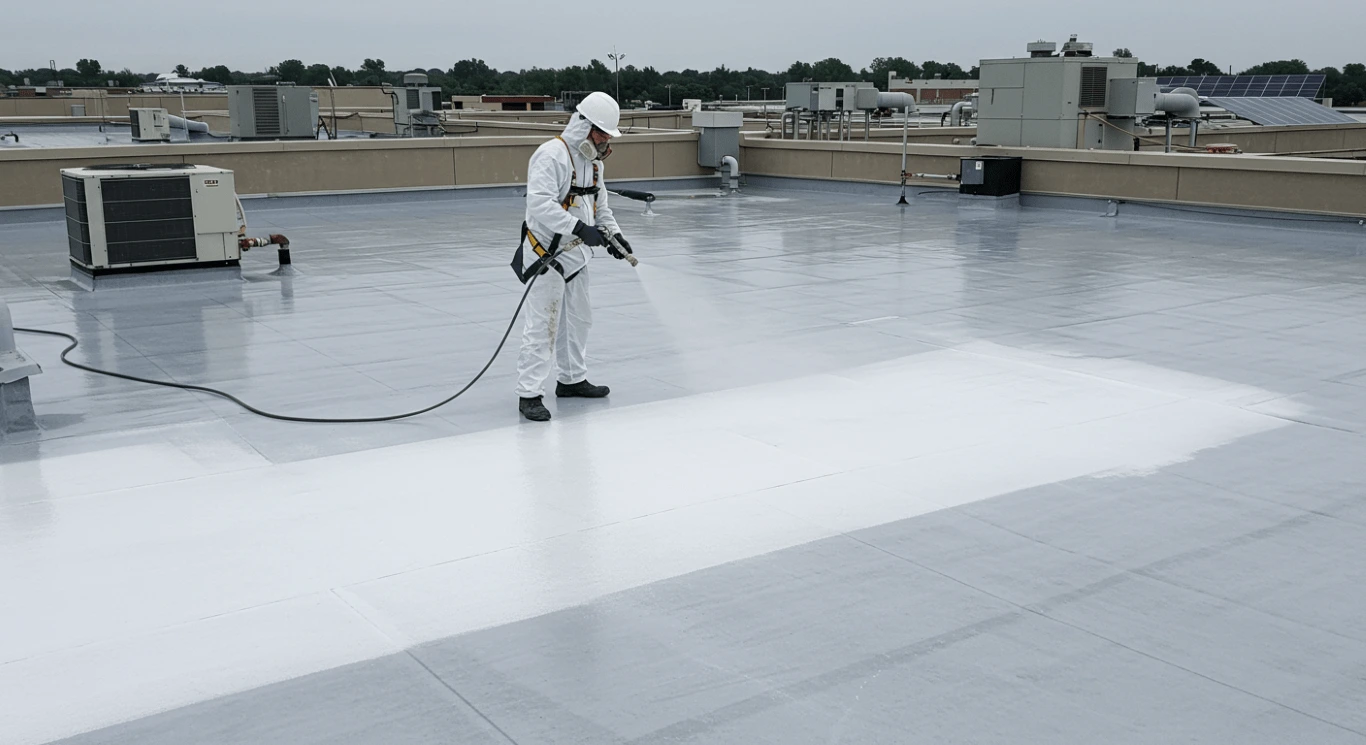
Roofing insulation fails for a handful of predictable reasons, and nearly all of them trace back to moisture, poor installation, or the wrong material for the climate and assembly. The insulation in your attic or roof assembly is not a set-it-and-forget-it system. It faces constant pressure from temperature swings, humidity from daily living, and air movement through every crack and gap in your home’s envelope. Understanding exactly how and why roofing insulation breaks down is the first step toward stopping the damage before it spreads to structural wood, drywall, and indoor air quality. A detailed roofing insulation guide can help identify these common failure points.
Water is the dominant force behind nearly every roofing insulation failure we encounter. According to the Moisture-Safe Unvented Wood Roof Systems – DOE Building America / Building Science Corporation study, the primary concern with unvented roof assemblies is “the potential for moisture build-up at the underside of the roof sheathing during cold weather” when warm indoor air carries water vapor through permeable insulation and condenses on the cold surfaces above. This moisture accumulates in the insulation material itself, reducing its thermal performance, and saturates the wood roof deck where mold and rot can develop.
The study found that wood moisture contents above 28% for extended periods create conditions where “visible mold and potentially decay” can develop after several years of cycling. In Chicago-area homes (Climate Zone 5), these conditions appear when interior humidity is high, and the roof assembly lacks proper air sealing or vapor control.
Damp insulation can lose a substantial portion of its thermal resistance. When insulation fibers become saturated, water displaces the trapped air pockets that provide the insulating effect, and heat transfers through the wet material far more quickly. The Building Science Corporation research showed that the combination of open-cell spray foam and fiberglass fill performed marginally in Zones 3-4 with high interior humidity, while full-depth open-cell foam alone experienced wood moisture contents above 28% for four or more weeks in colder climates. Homeowners dealing with moisture-related insulation problems may benefit from professional roof insulation services in Burr Ridge, IL.
Fibrous insulation materials like fiberglass batts, blown fiberglass, and cellulose are air-permeable. They stop conducted heat, but they do not stop air movement. When warm, moist indoor air leaks upward through ceiling penetrations, electrical boxes, and recessed lights, that air passes directly through fibrous insulation in a vented attic. If the air reaches the cold roof deck, condensation forms and drips back into the insulation.
The DOE study specifically noted that “for roofs with fibrous insulation (mineral fiber or cellulose), airflow is a serious moisture risk in an unvented assembly” and that an “air barrier system is required somewhere within the assembly” to prevent this mode of failure. In practical terms, this means that simply adding more fiberglass to an attic does not solve the underlying air sealing problem that caused the original failure.
Vapor barriers and retarders are among the most misunderstood elements in building construction. The Building Science Corporation research in BSD-106: Understanding Vapor Barriers explains that “incorrect use of vapor barriers is leading to an increase in moisture-related problems” because they “often prevent assemblies from drying” when placed on the wrong side of the insulation or in the wrong climate zone.
In cold climates like ours, vapor retarders belong on the warm interior side of the insulation to slow moisture migration from the living space into the roof assembly. When builders install vapor-impermeable materials on both sides of an assembly, they create a “double vapor barrier” that traps any moisture that gets in, preventing drying in either direction. This is particularly dangerous in unvented cathedral ceilings and flat roof assemblies where ventilation cannot help remove accumulated moisture.
Insulation does not last forever at peak performance. As detailed in R-value (Insulation) – Wikipedia, certain foam insulation materials, particularly those blown with CFCs or HCFCs, gradually lose their blowing agents to diffusion and are replaced by air, reducing the effective R-value over the life of the building. The same source notes that research by the U.S. Army Engineer Research and Development Center found closed-cell polyurethane spray foam saw a 27.5% reduction in R-value over time due to moisture absorption and loss of blowing agent.
Loose-fill materials face different degradation paths. Cellulose can settle and create voids, while fiberglass batts can sag, compress, or be displaced by workers accessing attic spaces. In all cases, the effective thermal resistance drops below the original installed R-value.
Thermal bridges are points in the building envelope where heat flows through continuous paths of conductive material, bypassing the insulation entirely. In a typical roof assembly, every wood rafter, steel fastener, and structural penetration creates a thermal bridge. When insulation is installed only between rafters and not as a continuous layer, these bridges can account for a significant percentage of total heat loss.
The Building Insulation – Wikipedia entry notes that “construction quality issues can include inadequate vapor barriers and problems with draft-proofing” and that these factors affect real-world thermal performance regardless of the rated R-value of the insulation material.
| Warning Sign | What It Indicates | Urgency |
|---|---|---|
| Ice dams forming along roof edges | Warm air escaping through attic insulation, melting snow that refreezes at eaves | High |
| Water stains on ceilings or walls | Condensation forming in roof assembly and penetrating through drywall | High |
| Visible mold on rafters or sheathing | Prolonged moisture exposure above 28% wood moisture content | Critical |
| Uneven temperatures between rooms | Air leakage and insulation gaps in specific roof sections | Medium |
| Rising heating or cooling bills | Loss of effective R-value from settling, moisture, or compression | Medium |
| Frost on interior roof surfaces in winter | Inadequate insulation allowing warm air contact with cold roof deck | High |
Before adding any new insulation to a roof assembly that may be failing, a professional assessment is essential. Adding insulation on top of existing moisture problems without addressing air sealing, ventilation, and vapor control can accelerate the damage rather than fix it. A qualified insulation contractor will evaluate the existing assembly, identify the specific failure mechanism, and recommend a solution matched to your climate zone and home construction.
Air sealing is always the priority. Sealing penetrations between the living space and the attic or roof cavity, including around recessed lights, plumbing vents, electrical runs, and chimneys, stops the primary path for moisture-laden air to reach cold surfaces. The DOE study found that spray foam, which acts as both insulation and an air barrier, performed well across all climate zones specifically because it “seals all the joints and cracks in the roof deck.”
The Recommended Home Insulation R-Values – ENERGY STAR guide specifies that homes in Climate Zones 5 through 8 require R-49 to R-60 in attics for retrofit applications. In our service area of Bridgeview (60451), this falls squarely within the Zone 5 recommendation of R-60 for uninsulated attics. Meeting these targets with the correct material and installation method matters more than hitting the number on paper.
Traditional vented attics rely on outside air moving through the attic space to remove moisture that passes through the ceiling plane. When homeowners convert vented attics to unvented cathedralized spaces by insulating the underside of the roof deck, the moisture removal mechanism changes entirely. The DOE study concluded that “so long as airtightness is provided, and wintertime humidity is controlled, numerous unvented solutions using either or both spray foam and fibrous insulation can be successful,” but only when designed and installed correctly for the specific climate zone.
| Your Situation | Recommended Approach | Why |
|---|---|---|
| Older home, original attic insulation never updated | Air sealing + blown-in insulation over existing material | Stops leaks and boosts R-value without tearing out existing material |
| Recent roof replacement with visible condensation | Full inspection for ventilation and vapor barrier issues | Roof work may have altered airflow patterns or introduced moisture |
| Finished attic or cathedral ceiling with temperature complaints | Assessment of unvented assembly and potential retrofit with spray foam | Fibrous insulation in unvented assemblies is a known failure point in cold climates |
| Ice dams every winter despite adequate insulation | Targeted air sealing at the eaves and improvement of attic ventilation | Ice dams indicate air leakage, not just insufficient R-value |
| Post-renovation with new drywall or lighting | Air sealing around all new penetrations before insulation | New construction creates fresh air leakage paths into the roof assembly |
The right contractor does not begin by quoting a material or an R-value. They begin by asking about your home, its history, and the specific symptoms you are experiencing. They explain why moisture control matters in your climate zone and how their recommended approach addresses air sealing, vapor management, and thermal performance together.
Look for clear communication about what they will inspect, what problems they might find, and what the full scope of work involves before and after insulation installation. A contractor who takes the time to assess your existing assembly before recommending a solution is far more likely to deliver a result that lasts.
South Chicago Insulation serves homeowners throughout Bridgeview and the surrounding Chicago area with professional attic insulation assessments and installations. Our team evaluates your existing roof assembly, identifies air sealing and moisture issues, and recommends the right approach for your home and climate zone. Call us at (779) 803-8025 or email [email protected] to request a quote or schedule an insulation inspection.
Don’t wait until moisture damage spreads to your roof deck and structural framing. A professional assessment now can prevent thousands in repairs later.
Look for dark stains or discoloration on the insulation surface, visible mold on wood rafters, a musty odor in the attic, and any signs of water staining on ceilings below.
You should never add new insulation over material that is wet, compressed, or mold-contaminated. The existing material must be assessed and, if necessary, removed before new insulation is installed.
Yes. Most insulation materials lose some performance over time due to settling, compression, moisture absorption, or loss of blowing agents. Periodic inspection helps determine whether a top-up or full replacement is needed.
A vented attic has insulation on the attic floor with open air circulation above it, while an unvented assembly insulates directly against the roof deck. Each requires different materials and vapor control strategies.
Ice dams form when warm air leaks from the living space into the attic and melts snow on the roof, which then refreezes at the colder eaves. The root cause is air leakage, not a lack of insulation.