What Is Foundation Insulation and Why Is It Important for Residential Buildings?
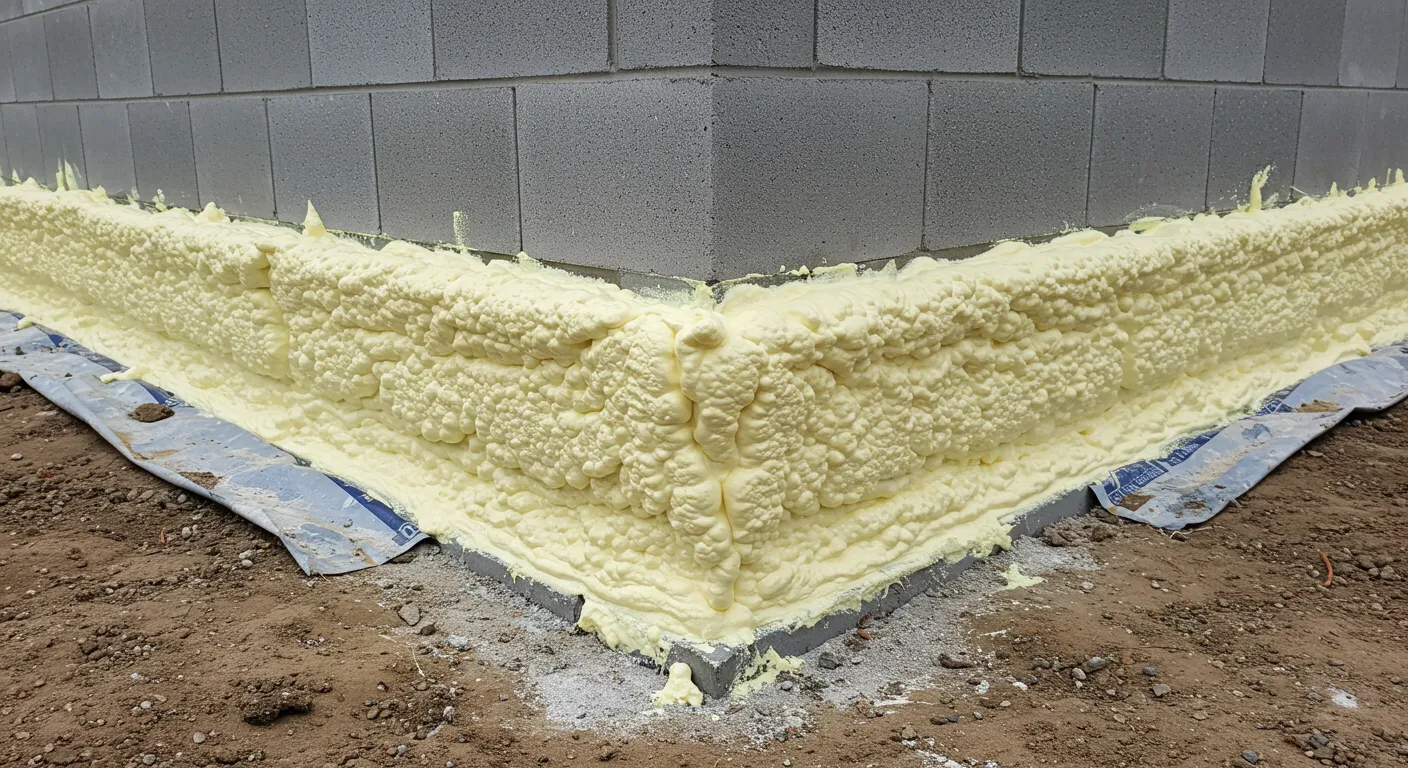
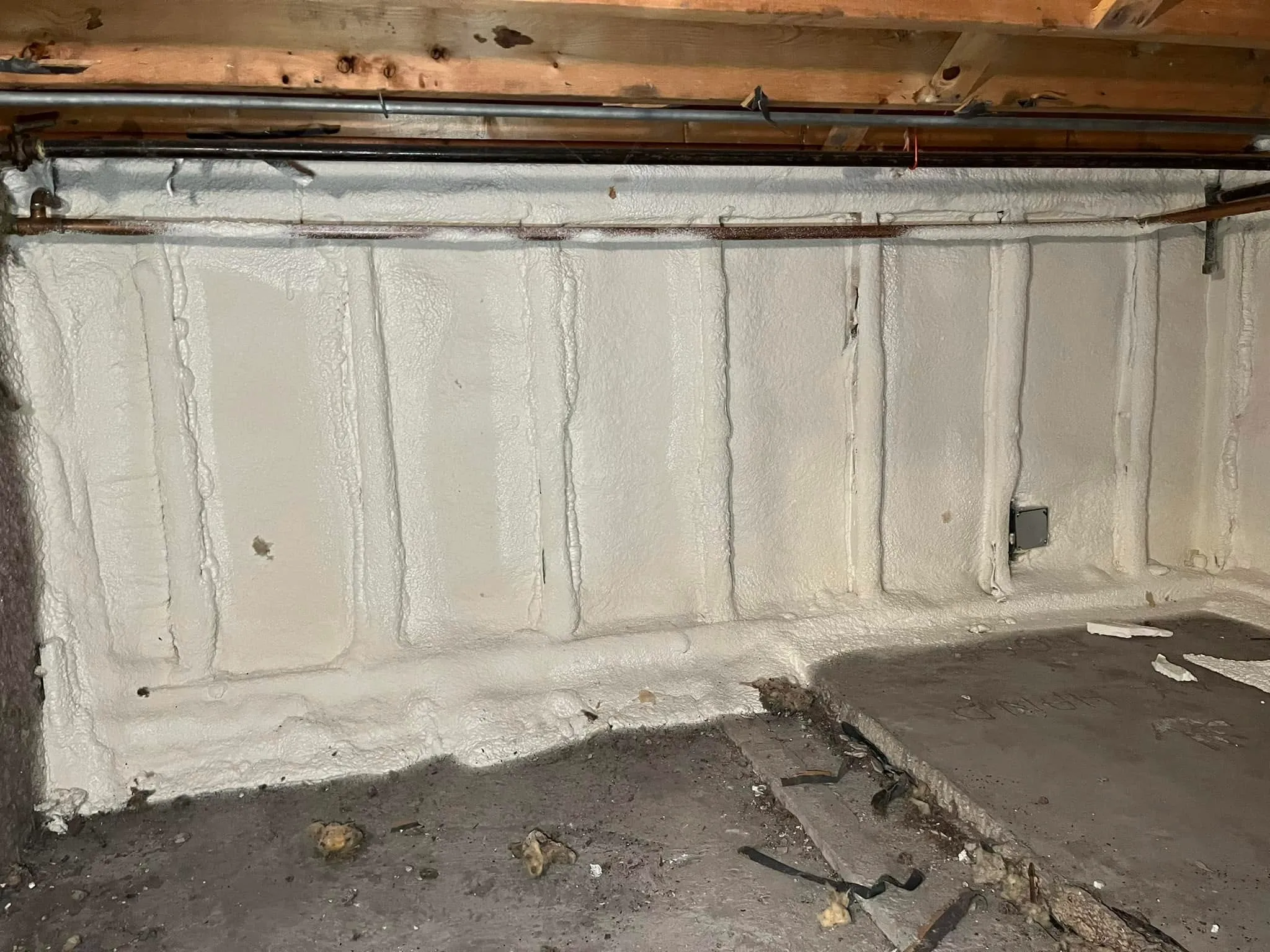
Foundation insulation is the application of thermal materials to the walls, floors, or slabs of a building’s foundation to create…


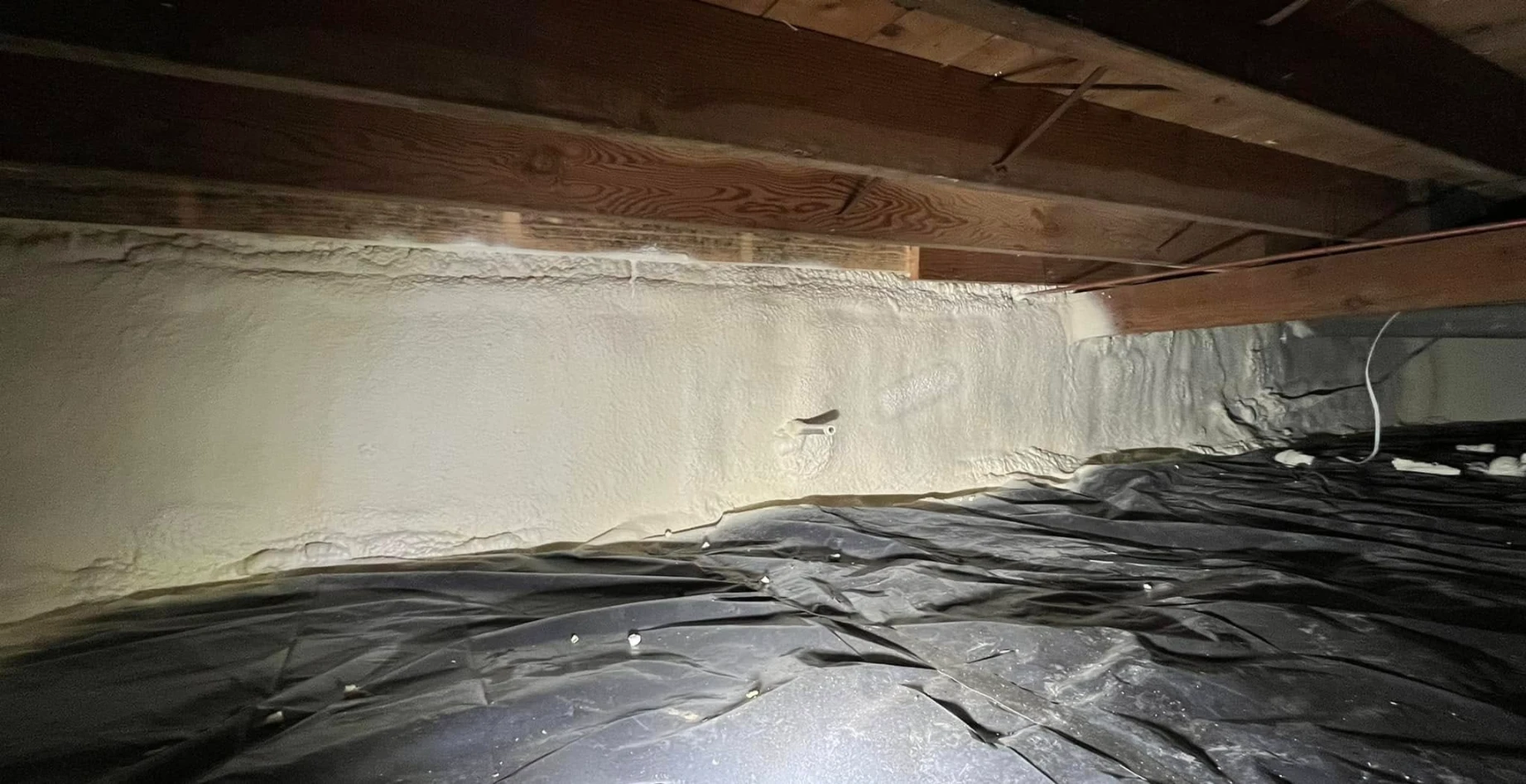
Crawl space encapsulation is a moisture-control approach that seals a crawl space from the surrounding soil and outside air. A typical system uses a sealed ground liner, wall sealing, air sealing, and a plan for managing moisture that still enters the space.
The important distinction is that encapsulation is more than laying plastic over the dirt. Understanding crawl space encapsulation starts with identifying where water and moisture are coming from, then addressing those conditions before the crawl space is sealed.
A crawl space can allow moisture from exposed soil and humid outside air to enter the area beneath the home. Encapsulation changes that environment by separating the crawl space from those moisture sources and sealing parts of the boundary.
Advanced Energy’s research on closed crawl spaces describes a sealed vapor retarder over the ground and foundation walls as part of a moisture-control system. Crawl space encapsulation solutions help address moisture concerns, but sealing alone doesn’t remove every source of water, which is why drainage and moisture management still matter.
That distinction matters for homeowners. If water is already entering through a plumbing leak, foundation problem, poor drainage, or another active source, South Chicago Insulation on Google can help homeowners find our business and learn more about our services, but covering the crawl space won’t make the underlying problem disappear.
A properly planned system can instead reduce the amount of moisture entering from the soil and limit uncontrolled air movement. That can help protect materials in the crawl space and reduce conditions associated with persistent dampness.
The exact scope depends on the condition and layout of the crawl space. We don’t treat every crawl space as though it has the same moisture problem.
A typical system may include:
Advanced Energy recommends treating a closed crawl space as a system rather than simply installing a ground liner. Its guidance includes moisture removal, a sealed vapor retarder, air sealing, and measures for dealing with liquid water.
That is why we look at the crawl space as a whole before deciding what work makes sense.
These terms are often used as if they mean the same thing. They don’t.
A vapor barrier or vapor retarder primarily addresses moisture moving from the ground. Encapsulation has a broader scope, with the goal of creating a more controlled crawl space by combining the ground barrier with sealing and moisture-management measures.
| Consideration | Vapor Barrier | Crawl Space Encapsulation |
|---|---|---|
| Ground moisture control | Yes | Yes |
| Ground liner | Main component | Usually part of the system |
| Wall and perimeter sealing | May be limited | Broader sealing approach |
| Air sealing | Not necessarily | Typically part of the design |
| Moisture-source evaluation | Still needed | Still needed |
| Drainage planning | Depends on conditions | Important when liquid water is present |
| Overall scope | Focused moisture-control measure | Broader crawl space system |
A ground liner can be useful on its own, but it shouldn’t be presented as though it automatically creates a fully closed crawl space. Advanced Energy specifically describes a sealed liner as part of a larger moisture-management approach.
We recommend starting with the moisture source, not the liner.
Before installation, the crawl space should be checked for standing water, plumbing leaks, drainage problems, groundwater intrusion, surface runoff, and other conditions that could continue introducing moisture after the space is sealed.
This step can change the scope of the project. A crawl space with damp soil needs a different response from one with several inches of standing water after heavy rain.
Advanced Energy recommends measures such as directing surface water away from the home, addressing foundation drainage, sealing the crawl space boundary, and providing a way to remove liquid water when necessary.
That leads to a simple rule: don’t use encapsulation to hide an active water problem. Fix or manage the source first, then seal the space.
The exact installation sequence varies with the property, but we generally think about the work in stages.
1. Inspect the crawl space. We look at the floor, foundation walls, access points, plumbing, existing insulation, ventilation, and visible moisture conditions.
2. Identify moisture sources. Standing water, leaks, poor drainage, or water entering around the foundation need attention before the space is closed.
3. Prepare the area. Loose debris and conditions that interfere with installation need to be addressed so the liner and sealing work can be installed properly.
4. Install the ground barrier. A suitable vapor-retarding liner is placed over the exposed soil and detailed at seams, edges, walls, piers, and penetrations according to the system design.
5. Seal the crawl space boundary. Openings and access points are addressed as part of creating a more controlled environment.
6. Complete moisture and humidity controls. If the crawl space needs drainage, a sump arrangement, or mechanical humidity control, those components should be included in the overall plan.
7. Check the finished system. The goal is not simply to see plastic on the floor. The finished work should make sense as a connected moisture-control and air-sealing system.
Not necessarily.
Encapsulation makes the most sense when the crawl space has conditions that can benefit from better moisture and air control. But the right solution depends on what is actually happening below the home.
For example, a property with exposed soil and persistent dampness may need a different scope from a crawl space with an active drainage failure. A crawl space with a radon concern also needs a separate evaluation.
We would rather identify those differences before installation than recommend the same package for every property.
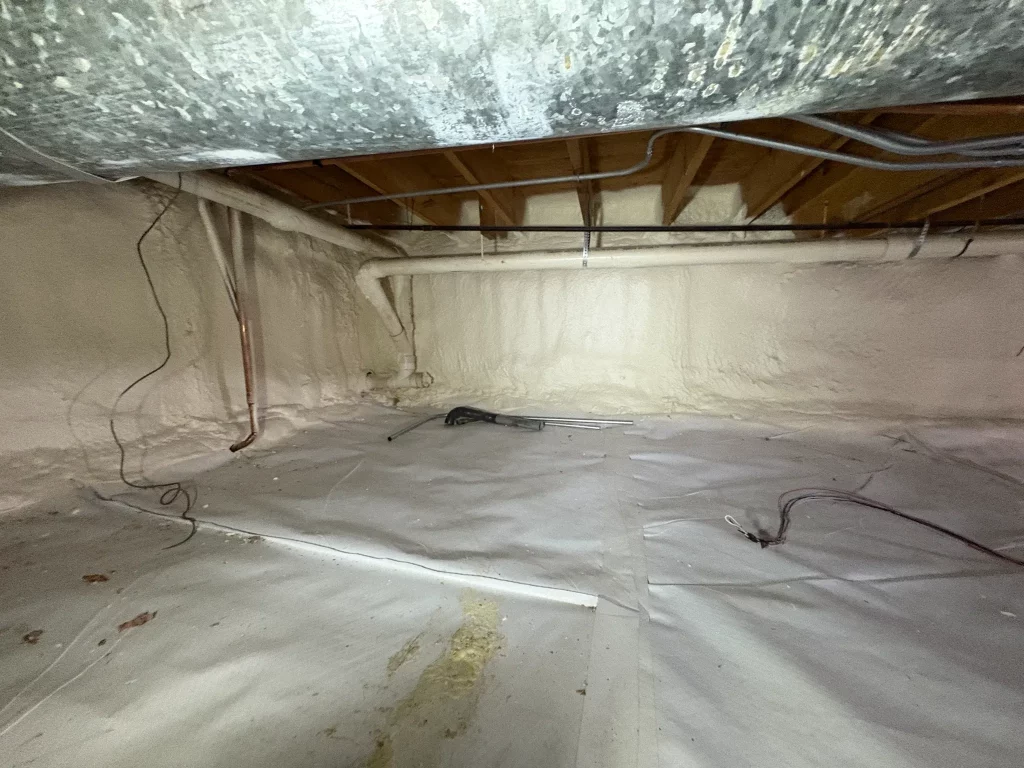
For a Hammond property, local requirements and site conditions should be checked before work begins. The scope should reflect the actual building, not a generic crawl space diagram.
Moisture control starts with the property itself. Surface water, foundation conditions, plumbing, drainage, and exposed soil can all affect what an encapsulation project needs.
A sealed liner can reduce moisture coming from the crawl space floor, but it isn’t designed to make liquid water disappear. Advanced Energy specifically warns that moisture can still enter a closed crawl space through several routes, including leaks and water movement through foundation materials.
Encapsulation and radon mitigation overlap in some areas, but they aren’t the same job.
The EPA explains that crawl space homes can use submembrane suction, which places a high-density sheet over the crawl space floor and uses a vent pipe and fan to draw radon from beneath the membrane.
So we don’t recommend assuming that a sealed crawl space automatically solves a radon problem. If testing shows elevated radon, the appropriate radon-reduction approach should be evaluated separately.
The Village of Hammond, Illinois, adopted Ordinance #2023-16 in December 2023. The ordinance adopts several construction and property-maintenance codes, including the 2015 International Residential Code and the 2015 Illinois Energy Conservation Code, subject to state law and the ordinance’s provisions.
That doesn’t mean every crawl space project has the same permitting or construction requirements. The applicable code and project requirements should be confirmed for the specific property before work begins.
Don’t compare crawl space estimates by the final number alone. Compare what each contractor plans to do.
A useful estimate should make the scope clear, including:
Two estimates can have very different prices because they address different problems. A lower number isn’t necessarily a better value if it leaves the moisture source untreated or excludes preparation that another estimate includes.
If you’re dealing with a damp, musty, or difficult-to-manage crawl space in Hammond, South Chicago Insulation can be part of the conversation about your insulation and crawl space needs. Call (779) 803-8025 or email [email protected] to discuss the property and determine what should be evaluated before you commit to a scope of work.
No. A vapor barrier mainly controls moisture moving from the ground. Encapsulation takes a broader approach that can include the ground liner, wall sealing, air sealing, and moisture or humidity controls.
If liquid water is entering the crawl space, the water source needs to be addressed as part of the project. A liner can help control ground moisture, but it isn’t a substitute for drainage or a solution to an active leak.
Not automatically. A sealed membrane can be part of a radon-reduction system, but the EPA identifies submembrane suction as a specific radon-control method that uses a membrane, vent pipe, and fan.
We recommend checking for standing water, leaks, drainage issues, exposed soil, foundation openings, access points, and other moisture or air-entry paths. Those findings determine whether simple moisture control is enough or whether the crawl space needs additional work.