What Is Foundation Insulation and Why Is It Important for Residential Buildings?
Foundation insulation is the application of thermal materials to the walls, floors, or slabs of a building’s foundation to create…


Foundation insulation is the application of thermal materials to the walls, floors, or slabs of a building’s foundation to create a continuous thermal barrier between the interior space and the exterior ground. Foundation insulation solutions can help address heat transfer through concrete and masonry, which act as thermal bridges and pull heat out of the home and into the cold soil. In many residential buildings, this makes the foundation a significant source of uncontrolled heat loss.
TL;DR:
Your home’s foundation is a critical part of the building envelope, but it is often ignored during energy efficiency upgrades. While most homeowners focus on attic insulation or window replacements, a significant amount of energy is lost through the basement or crawlspace.
Concrete has a high thermal conductivity, meaning it transfers heat very efficiently. When your Foundation Wall Insulation is nonexistent, concrete acts as a “heat sink,” drawing warmth from your living areas. Understanding foundation insulation helps explain how the stack effect compounds this heat loss, as warm air rises through the home and creates negative pressure that pulls cold, damp air into the basement through cracks and gaps. Insulating the foundation breaks this cycle, helping to maintain a consistent indoor temperature and lowering the load on your HVAC system.
Adding insulation to your foundation does more than just lower your energy bills. It fundamentally changes how your home handles temperature and moisture.
Choosing where to place the insulation depends on whether you are building a new home or retrofitting an existing one.
| Method | Best For | Pros | Cons |
|---|---|---|---|
| Exterior | New builds or major repairs | Protects concrete from freezing; no interior space loss | High cost; requires excavation |
| Interior | Retrofits/finished basements | Lower cost; easier access | May require moisture barrier; takes up wall space |
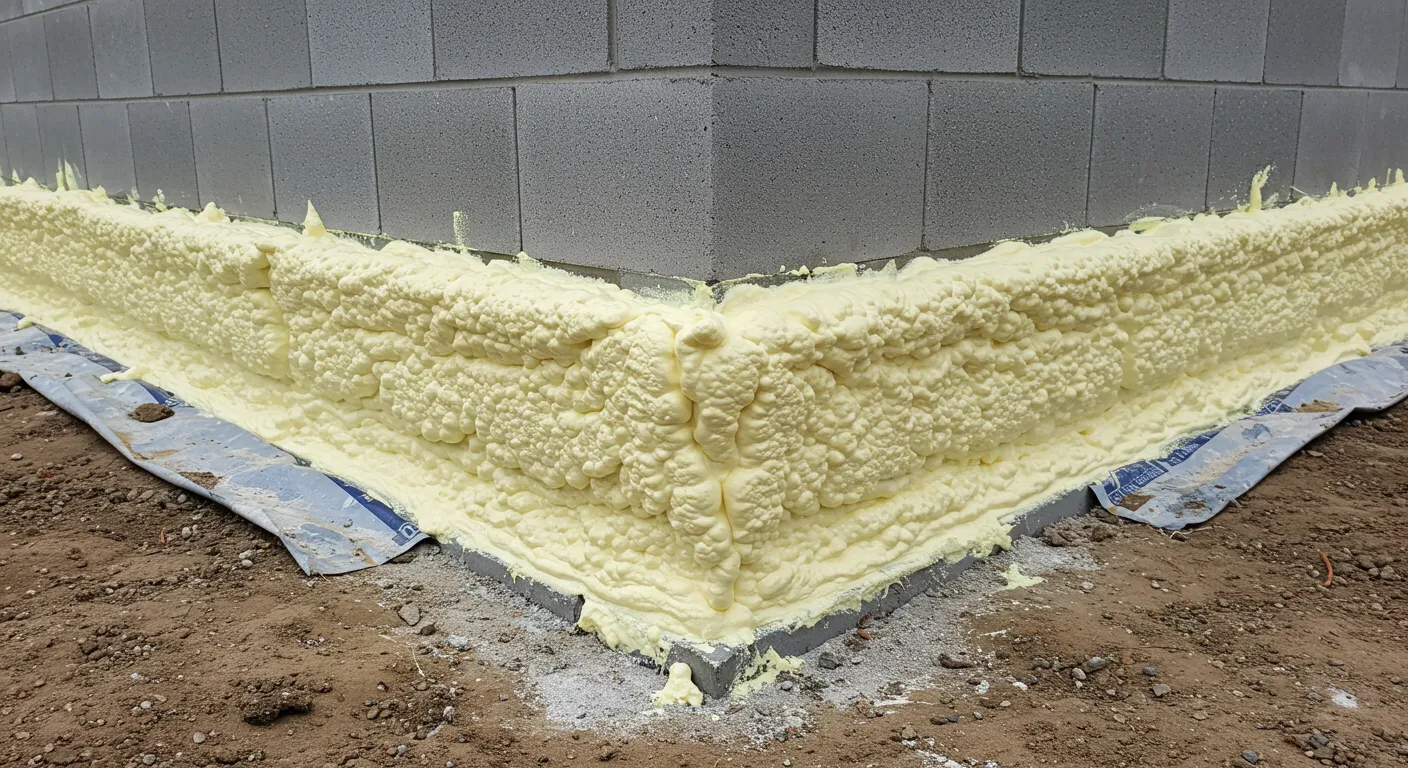
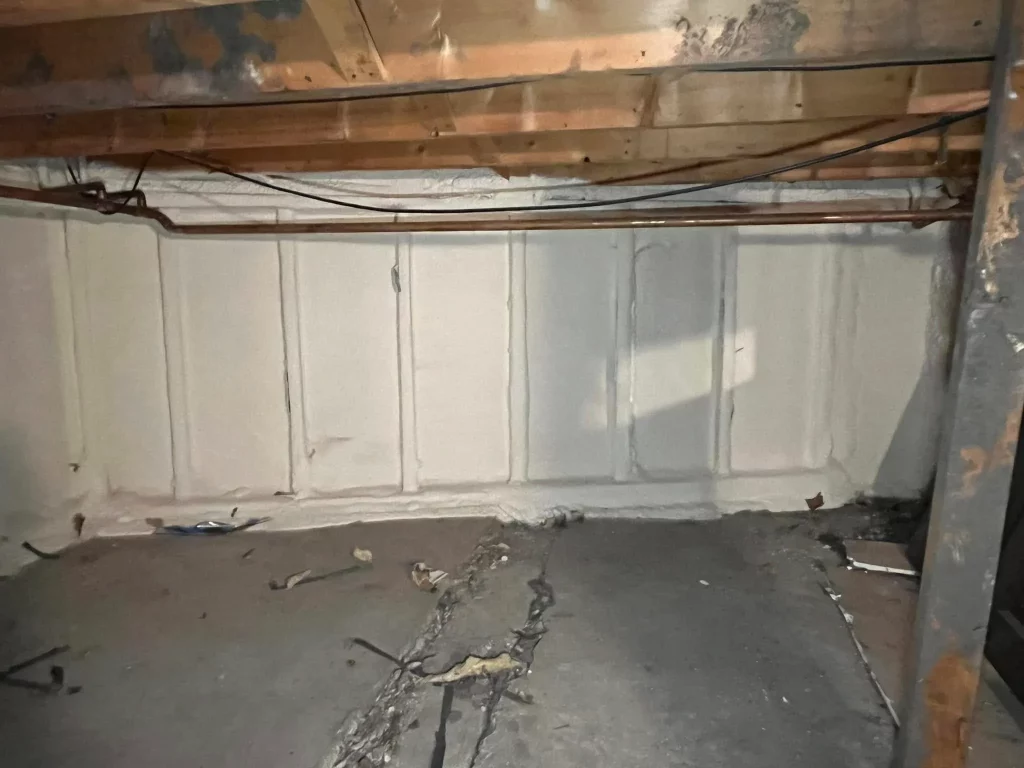
Exterior insulation is often considered the gold standard in building science because it keeps the entire foundation wall at a stable temperature, preventing freeze-thaw damage. However, it requires digging up the perimeter of your home. Interior insulation is the standard for most basement finishing projects. It is far more affordable, but it must be installed correctly with a moisture-resistant approach to prevent water from becoming trapped between the insulation and the concrete wall.
Not all insulation materials perform the same way in a below-grade environment. Because foundations are constantly exposed to soil moisture, you need materials that resist water absorption.
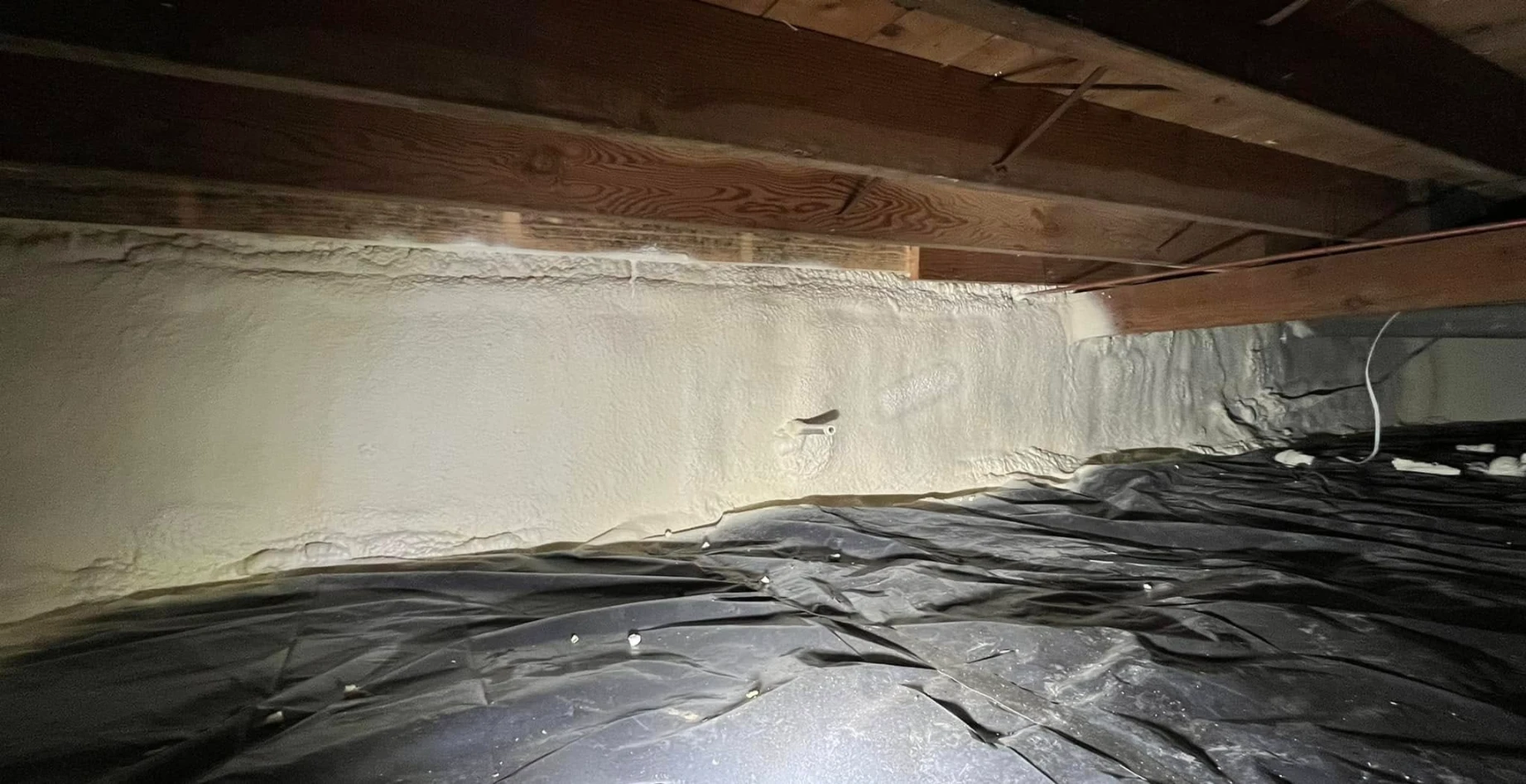
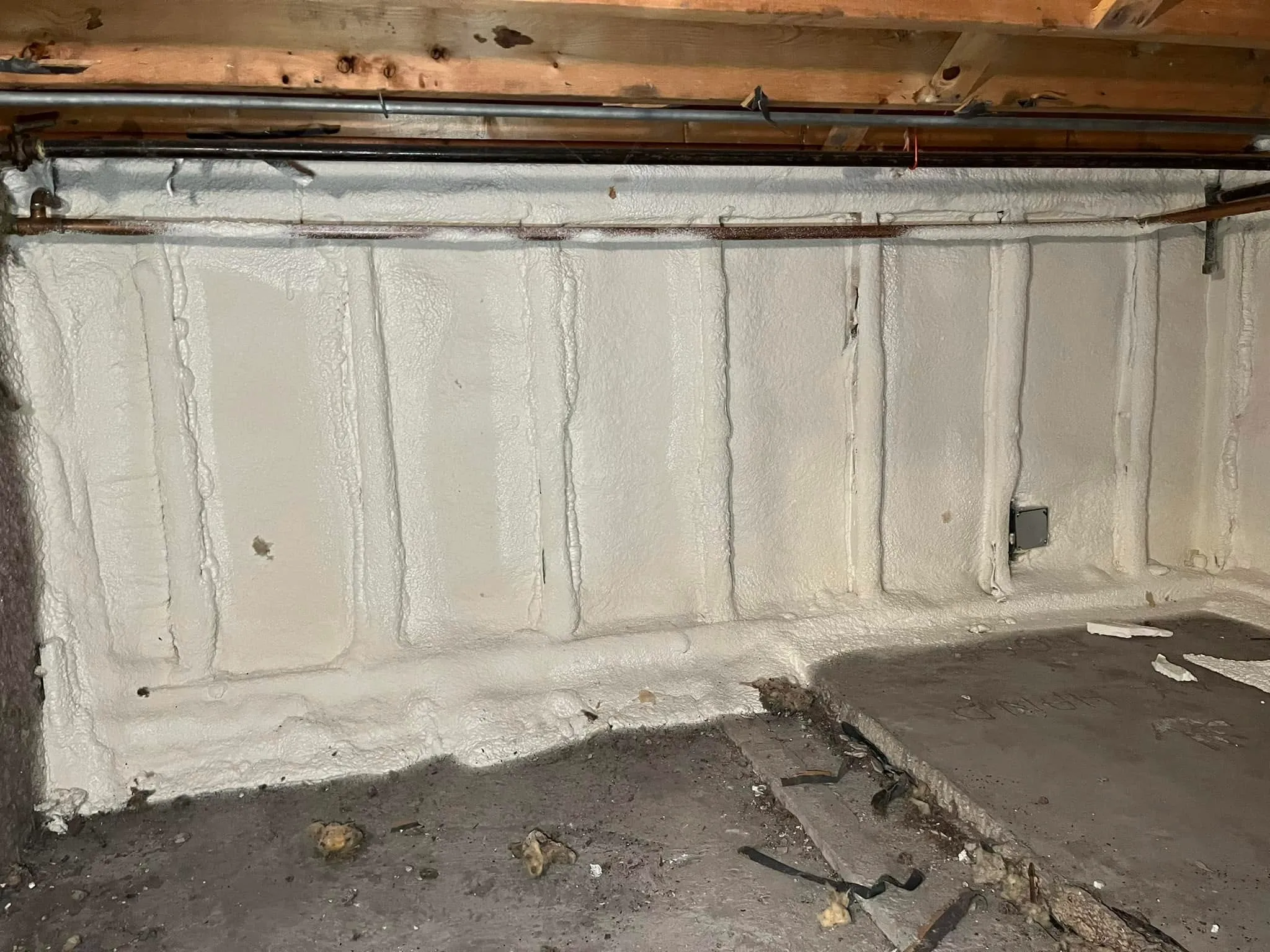
Spray Foam Foundation Insulation is often the preferred choice for foundation walls because it serves two purposes: it provides a high R-value per inch, and it acts as its own vapor barrier. This is particularly important in our Chicago climate, where high humidity and cold winters create perfect conditions for condensation. Rigid foam boards are another effective option for exterior applications, provided the joints are sealed properly to prevent air and moisture movement. Avoid using fiberglass batts in direct contact with concrete; they can act as a sponge, holding moisture against the wall and promoting mold growth.
Every foundation is unique, and applying the wrong material or method can lead to moisture issues rather than fixing them. South Chicago Insulation provides expert Foundation Insulation Services to identify how your home’s specific foundation design, whether it is a full basement, a slab, or a crawlspace, is impacting your comfort and energy bills. We focus on proper Foundation Insulation Installation to ensure your home stays dry and efficient.
Contact us at (779) 803-8025 or email [email protected] to discuss your home’s performance needs.
Yes, for most homeowners, the improvement in comfort, the reduction in moisture-related issues, and the long-term energy savings make it a high-value home investment.
It prevents the condensation that fuels mold growth. However, it does not fix existing water leaks or bulk water intrusion through foundation cracks.
Most interior insulation projects, such as spray foaming basement walls, can be completed in one to two days, depending on the square footage.
While some rigid foam board projects are DIY-friendly, spray foam requires professional equipment and safety training to ensure proper coverage and chemical curing.
Exterior is better for long-term structural protection, but interior is far more practical for existing homes where digging up the foundation is not feasible.