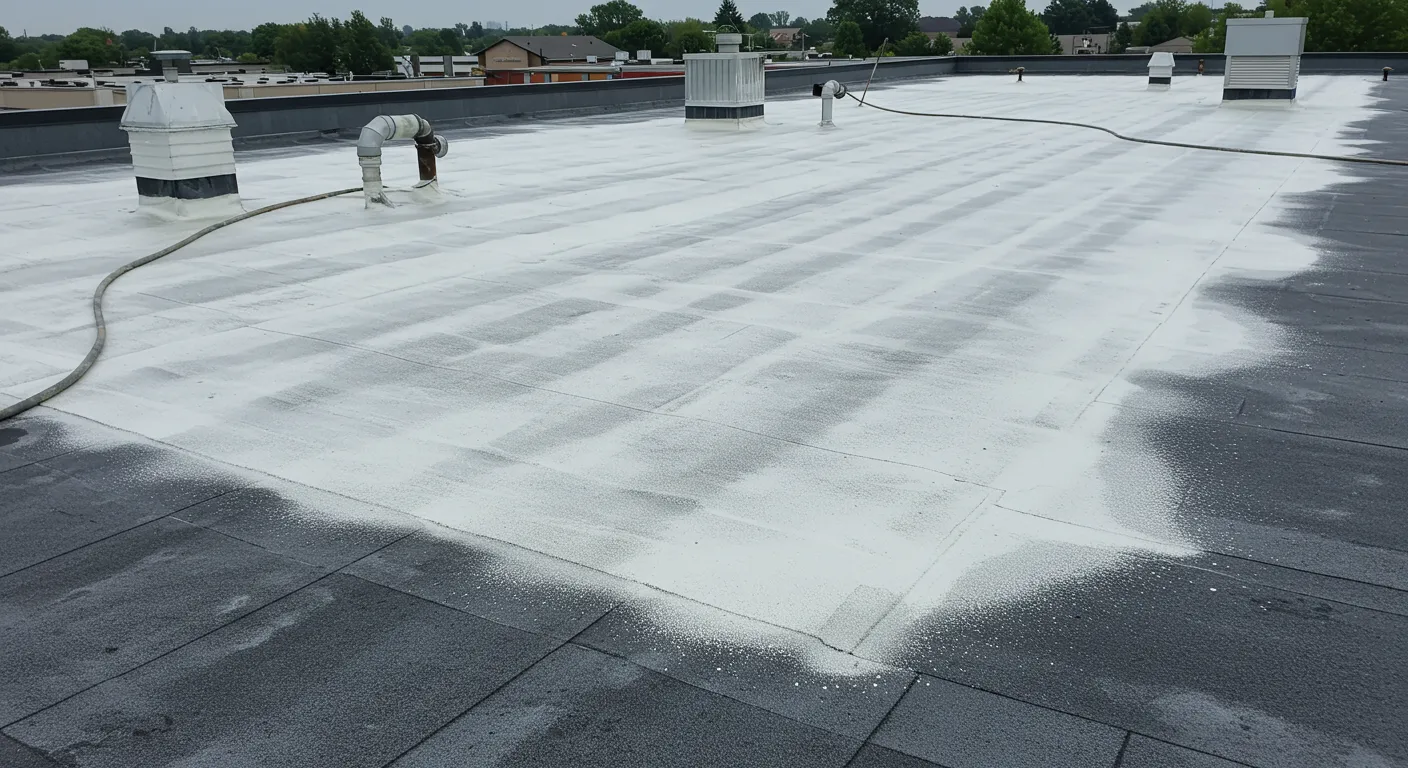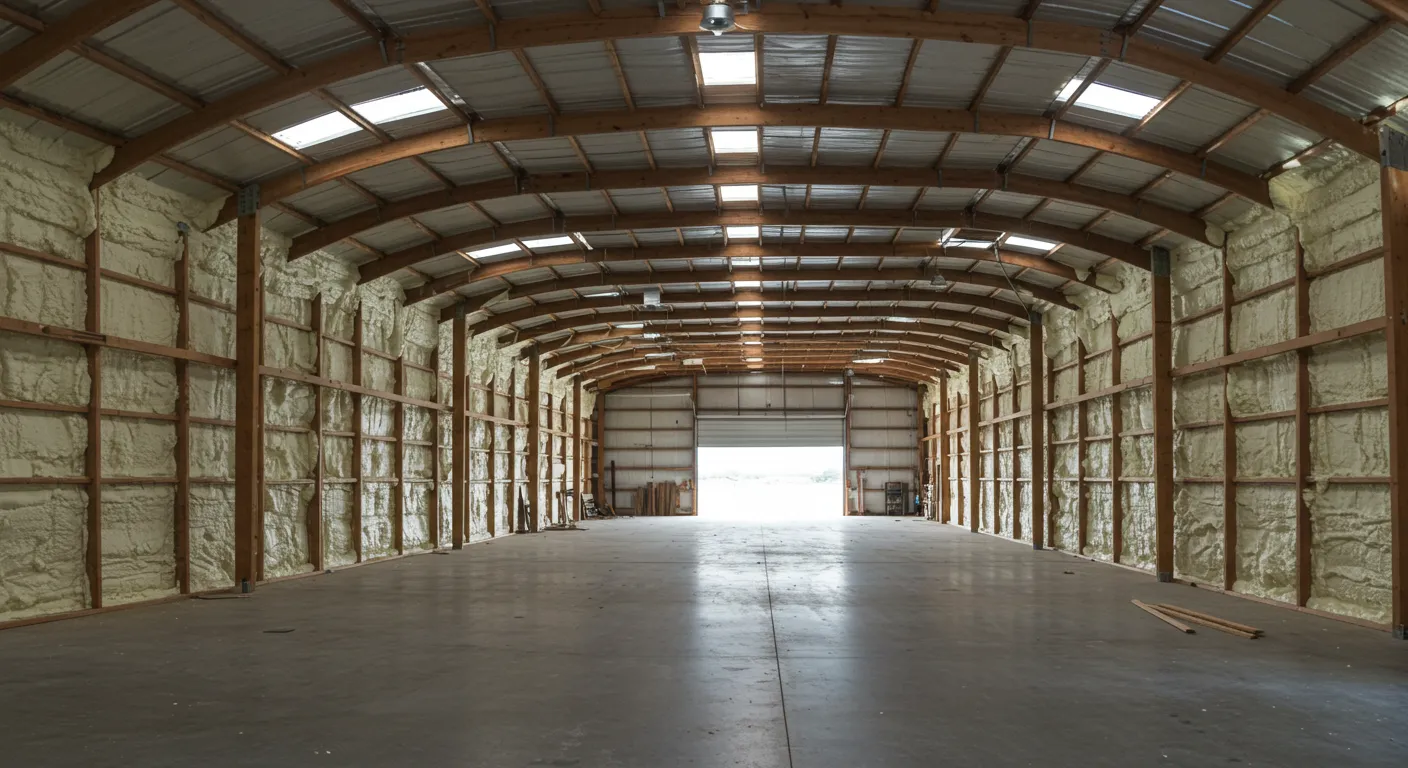
Why Is Your Pole Barn in Carpentersville, IL Too Hot in Summer and Cold in Winter?
Pole barn insulation services can help address the extreme temperature swings common in Carpentersville, IL pole barns. Bare steel panels…


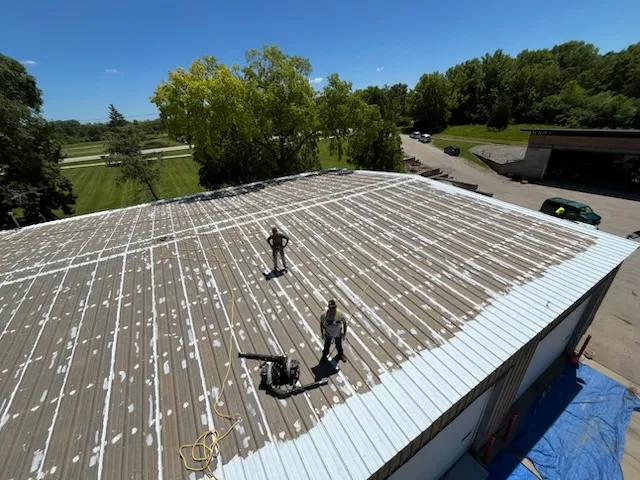
Roofing insulation services in Park Ridge, IL can address the thermal losses that drive higher energy bills. Poor roofing insulation pushes energy bills up because the attic and roof assembly is the weakest thermal barrier in most homes. In winter, expensive furnace heat escapes through thin insulation and ceiling gaps into a cold attic. In summer, a sun-baked roof pushes that heat back down into bedrooms, forcing the air conditioner to run longer. The EPA’s ENERGY STAR program estimates that air sealing plus added attic insulation saves homeowners an average of 15% on heating and cooling costs, and homes in our Climate Zone 5 area can expect around 16% savings on heating and cooling alone. With roughly 6,300 heating degrees a year in the Park Ridge area, every weak spot in the roofline costs you more here than it would in a milder climate. Below, we break down the mechanics of the loss, the warning signs, the correct sequence of repairs, and typical project pricing.
Heat moves out of your home in two ways, and most Park Ridge homes lose money to both.
Conduction is heat passing directly through materials, from your warm ceiling through compressed or thin insulation into the attic. Many older homes were insulated to code minimums that are decades old, and settled or disturbed insulation leaves the upper attic floor under-protected.
A roof insulation planning guide can help homeowners understand where heat loss and air leakage commonly occur along the roof line. Air leakage is warm air physically escaping through gaps, and research from the University of Minnesota Extension notes that in many homes this is the major mode of heat loss at the roof line. Heated indoor air pushes up through recessed lights, wiring holes, attic hatches, bath fan housings, and top plates, then escapes into the attic. This matters more than most homeowners realize: EIA data shows heating and cooling make up 52% of household energy use, so a roof line that leaks conditioned air forces your furnace and AC to replace that air nonstop.
Park Ridge sits in the demanding climate band along Lake Michigan, and the Illinois State Climatologist Office records for nearby Chicago O’Hare tell the story:
| Climate Factor (Chicago O’Hare Normals) | Annual Average |
|---|---|
| Heating degree days | 6,339 |
| Days below 32°F | 122 |
| Days below 0°F | 7 |
| Snowfall | 36.7 inches |
| Cooling degree days | 842 |
That long, cold season means a poorly sealed roofline bleeds heat for months at a time. Midwest households already consume more energy than households in the South and West because of heating demand, and Park Ridge’s housing stock includes many mid-century homes where insulation has settled well below current expectations. The ENERGY STAR savings methodology modeled exactly this scenario: sealing leaks and bringing attic insulation up to modern code levels saves an estimated 16% on heating and cooling costs in Climate Zone 5, with higher savings in the North than in the South.
High bills are only the first symptom. A professional roof insulation contractor can identify insulation and air-sealing issues that contribute to heat loss and winter moisture problems. The DOE’s Building America Solution Center explains that ice dams need three ingredients: snow on the roof, a poorly air-sealed or insulated attic, and freezing temperatures, and they can form with as little as 2 inches of snow. Heat escaping your roof melts snow up high, the meltwater refreezes at the cold eaves, and the growing dam traps water that gets drawn up under shingles, causing roof leaks, damaged insulation, and ceiling stains.
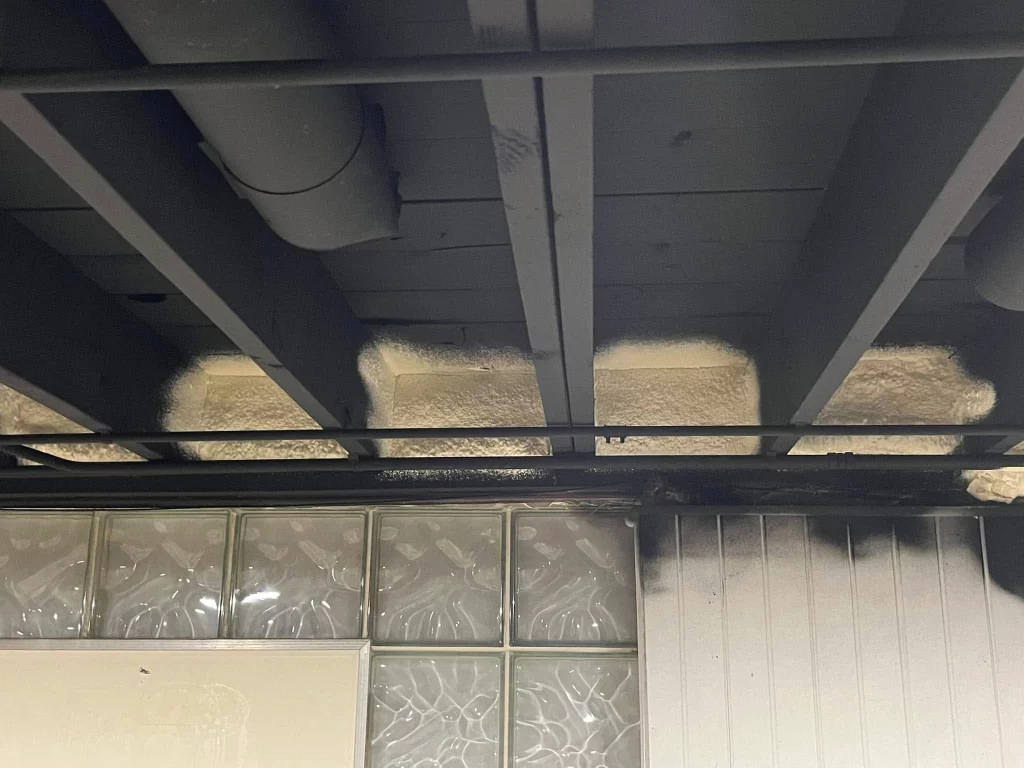
Adding insulation over air leaks is the most common mistake we see. The University of Minnesota Extension recommends making the ceiling airtight first, then increasing insulation to cut conductive loss. Our approach follows the same building science in three steps:
Based on our own completed projects across our service area:
| Service | Typical Low | Typical Average | Typical High |
|---|---|---|---|
| Blown-in cellulose | $2,500 | $5,000 | $7,500 |
| Attic insulation | $5,000 | $10,000 | $18,000 |
| Crawlspace insulation | $2,300 | $5,000 | $8,000 |
Factors that raise the price include larger square footage, greater thickness or higher R-value targets, ventilation modifications, removal of old insulation, difficult access, roof pitch, and moisture or mold issues that need correcting first. Read what homeowners say about us to see feedback from customers who have worked with our team. You can lower the cost by prepping the area yourself before we arrive.
| Your Situation | Recommended Approach | Why |
|---|---|---|
| Retrofit home, 1,500 to 2,500 sq ft | Blown-in cellulose top-up with air sealing | Fastest payback in the most common Park Ridge home type |
| Home with can lights or an old hatch | Full ceiling-plane air seal before any insulation | Stops the convective losses that dominate at the roof line |
| Home with recurring ice dams | Air seal, insulation, baffles, and ventilation corrections | Treats the heat source, not the symptom |
| Crawlspace under main living areas | Crawlspace insulation | Stops cold floors and rim joist losses |
| Commercial buildings | Commercial insulation scope with an assessment | Larger assemblies need a measured plan |
If your Park Ridge home shows any of the warning signs above, our team at South Chicago Insulation will measure where your heat is actually going, then fix the roof line in the right order: seal, insulate, ventilate. Call us at (779) 803-8025 or email [email protected], and let’s turn your attic from your home’s biggest liability into its best thermal barrier.
In our climate zone, ENERGY STAR modeling estimates about 16% savings on heating and cooling costs and 12% on total home energy after air sealing and insulation upgrades. Older, under-insulated homes often see the larger end of the range.
Air seal first. Sealing the ceiling plane stops warm air from escaping into the attic, and adding insulation over unsealed leaks buries the problem instead of fixing it.
In most cases, yes. Ice dams need heat escaping the roof, so a fully sealed ceiling, code-level insulation, and proper ventilation keep the roof deck cold and snow intact.
Look for exposed joists, thin or patchy coverage, daylight at the hatch, and winter icicles. A professional assessment with a blower door and infrared camera confirms exactly where losses occur.
Square footage, target R-value thickness, access difficulty, roof pitch, removal of old insulation, and any ventilation or moisture corrections. Prepping the space yourself can reduce the total.