What Is Foundation Insulation and Why Is It Important for Residential Buildings?
Foundation insulation is the application of thermal materials to the walls, floors, or slabs of a building’s foundation to create…


Bugs and pests enter crawl spaces through gaps in insulation, foundation cracks, unsealed vents, and moisture-saturated materials that provide both an entry point and a habitat. The most effective way to stop them is to seal your crawl space completely with proper insulation, a continuous vapor barrier, and dehumidification, turning the area into a conditioned part of your home rather than leaving it as a damp, vented zone connected to both the outside and your living space. In Glenview, where Cook County falls within IECC Climate Zone 5A, the cold winters and humid summers create conditions that make your crawl space especially attractive to pests if left unprotected. The right approach depends on the current condition of your crawl space, the type of insulation already in place, and whether you are dealing with an active pest issue or taking preventative measures.
Crawl spaces in older Glenview homes are often vented to the outside with fiberglass batts installed between the floor joists. This configuration creates several problems. According to the Building Science Corporation, vented crawl spaces with sub-floor insulation consistently underperform sealed, conditioned crawl spaces across every metric, including pest control. The issue is straightforward: when a crawl space is connected to both the outside and the inside of your home, moisture from warm, humid summer air condenses on cooler surfaces. Fiberglass insulation absorbs this moisture, sags, and eventually falls. Once it is on the ground, it becomes nesting material for rodents and a food source for certain insects.
The EPA’s Mold Course specifically identifies crawl spaces with high relative humidity as common sites of hidden mold growth, especially those with bare earth floors. Soil wicks moisture upward through capillary action, and that moisture evaporates into the crawl space air. Bugs, cockroaches, silverfish, and other pests are drawn to damp environments. The moisture problem feeds the pest problem, which in turn damages whatever insulation remains, accelerating the cycle.
Understanding how pests enter helps you know exactly what needs to be sealed. The University of Nebraska-Lincoln Extension provides detailed research on rodent and pest entry capabilities that applies directly to crawl spaces:
Mice can enter through gaps as small as a quarter inch, and rats need only slightly more than a half inch. Both species can gnaw through wood, vinyl, rubber, and plastic, but they cannot gnaw through galvanized sheet metal or properly installed hardware cloth. This tells us exactly which materials to use when sealing entry points, especially when protecting areas affected by crawl space and foundation insulation.
The single most impactful decision you can make for pest prevention is whether to keep your crawl space vented or convert it to a sealed, conditioned space. The Building Science Corporation is direct on this point: crawl spaces should either be fully connected to the house or fully disconnected from it. Anything in between leads to problems. Understanding crawl space insulation costs can help homeowners plan an effective long-term solution.
| Feature | Vented Crawl Space | Sealed, Conditioned Crawl Space |
|---|---|---|
| Moisture control | Poor; humid outside air enters freely | Controlled through dehumidification or HVAC supply air |
| Insulation location | Between floor joists (vulnerable to sagging) | Perimeter walls (protected, continuous) |
| Pest access | Open vents, cracks, and gaps remain accessible | All vents sealed, vapor barrier continuous |
| Humidity range | Often exceeds 60% RH in summer | Maintained at 30-50% RH |
| Nesting habitat | Fiberglass batts on the ground provide nesting material | Closed-cell foam or rigid board resists nesting |
| Long-term durability | Insulation degrades within 5-10 years in many cases | Materials last 20+ years when properly installed |
Building scientist Joseph Lstiburek notes that “unvented” is misleading terminology because it implies you simply remove the vents. A conditioned crawl space requires active moisture management through air supply from the HVAC system or a dedicated dehumidifier. The USDA’s Integrated Pest Management (IPM) program supports this approach by emphasizing that structural exclusion, moisture control, and habitat modification are the foundation of any effective pest management strategy.
Before any new materials go in, our team inspects the existing crawl space for signs of pest activity: droppings, gnaw marks on wood or wires, shredded nesting material, and tunnels through insulation. Damaged fiberglass must be fully removed because contaminated material cannot be salvaged and will continue to attract pests.
Every gap larger than a quarter inch gets addressed. Our technicians use spray foam for small penetrations around pipes and wires, and rigid materials like galvanized flashing or hardware cloth for larger openings. Vents are sealed with insulated covers. The sill plate gap, one of the most overlooked entry points, receives particular attention, which is why working with an experienced insulation company is important for long-term protection.
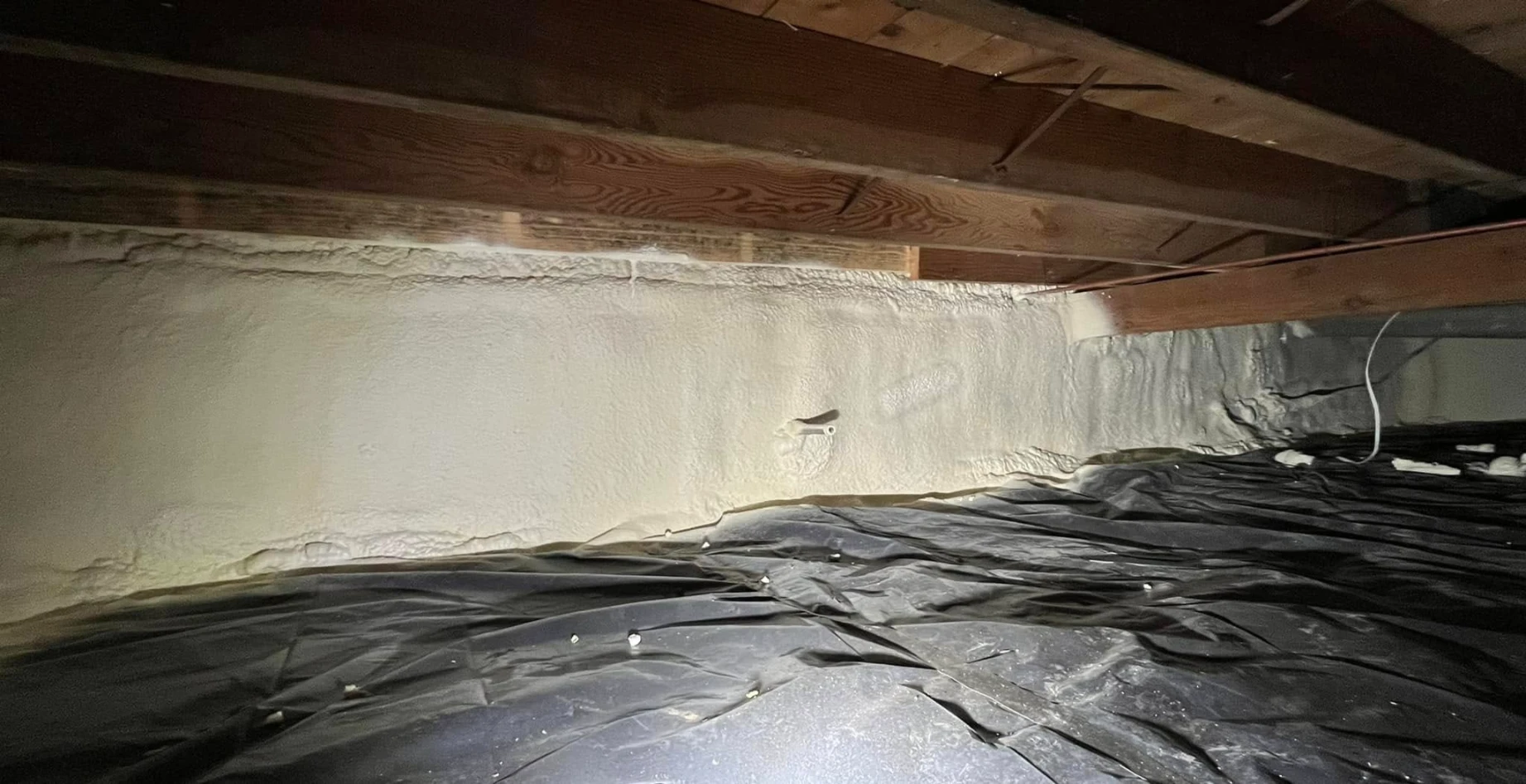
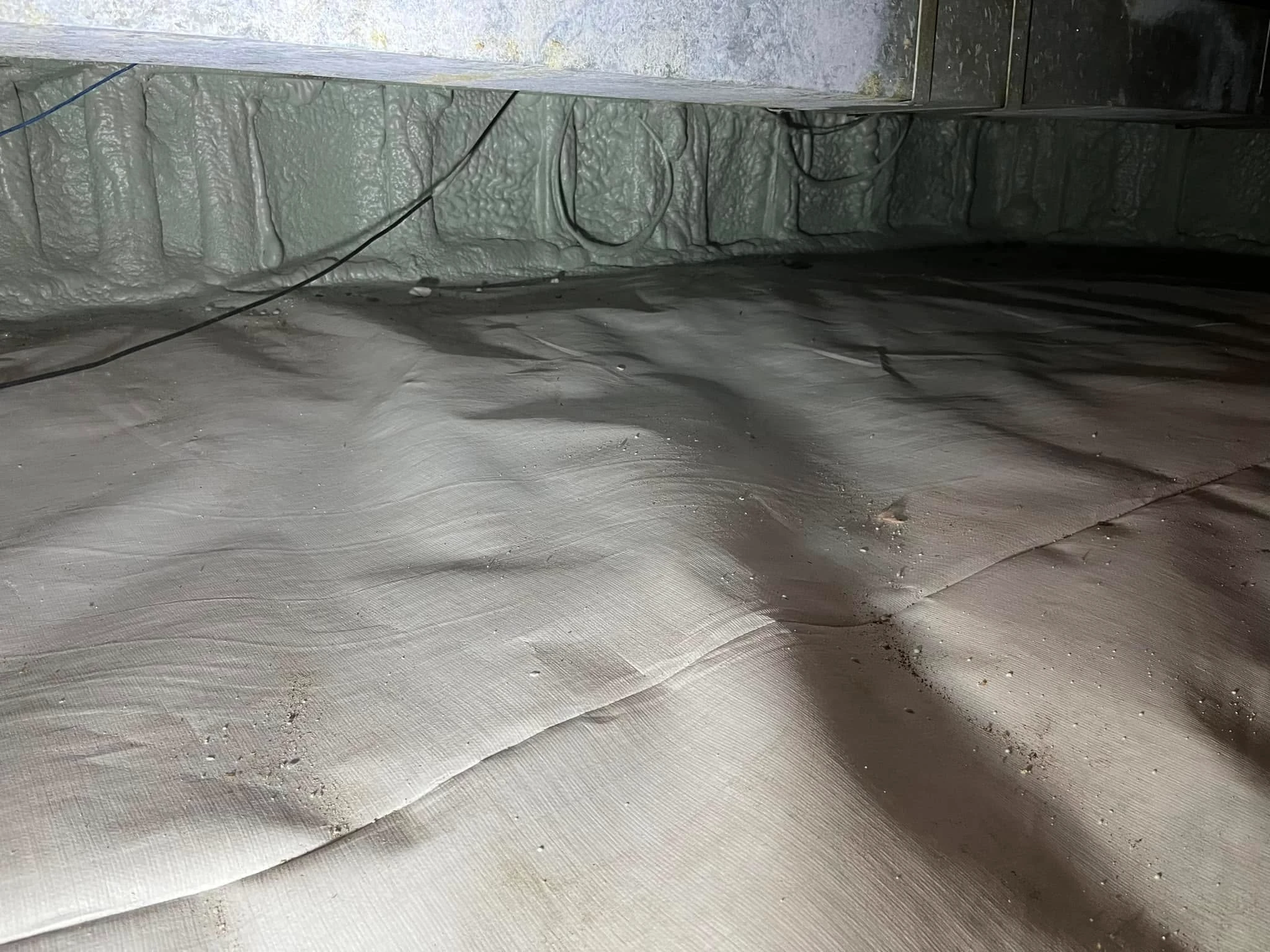
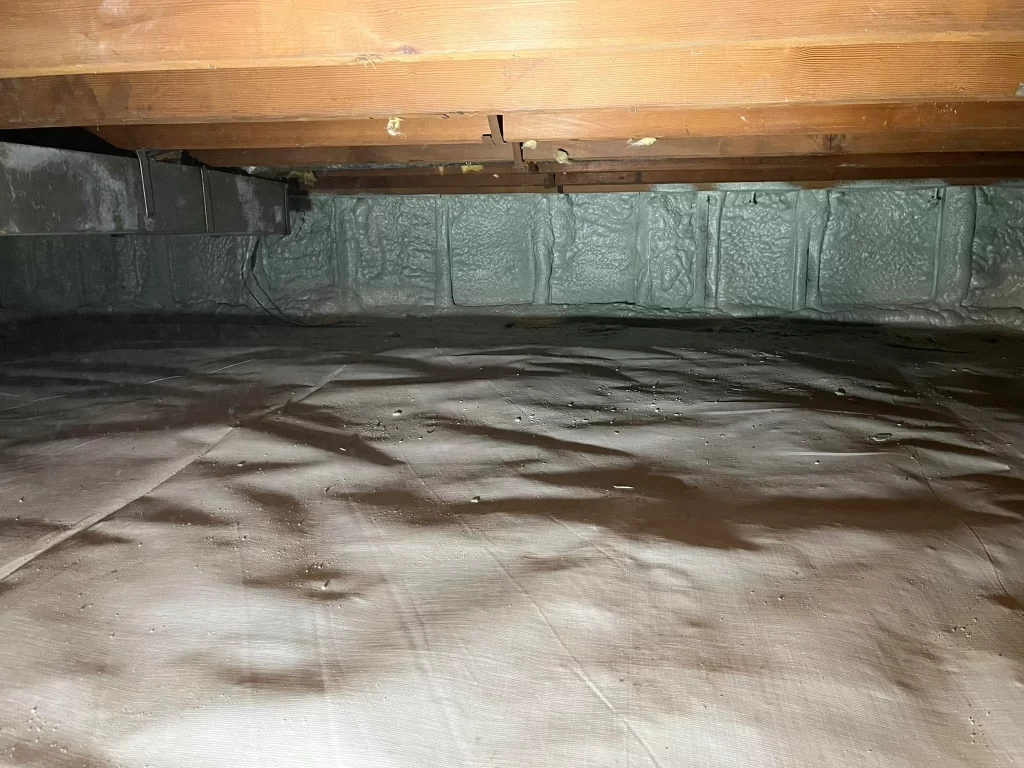
A 20-mil polyethylene liner covers the entire floor and extends up the foundation walls, sealed at all seams and joints. This barrier prevents ground moisture from entering the crawl space air, which is the first step in making the space unattractive to pests.
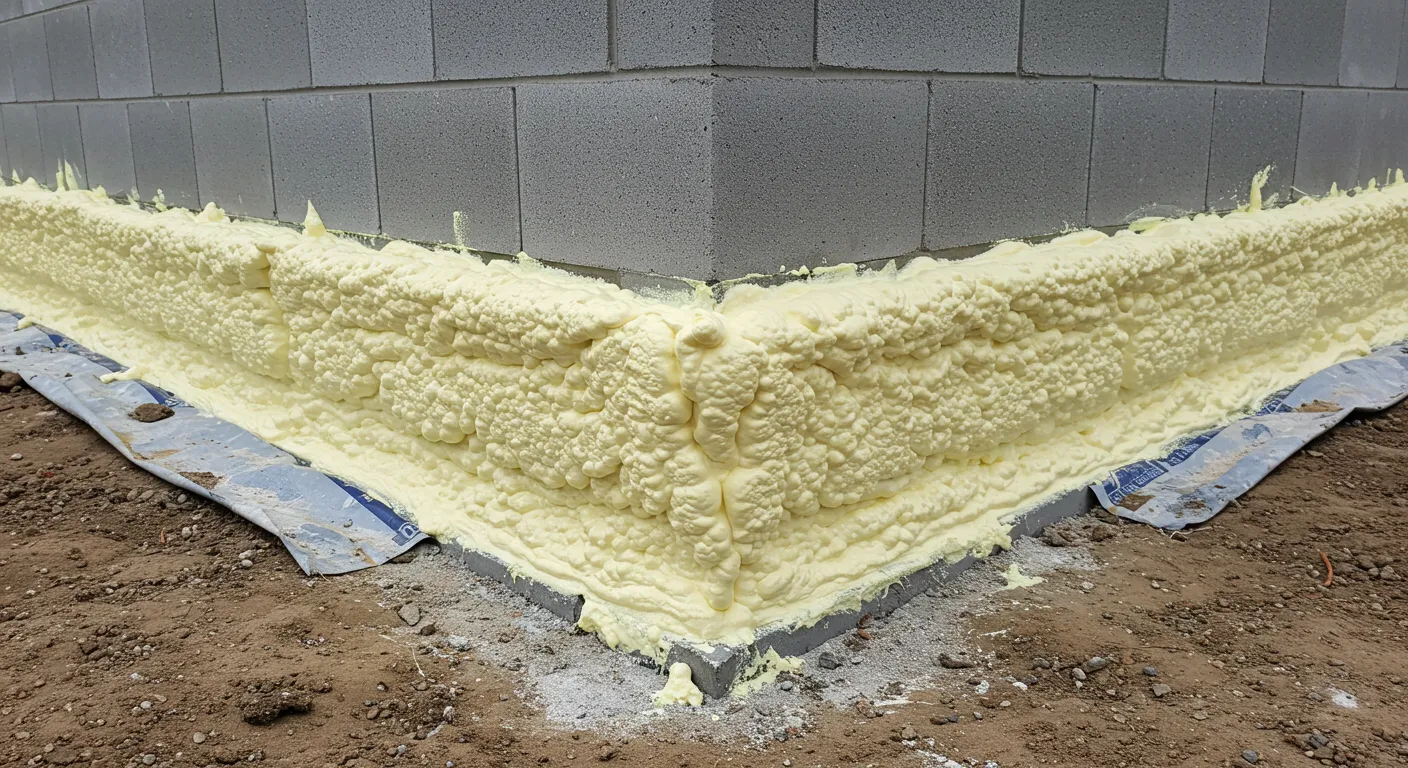
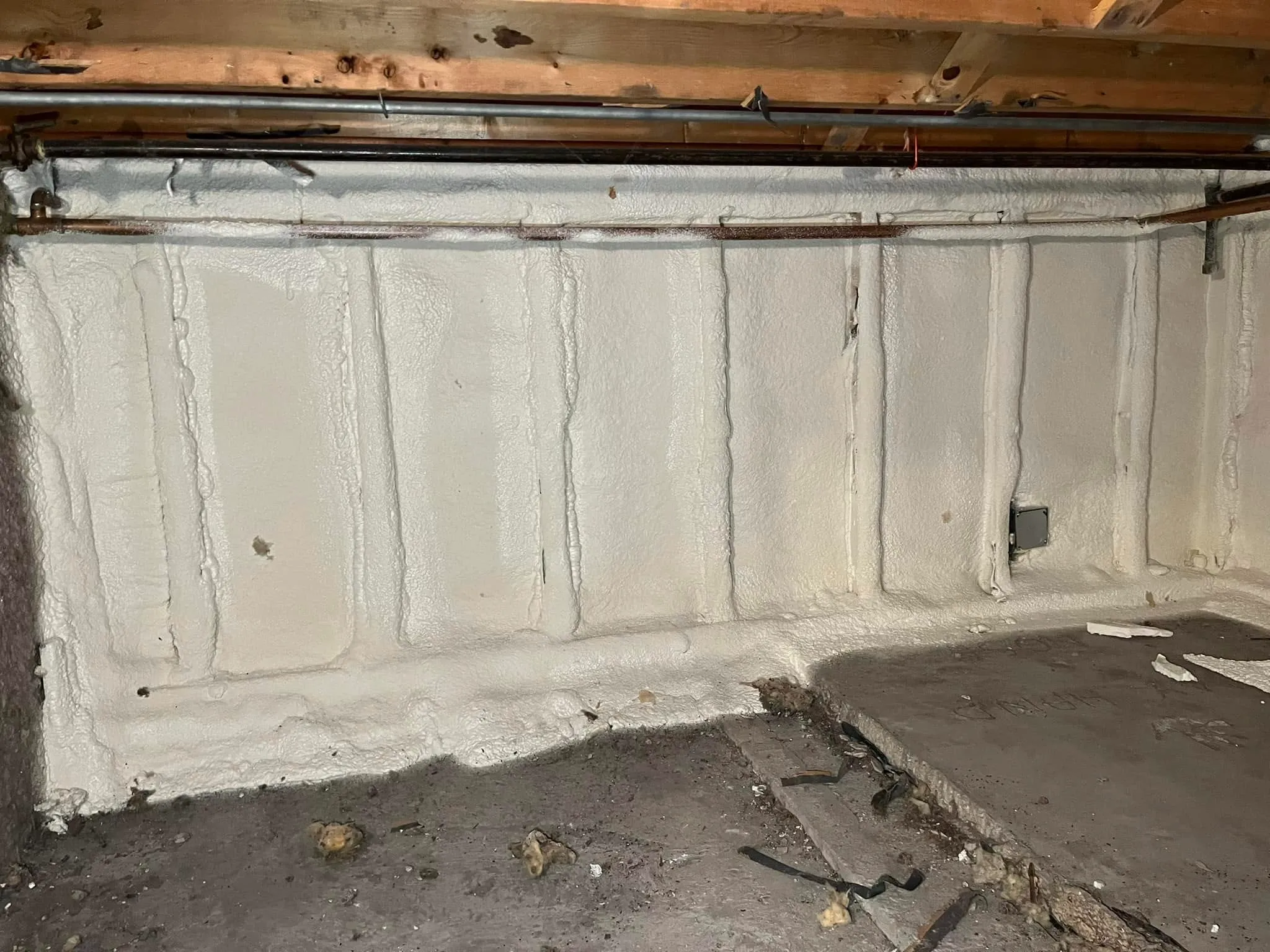
Closed-cell spray foam applied to the perimeter walls creates an airtight, pest-resistant barrier that also serves as a vapor retarder. Unlike fiberglass, closed-cell foam cannot be torn apart for nesting, and insects cannot tunnel through it. For crawl spaces where spray foam is not practical, rigid foam board with sealed joints provides similar protection.
A sealed crawl space still needs moisture management. Options include ducting a small supply from the home’s HVAC system, installing a dedicated dehumidifier, or using an exhaust fan configuration. The goal is maintaining humidity between 30% and 50%, which the EPA identifies as the range that discourages both mold growth and pest activity.
| Your Situation | Recommended Approach | What to Prioritize |
|---|---|---|
| Older home with vented crawl space, no active pest issue | Full encapsulation with perimeter insulation | Seal vents, install vapor barrier, apply closed-cell foam to walls |
| Active rodent or insect infestation | Complete remediation then encapsulation | Remove all contaminated insulation, seal entry points with gnaw-resistant materials, then insulate |
| Recently purchased home, crawl space condition unknown | Professional inspection and assessment | Get a full evaluation before any insulation work to identify hidden damage |
| New construction or major renovation | Conditioned crawl space from the start | Design the crawl space as part of the conditioned envelope with perimeter insulation and dehumidification |
| Fiberglass insulation falling to the ground | Full removal and replacement | Do not reinstall fiberglass in a crawl space; switch to perimeter wall insulation |
You do not always need to crawl under your house to know something is wrong. Watch for these indicators:
Any of these signs warrant a professional inspection before the problem compounds. Pests that establish a presence in your crawl space can eventually find pathways into wall cavities and living areas.
Homeowners sometimes attempt DIY crawl space fixes that inadvertently create more problems:
South Chicago Insulation specializes in crawl space encapsulation and insulation for homeowners throughout Glenview and the surrounding area. Our technicians assess your crawl space, identify pest entry points, remove damaged materials, and install a complete sealed system with pest-resistant insulation and continuous vapor barriers. Every project is customized to your home’s specific conditions and code requirements for Climate Zone 5A.
Call us at (779) 803-8025 or email [email protected] to get started. We evaluate your crawl space, explain exactly what is needed, and provide clear pricing with no surprises.
Yes. Many insects and rodents use fiberglass insulation as nesting material. The material absorbs moisture, holds warmth, and provides a soft medium that pests shred and rearrange to create nests and tunnels.
Closed-cell spray foam is an effective deterrent because insects cannot chew through it, but it must be part of a complete system that includes sealing vents, covering the ground with a vapor barrier, and controlling humidity.
The University of Nebraska-Lincoln Extension documents cases where mice have completely destroyed perimeter insulation within three years. Once rodents establish nesting, damage accelerates quickly.
If you have an active infestation, pest control should address the existing population first, then insulation and sealing prevent re-entry. Both steps are necessary for a lasting solution.
Glenview follows the Illinois Energy Code, which references the IECC. The code allows conditioned crawl spaces as an alternative to vented ones, but does not mandate encapsulation. However, conditioned crawl spaces are recognized as the higher-performing approach for Climate Zone 5A.