What Happens to Your Beverly, Chicago, IL Home When Damaged Roofing Insulation Is Left Without Professional Repair?
Bob Gasca
August 24th, 2026
When damaged roofing insulation goes unrepaired in a Beverly home, the consequences compound quietly across your energy bills, structural integrity, indoor air quality, and property value. Chicago’s freeze-thaw winters make the Beverly neighborhood particularly vulnerable, especially when attic insulation has settled, absorbed moisture, or been compromised by pests and aging. The damage does not stay confined to the attic, making roofing insulation considerations important for preventing further heat loss and moisture-related problems. Heat escapes through compromised insulation, warm air melts rooftop snow, and that meltwater refreezes at the eaves to form ice dams, which the National Weather Service describes as a direct cause of water intrusion into ceilings, walls, and home contents when left unchecked. The chain reaction from a single layer of degraded insulation can affect every room below it.
TL;DR
Energy waste accelerates fast. The EPA estimates that proper air sealing and insulation can save homeowners an average of 15% on heating and cooling costs, meaning damaged insulation works directly against your utility budget every month.
Ice dams become a recurring winter threat in Beverly’s freeze-thaw climate, and inadequate attic insulation is one of the primary causes of ice dam formation on Chicago-area roofs.
Moisture trapped by damaged insulation creates conditions for mold growth on roof sheathing and framing, which research has linked to respiratory symptoms, asthma exacerbation, and other health problems.
Indoor air quality suffers when humidity builds up in poorly insulated attic spaces, increasing exposure to airborne pollutants and biological contaminants.
Structural damage worsens over time as condensation rots roof decking, warps framing members, and degrades drywall and paint on interior ceilings.
Professional insulation repair for Beverly homes typically ranges from $5,000 to $18,000 for attic insulation projects depending on the scope and complexity.
How Damaged Roofing Insulation Triggers a Cascade of Problems
Most homeowners think of insulation as a static layer that either works or does not. In practice, insulation is part of a dynamic system that manages heat flow, moisture movement, and air pressure. When that layer breaks down, every mechanism it supported starts to fail.
Energy Loss and Rising Utility Costs
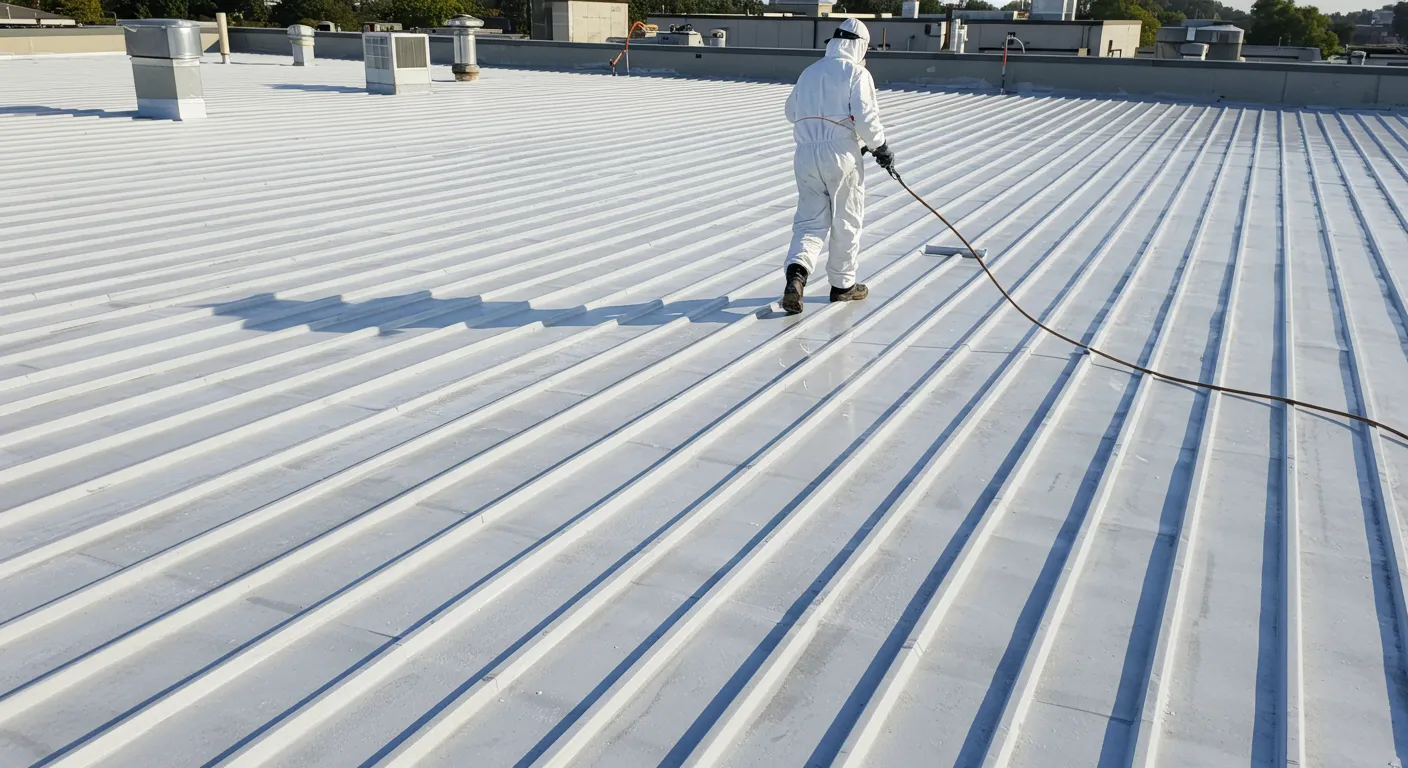
Insulation resists conductive heat flow between your living space and the outdoors. When it is damaged, compressed, displaced, or moisture-saturated, its thermal resistance drops significantly. Warm air from your furnace rises into the attic through gaps around light fixtures, plumbing stacks, and HVAC penetrations. Without an intact insulation barrier, that heat transfers directly through the roof assembly, making spray foam roofing a relevant option for improving insulation and reducing heat transfer. In summer, the process reverses as radiant heat from the sun penetrates the roof and pushes into your living space, forcing your air conditioning system to work harder.
According to ENERGY STAR’s Seal and Insulate program, nine out of ten homes in the U.S. are under-insulated, and sealing air leaks combined with adding insulation in attics, crawl spaces, and basements can reduce heating and cooling costs by an average of 15%. In a Beverly home where insulation has been damaged rather than simply underperforming, the energy penalty is often worse because the damage creates concentrated points of heat loss that bypass what insulation remains.
Ice Dams and Water Damage in Chicago Winters
Beverly’s location in northern Illinois means your home endures repeated freeze-thaw cycles every winter. When attic insulation is compromised, heat from inside the home warms the roof deck unevenly. Snow on the warmer sections melts, runs down the roof, and hits the colder eave overhang where it refreezes. Over several melt-freeze cycles, this forms an ice dam, a ridge of ice that traps subsequent meltwater behind it.
The National Weather Service warns that when ice dams go unnoticed over extended periods, water works up under shingles, enters the attic, and eventually damages ceilings, walls, and contents. The NWS recommends that attic insulation reach at least R-30, with R-38 preferred in northern climates, combined with proper soffit-to-ridge ventilation to keep the attic air cold enough to prevent the melt-freeze cycle.
For Beverly homeowners, this is not a theoretical risk. Chicago winters regularly deliver heavy snowfall followed by daytime highs above freezing and overnight drops well below. Damaged insulation guarantees that your roof surface temperature will be uneven, which is the exact condition that creates ice dams.
Damage Stage
What Happens
Affected Home Systems
Early
Minor energy bill increase, uneven room temperatures
HVAC system, utility costs
Moderate
Ice dam formation, condensation on attic surfaces, musty odors
Roof structure, interior ceilings, indoor air
Advanced
Mold growth on sheathing/framing, drywall stains, paint peeling
Structural integrity, occupant health
Severe
Roof deck rot, framing damage, compromised insulation R-value, pest intrusion
Full building envelope, property value
Moisture, Mold, and Indoor Air Quality
The connection between damaged roof insulation and moisture problems is well documented in building science. When warm, humid interior air leaks past compromised insulation into a cold attic space, condensation forms on the underside of the roof sheathing. Over time, this moisture accumulates in the wood, creating an environment where mold thrives.
Research published by the National Institutes of Health documents that occupants of damp indoor environments face increased risk of upper and lower respiratory symptoms, asthma onset and exacerbation, respiratory infections, hypersensitivity pneumonitis, allergic rhinitis, and bronchitis. The research further estimates that approximately 21% of current U.S. asthma cases are attributable to dampness and mold exposure in indoor environments.
In your Beverly home, this translates to real health risks for your family. Mold growth on attic sheathing releases spores that can enter living spaces through recessed lights, attic hatches, and gaps in the ceiling plane. Once inside, these spores become part of the air you breathe daily. The EPA’s guidance on energy, weatherization, and indoor air quality specifically warns that moisture accumulates during everyday activities like cooking and showering, and without proper ventilation, high humidity levels provide a breeding ground for mold, mites, and bacteria. When insulation is damaged, your attic loses its ability to manage that moisture load, and the problems multiply.
The Building Science Corporation’s research on attic assemblies confirms that in vented attics, moisture-related problems are common when insulation and air sealing are inadequate. Their work shows that condensation on roof sheathing and framing can lead to mold growth, wood rot, and degradation of structural members, particularly when the insulation system has been compromised and can no longer maintain proper temperature and moisture profiles within the assembly.
Structural Deterioration Over Time
Water is the most destructive force your home encounters. When damaged insulation allows repeated condensation or ice dam water intrusion, the structural components of your roof assembly begin a slow but irreversible decline.
Roof sheathing, typically oriented strand board or plywood, absorbs moisture when condensation forms on its underside. Repeated wetting cycles cause the material to delaminate, swell, and lose structural strength. Framing members such as rafters and trusses experience similar degradation, with rot weakening load-bearing connections. Interior finishes, including drywall, plaster, and paint on your ceilings, show stains, bubbling, and cracking as moisture penetrates from above.
The EPA notes that insulation plays a direct role in conserving energy and improving the health and comfort of building occupants. When that insulation fails, the building envelope can no longer perform its primary function of separating conditioned interior space from the harsh exterior environment. For Beverly homes, which often feature older construction with original framing and roofing, this deterioration happens faster because the materials have already endured decades of seasonal stress.
What Professional Repair Actually Addresses
Professional insulation repair is not simply adding more material on top of damaged insulation. A proper repair process involves:
Removal of damaged, wet, or contaminated insulation to eliminate moisture sources and mold growth
Identification and sealing of air leakage points between the living space and attic
Assessment of ventilation adequacy to ensure proper attic airflow
Installation of new insulation at the correct R-value for Chicago’s Climate Zone 5
Moisture barrier and vapor control evaluation to prevent recurring condensation
Our team at South Chicago Insulation approaches every Beverly project with this full-system perspective. We do not just cover up the problem. We identify where the damage originated, correct it, and rebuild the insulation system to perform reliably through Chicago’s demanding seasons, while local customer experiences can help homeowners evaluate the quality of similar insulation projects.
Signs You’ve Found the Right Insulation Contractor
Not every contractor evaluates the full picture. Here is what separates a thorough professional approach from a surface-level fix:
They inspect the attic before quoting, looking for moisture stains, mold evidence, air leakage pathways, and ventilation adequacy rather than just measuring square footage
They explain what they found and why it matters, connecting visible damage to the problems you have been experiencing
They address air sealing as part of the insulation scope, recognizing that insulation without air sealing cannot perform at its rated R-value
They offer clear pricing based on the actual conditions in your attic, including factors like moisture remediation, difficult access, and ventilation modifications
Recommendation by Homeowner Situation
Your Situation
Recommended Action
Why It Matters
Noticing high energy bills and uneven temperatures
Full attic insulation assessment and air sealing evaluation
Damaged insulation creates concentrated heat loss points that standard diagnostics often miss
Visible ice dams forming each winter
Attic insulation repair with ventilation assessment
Ice dams are a symptom of heat escaping through the roof plane, not a roofing problem alone
Musty odors or ceiling stains after winter storms
Inspection for moisture damage and potential mold on sheathing
Water from ice dams or condensation causes progressive structural damage that accelerates without intervention
Planning a roof replacement
Insulation evaluation before new roofing installation
Replacing the roof without addressing underlying insulation problems guarantees the same issues will recur
Recent storm or water intrusion event
Immediate insulation inspection even if drywall looks fine
Water can saturate insulation without visible interior damage, creating hidden mold and rot conditions
Ready to Protect Your Beverly Home
South Chicago Insulation provides professional insulation repair and replacement for Beverly homeowners dealing with the consequences of damaged roofing insulation. Our team evaluates the full system, from air sealing and ventilation to insulation R-value and moisture control, to make sure the repair addresses the root cause rather than just the symptoms. We work with homes in Chicago neighborhoods.
How do I know if my attic insulation is damaged or just old?
Look for uneven coverage, visible compression, water stains on sheathing, musty smells in upper floors, and ice dams forming along your roof edges during winter. If your home is more than 20 years old and the insulation has never been updated, an inspection is warranted regardless of visible signs.
Can damaged insulation cause roof leaks even when the roofing material is intact?
Yes. When insulation fails, warm interior air reaches the roof deck and melts snow, which refreezes at the eaves as ice dams. The ice dam traps subsequent meltwater, which then backs up under shingles and enters the attic. The leak originates from the insulation failure, not a roofing defect.
How long does it take for moisture-damaged insulation to cause mold?
Mold can begin colonizing damp organic materials within 24 to 48 hours under the right conditions. In a poorly ventilated attic where condensation forms repeatedly, mold growth on roof sheathing can develop gradually over weeks or months and may not be visible until it has spread significantly.
Does insurance cover insulation damage from ice dams or storms?
Coverage depends on the cause of the damage and your specific policy terms. Storm-related damage is more commonly covered than gradual deterioration from age or poor maintenance. We recommend documenting the damage thoroughly and reviewing your policy with your insurer before beginning repairs.
Why can I not just add new insulation over the damaged material?
Adding insulation over damaged, wet, or contaminated material traps moisture and mold in your attic assembly. This approach reduces the new insulation’s effectiveness, creates ongoing odor and air quality problems, and allows structural damage to continue hidden beneath the new layer. Professional repair requires removing compromised material first.
Sources
ENERGY STAR – Why Seal and Insulate? – EPA data on energy savings from proper insulation and air sealing, including the statistic that 9 out of 10 U.S. homes are under-insulated.
NIH/PMC – Indoor Dampness and Mould Health Effects – Peer-reviewed research documenting health risks of damp indoor environments, including respiratory symptoms, asthma, and the estimated 21% of U.S. asthma cases attributable to dampness and mold.
EPA – Identifying Greener Insulation – EPA resource on insulation’s role in energy conservation, occupant health, and building comfort, including sustainability considerations for insulation materials.
I’m Bob Gasca, with over 16 years of spray foam experience and training that began in 2007. South Chicago Insulation, LLC was established in January 1984, bringing more than four decades of experience in the insulation industry. I’m a certified Spray Foam Master Installer, SPFA member, and Spray Foam Worldwide Ambassador specializing in moisture and air infiltration solutions.