What Makes Spray Foam Insulation a Better Option When Fiberglass Leaves Gaps in Addison, IL?
Bob Gasca
August 25th, 2026
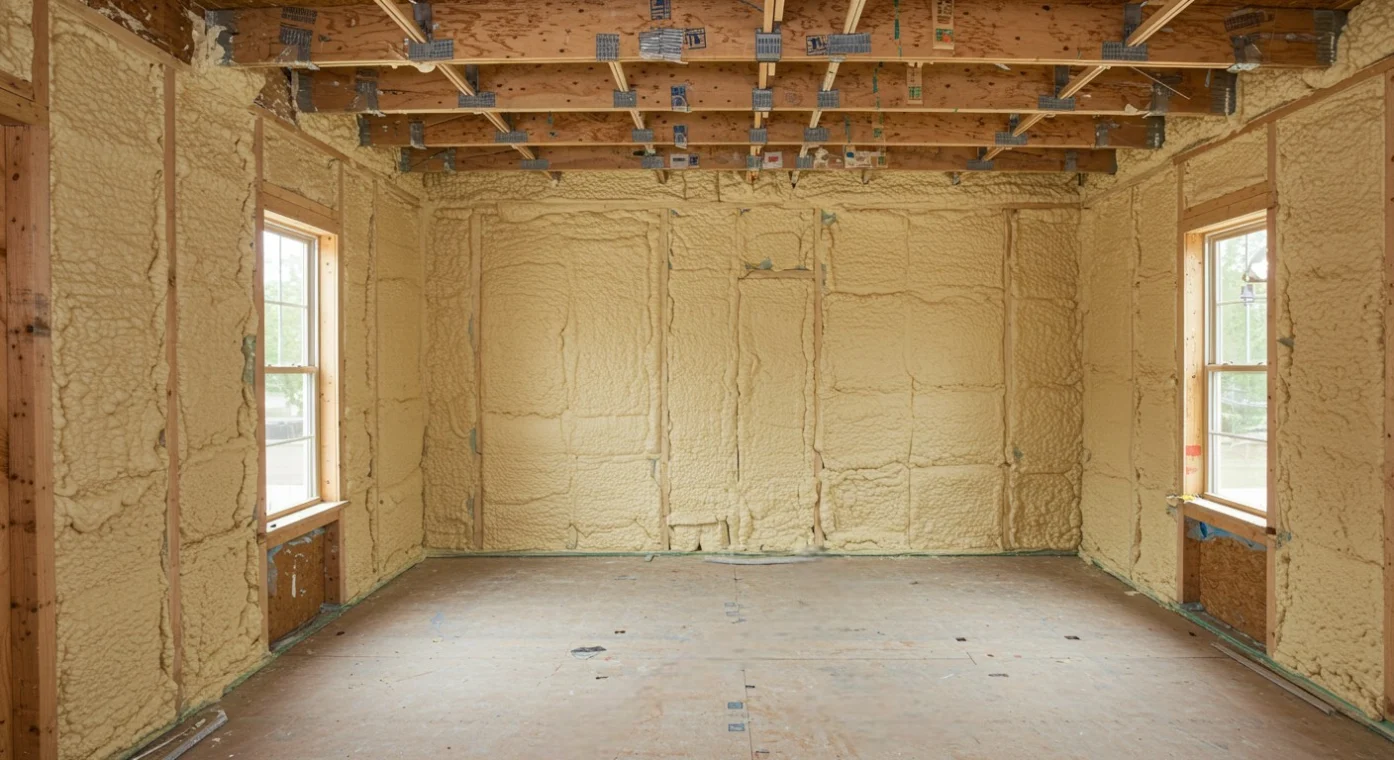
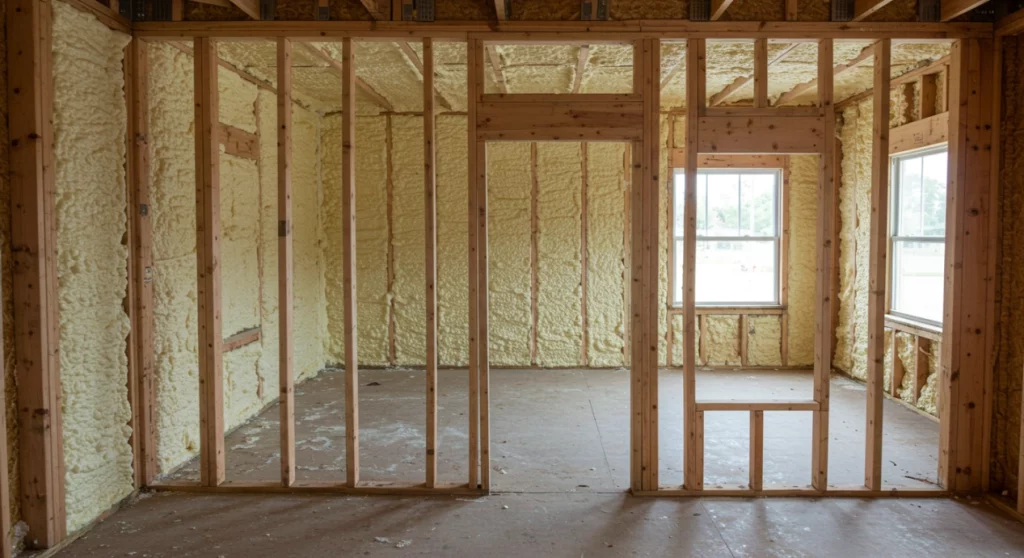
Spray foam becomes the stronger option when fiberglass batts leave gaps, voids, or compression in your wall cavities and attic, because it expands on application to fill those exact spaces while simultaneously creating an air barrier. In Addison, IL, which sits in Climate Zone 5 per the U.S. Department of Energy, homes need R-60 attic insulation and R-20 cavity plus R-5 continuous wall insulation to meet the 2021 IECC. Professional insulation services can help address installation deficiencies and determine the appropriate approach for achieving consistent coverage. Fiberglass can meet those targets on paper, but only when installed with zero gaps, zero compression, and full contact on all six sides of every cavity. In practice, especially in retrofit situations, that rarely happens, and spray foam addresses the root problem rather than working around it.
TL;DR
Air leakage accounts for 25 to 40 percent of heating and cooling energy use in a typical residence, and fiberglass does not stop air movement through walls and ceilings on its own
Building Science Corporation identifies gaps, voids, and convective looping as the two primary factors that degrade cavity insulation performance, both of which are direct consequences of poorly fitted fiberglass
Closed-cell spray foam delivers R-5.1 to R-6.7 per inch and acts as both an insulation layer and an air barrier in a single application
Open-cell spray foam provides R-3.5 to R-3.8 per inch with air sealing characteristics, making it effective for wall cavities and sound control
Addison, IL (Climate Zone 5) requires R-60 ceilings and R-20 + R-5 continuous insulation for wood-frame walls under the 2021 IECC
Fiberglass loses rated R-value when compressed behind wiring, plumbing, or electrical boxes, while spray foam expands to fill around all obstructions
Attic insulation projects with spray foam in the Addison area typically range from $5,000 to $18,000 depending on square footage and complexity
The EPA estimates homeowners save an average of 15% on heating and cooling costs by air sealing and adding insulation
Why Fiberglass Gaps Are a Bigger Problem Than They Look
Fiberglass batts are designed for uniform, standard-spaced cavities. In real homes, especially older construction in Addison, wall and attic cavities are anything but uniform. Wiring runs, plumbing stacks, electrical boxes, framing offsets, and non-standard stud spacing all create obstructions that force installers to cut, compress, or stuff batts into place.
According to Building Science Corporation’s cavity insulation guide, when batts are cut too short, too narrow, or too wide around obstructions, gaps form. Compression from forcing batts behind pipes or wiring reduces the effective R-value. Even when batts appear properly placed, “rolled shoulders” at framing edges create thin spots that allow convective air loops to form inside the wall cavity. These loops circulate air within and around the insulation, actively moving heat through the assembly the insulation was supposed to block.
The DOE’s Oak Ridge National Laboratory Insulation Fact Sheet further explains that insulation placed between studs does not retard heat flow through the studs themselves, a phenomenon called thermal bridging. In standard framing, studs occupy 15 to 25 percent of the wall area, creating direct conductive paths that bypass the fiberglass entirely. The ORNL fact sheet notes that compressed or incomplete fiberglass will not deliver its full rated R-value, and gaps as small as a narrow strip between closely spaced studs can “greatly reduce the insulation performance of the whole wall.”
How Spray Foam Addresses Both Insulation and Air Sealing Simultaneously
Spray foam’s primary advantage over fiberglass in gap-prone installations is not just higher R-value per inch. It is the combination of thermal resistance and air barrier performance in a single material.
ENERGY STAR’s air sealing guide states that air leakage accounts for 25 to 40 percent of the energy used for heating and cooling in a typical residence. The guide identifies joints between building materials, gaps around windows and doors, and penetrations for piping, wiring, and ducts as the primary leakage paths. Fiberglass does nothing to seal these paths. It sits in the cavity while air moves around it.
Spray foam expands 30 to 60 times its liquid volume upon application, filling irregular cavities, wrapping around obstructions, and adhering to framing, sheathing, and substrates. This expansion creates a continuous seal that eliminates the convective loops Building Science Corporation identifies as a major performance degrader. In Climate Zone 5, where Addison sits, spray foam insulation methods are particularly relevant because winter temperatures regularly drop well below freezing, making any air infiltration path a significant source of heat loss.
Feature
Fiberglass Batts
Spray Foam (Closed-Cell)
Spray Foam (Open-Cell)
R-Value per Inch
R-3.0 to R-4.0
R-5.1 to R-6.7
R-3.5 to R-3.8
Air Barrier
No
Yes (at 50mm+)
Yes (at 5.5 inches+)
Fills Gaps and Voids
Requires precise cutting
Expands to fill
Expands to fill
Convective Loop Prevention
Only if perfectly installed
Eliminates loops entirely
Eliminates loops entirely
Vapor Barrier
Requires separate layer
Yes (at 50mm+)
No
Thermal Bridging
Unaffected
Reduced by full coverage
Reduced by full coverage
Climate Zone 5 Requirements and Why R-Value Alone Is Not Enough
The ENERGY STAR specifies that Climate Zone 5, which includes Addison and most of Illinois, requires R-60 ceiling insulation and either R-20 cavity plus R-5 continuous exterior insulation, or R-13 cavity plus R-10 continuous insulation for wood-frame walls.
These are minimum code requirements. Meeting them with fiberglass means layering material in attics and hoping for perfect cavity fills in walls. The DOE guide itself notes that “heat can be lost or gained through any of these building components, especially through gaps where different parts of the building such as walls, ducts, pipes, vents, or other interfaces meet.” A spray foam insulation contractor in Addison, IL can help address gaps and difficult areas more effectively. The R-value printed on a fiberglass package assumes ideal installation conditions. Gaps, compression, and missing insulation behind obstructions all reduce the real-world performance below that number.
Spray foam, by contrast, delivers its rated R-value while simultaneously addressing the air leakage paths that the DOE identifies as major energy loss points. In a retrofit wall application, spray foam injected through small holes expands to fill the entire cavity, including around wiring and plumbing, eliminating both the voids and the air movement that degrade fiberglass performance.
Where Spray Foam Makes the Most Impact in Addison Homes
Not every insulation upgrade in Addison needs spray foam. The right material depends on the specific problem, the location in the building, and the condition of existing insulation. Here is how we evaluate which areas benefit most from spray foam when fiberglass has gaps or has underperformed.
Attics
Attics are the most common starting point because they are accessible and often the most under-insulated part of the home. In Addison’s Climate Zone 5, the target is R-60. Fiberglass batts in attics frequently have gaps around framing, compressed sections from storage loads, and voids around recessed lighting and ventilation penetrations. Spray foam applied to the attic floor or roof deck fills these irregularities and seals the air leakage paths between the living space and the attic, which the DOE identifies as some of the largest and most consequential in any home.
Crawlspaces
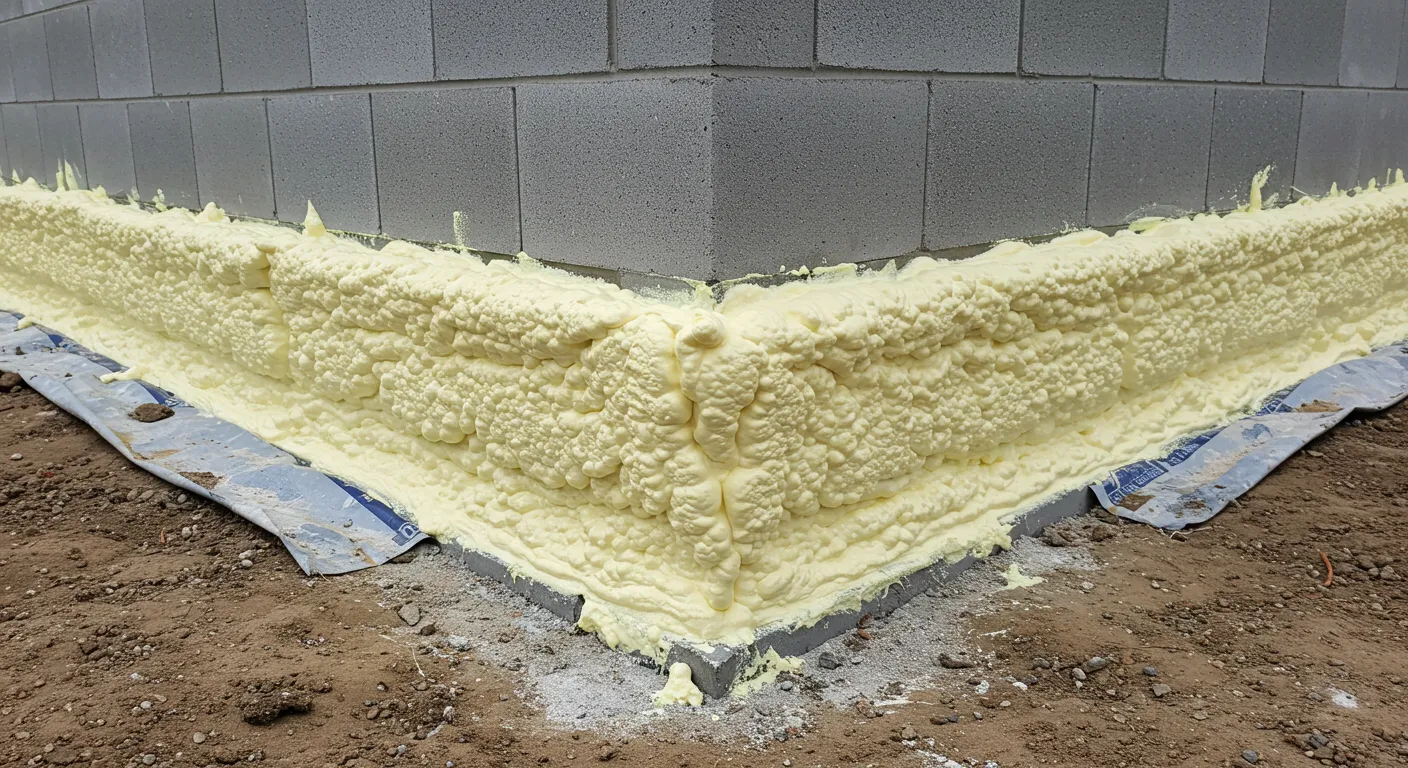
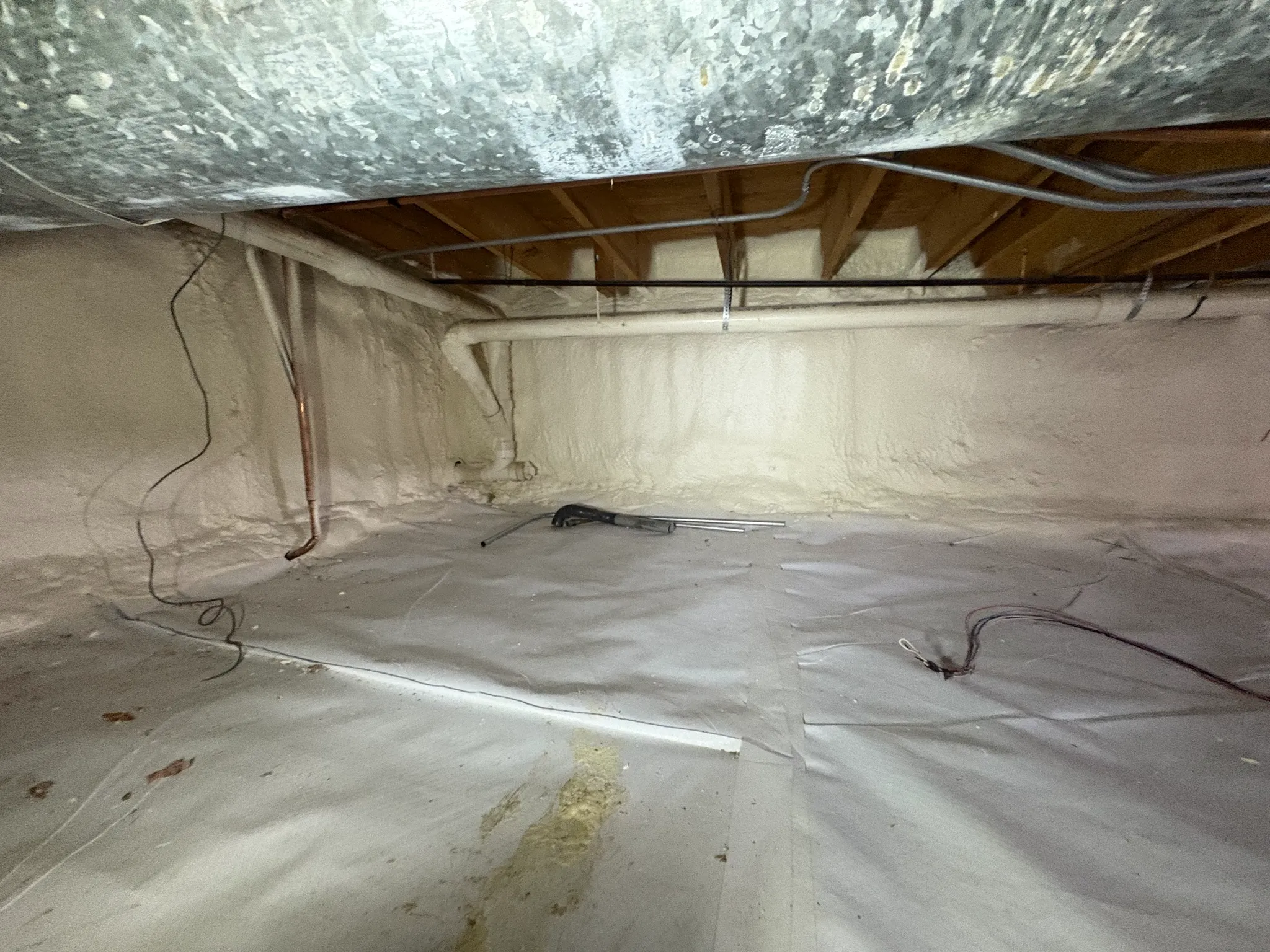
Crawlspace insulation in Addison homes often suffers from fiberglass that has sagged, been displaced by pests, or was never properly fitted to the irregular surfaces of foundation walls and rim joists. Spray foam adheres to masonry, wood, and concrete, sealing the rim joist band, a location the DOE specifically calls out as a major air leakage area that standard fiberglass cannot address.
Walls
Existing wall cavities with poorly installed fiberglass present the hardest retrofit challenge. Drill-and-fill spray foam injection can reach these cavities through small holes in the drywall or exterior siding, expanding to fill gaps around electrical boxes, wiring, and plumbing that would be impossible to address with new fiberglass batts without full wall demolition.
Investment Considerations for Spray Foam in Addison
Spray foam insulation projects in the Addison area vary based on the application, square footage, and degree of difficulty. Here is a summary of typical project ranges we see for our most common services.
Service
Typical Low
Typical Average
Typical High
Attic insulation
$5,000
$10,000
$18,000
Crawlspace insulation
$2,300
$5,000
$8,000
Blown-in cellulose
$2,500
$5,000
$7,500
Factors that increase pricing include larger square footage, greater thickness or higher R-value requirements, difficult access, and ventilation modifications. Projects where the building owner preps the area in advance can help lower the overall investment. For pole barn and commercial applications, pricing ranges higher due to the scale and complexity of those projects, so a local insulation professional can help property owners assess the project requirements before work begins.
Signs You Have Chosen the Right Insulation Approach
Your installer walks through the space before quoting and identifies specific gap locations, air leakage paths, and compression points rather than quoting a price per square foot over the phone
The proposal addresses air sealing as a separate line item or includes it as part of the spray foam application, rather than treating insulation and air sealing as unrelated tasks
You receive clear guidance on open-cell versus closed-cell foam based on your specific application, climate zone, and whether a vapor barrier is needed
The crew tests for proper mixing ratio and foam expansion during installation rather than spraying at a fixed rate regardless of cavity conditions
A post-installation walkthrough shows full cavity fill with no visible voids, gaps, or shrinkage, and the installer explains what was found and corrected during the process
Recommendations by Home Type and Situation
Situation
Recommended Approach
Key Notes
Older home with fiberglass showing gaps in walls
Drill-and-fill spray foam injection
Fills cavities around obstructions without removing drywall
Attic with compressed or displaced fiberglass
Spray foam over clean deck or remove and replace
Seals top-plate leaks and eliminates convective looping
Crawlspace with sagging fiberglass on rim joist
Closed-cell spray foam on rim joist and walls
Adheres to irregular surfaces and provides vapor barrier
New construction or major renovation
Spray foam in walls and attic during open framing
Easiest and most cost-effective time to apply
Home with ice dams or attic moisture issues
Spray foam at attic floor with air sealing
Addresses both insulation and the air leakage causing ice dams
Get an Insulation Assessment for Your Addison Home
South Chicago Insulation evaluates homes throughout Addison, IL to identify exactly where fiberglass has left gaps, compressed, or failed to seal. Our team assesses each cavity, measures existing insulation levels against Climate Zone 5 requirements, and recommends spray foam where it will deliver the greatest performance improvement. To discuss your project. We will show you precisely where your current insulation is falling short and what spray foam can do to fix it.
Can spray foam be installed over existing fiberglass insulation?
In most cases, existing fiberglass should be removed before spray foam application to ensure proper adhesion and avoid trapping moisture between layers.
How long does spray foam insulation take to cure?
Spray foam typically cures within 24 hours, with the initial expansion and tack-free stage completing within minutes of application.
Does spray foam qualify for the federal energy-efficient home improvement tax credit?
Spray foam insulation that meets or exceeds 2021 IECC requirements for your climate zone is eligible for the federal tax credit under the Inflation Reduction Act.
Is closed-cell or open-cell spray foam better for Addison’s climate?
Closed-cell is generally preferred in Climate Zone 5 for its higher R-value per inch and vapor barrier properties, though open-cell works well for interior wall cavities and sound control.
Will spray foam reduce my energy bills enough to justify the investment?
The EPA estimates homeowners save an average of 15% on heating and cooling costs through combined air sealing and insulation, with results varying based on your home’s current condition and the scope of work.
Sources
ENERGY STAR – Why Seal and Insulate? – EPA data on energy savings from air sealing and insulation, including the statistic that 9 out of 10 U.S. homes are under-insulated.
Oak Ridge National Laboratory / DOE – Insulation Fact Sheet – Comprehensive DOE guidance on how insulation works, why R-value alone does not capture real-world performance, and the impact of thermal bridging and installation quality on fiberglass effectiveness.
I’m Bob Gasca, with over 16 years of spray foam experience and training that began in 2007. South Chicago Insulation, LLC was established in January 1984, bringing more than four decades of experience in the insulation industry. I’m a certified Spray Foam Master Installer, SPFA member, and Spray Foam Worldwide Ambassador specializing in moisture and air infiltration solutions.