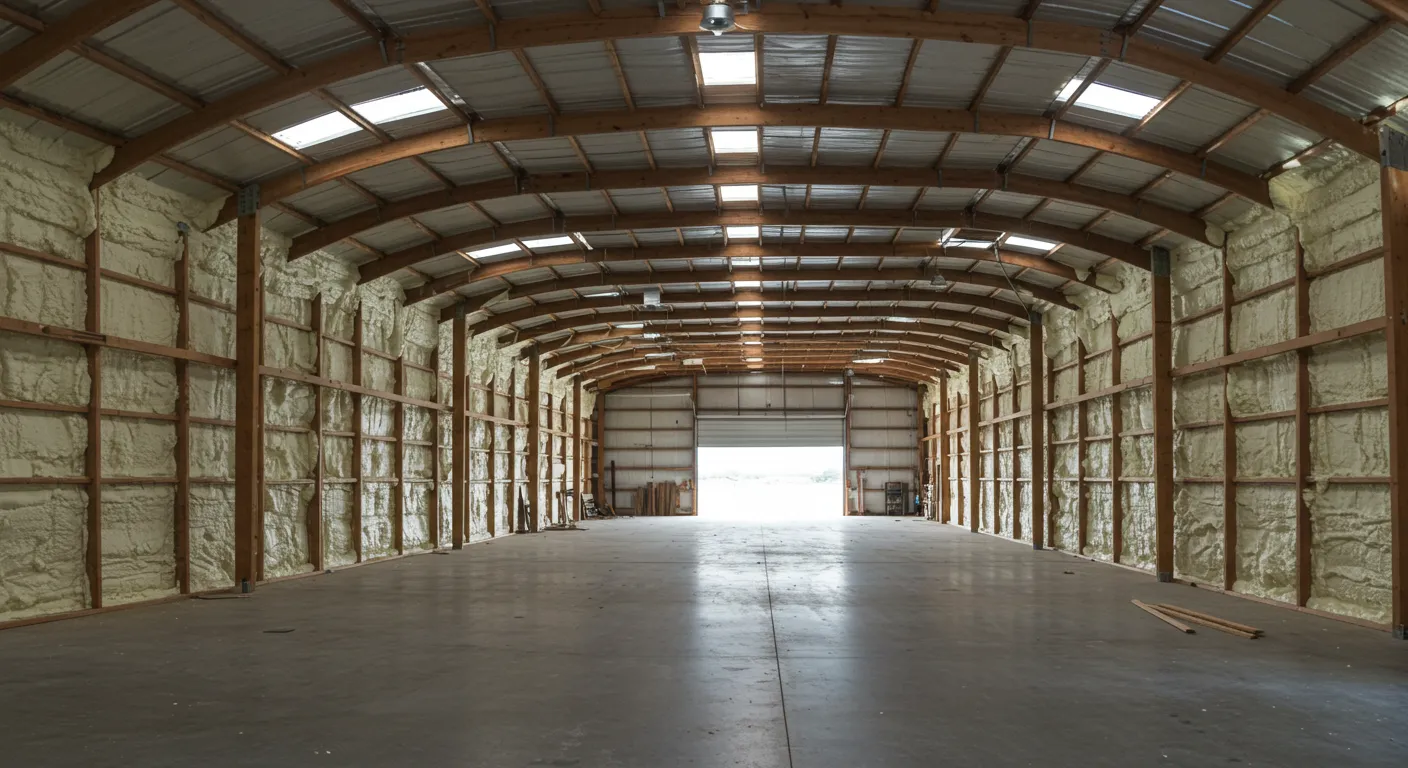
How Can Pole Barn Insulation Help Prevent Condensation and Interior Surface Issues in Park Ridge, IL?
Bob Gasca
August 24th, 2026
Pole barn insulation works by raising the interior surface temperature above the dew point, blocking moisture-laden air from reaching cold metal panels, and creating a continuous thermal barrier that keeps condensation from forming in the first place. In Park Ridge, Illinois, where the area falls within IECC Climate Zone 5, the cold winters create temperature extremes that make uninsulated metal roofs and walls prime targets for condensation damage. The right insulation strategy depends on your building’s use, its construction type, and whether you need full climate control. Pole barn insulation options such as closed-cell spray foam, fiberglass with vapor retarders, and hybrid approaches each serve different needs, but they all share the same goal: keeping interior surfaces warm enough that water vapor stays in the air instead of raining down on your equipment, stored goods, or finished interior.
TL;DR
Condensation forms when warm, moist indoor air contacts cold metal surfaces in pole barns, causing dripping, rust, mold, and wood rot
Park Ridge sits in IECC Climate Zone 5, where code-prescribed condensation control requires high-density closed-cell spray foam or equivalent vapor retarder assemblies
Pole barn insulation projects in the area typically range from $8,000 on the low end to $22,000 on the high end, with most falling around $14,000
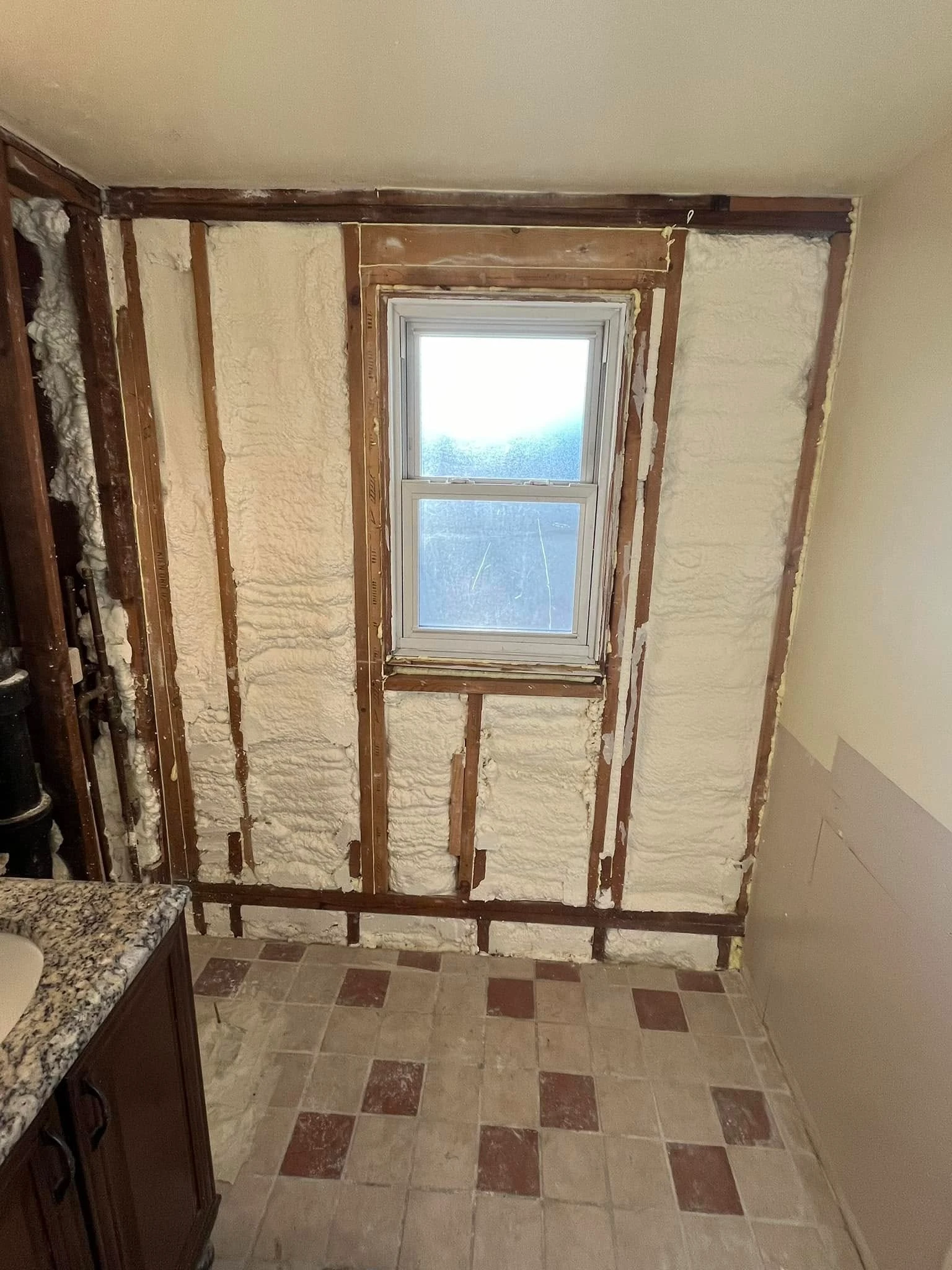
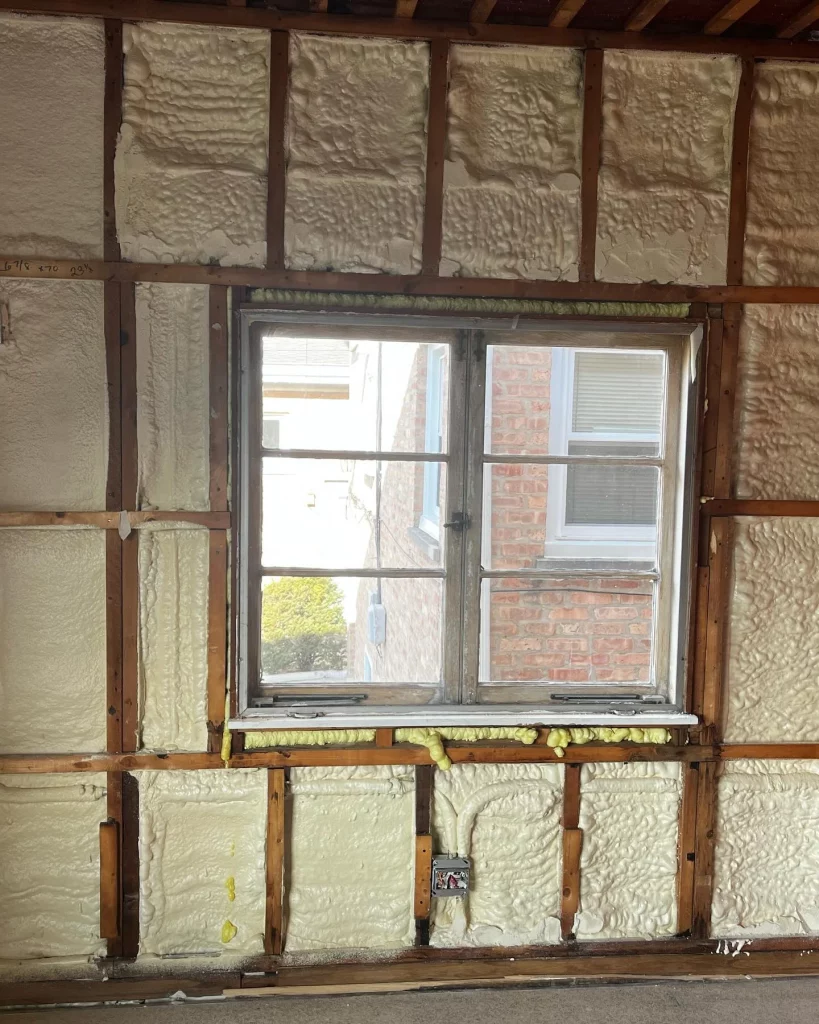
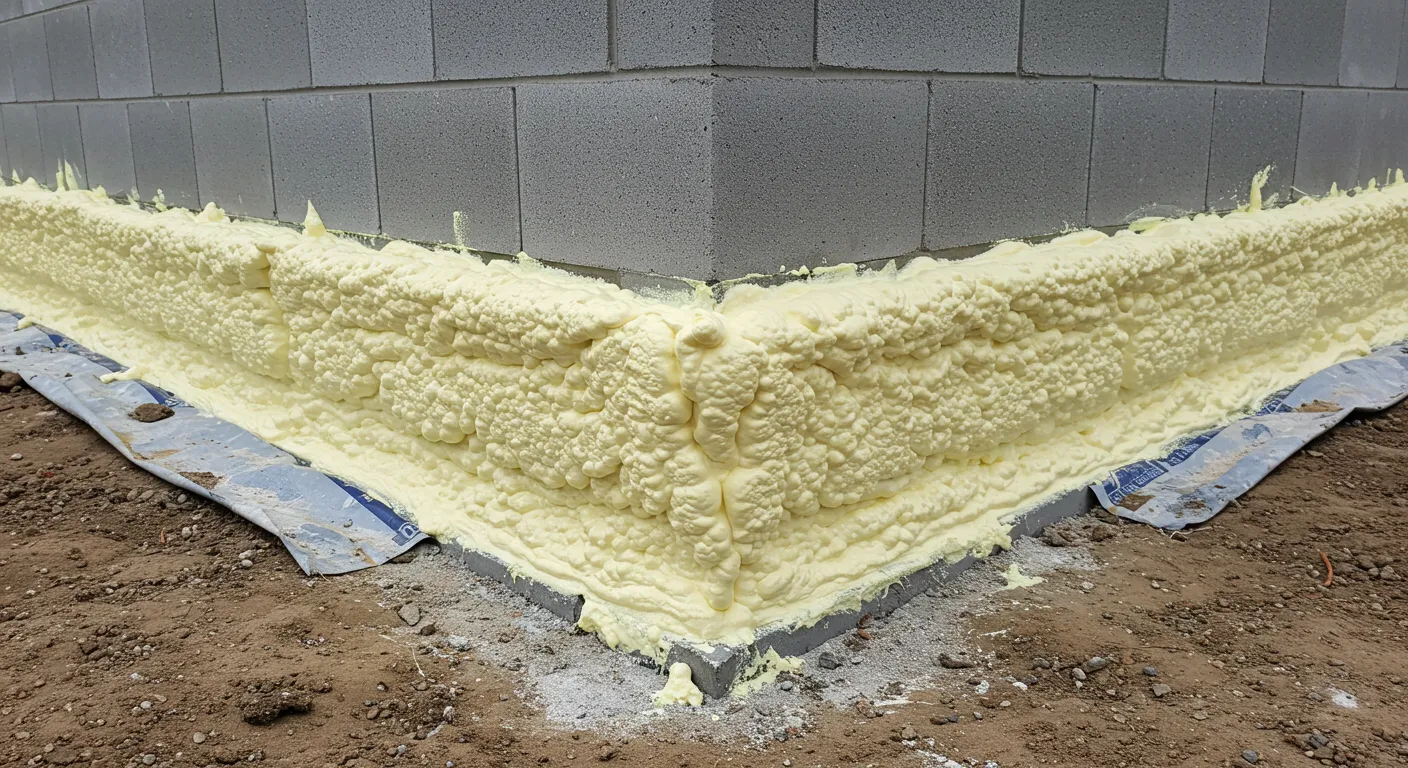
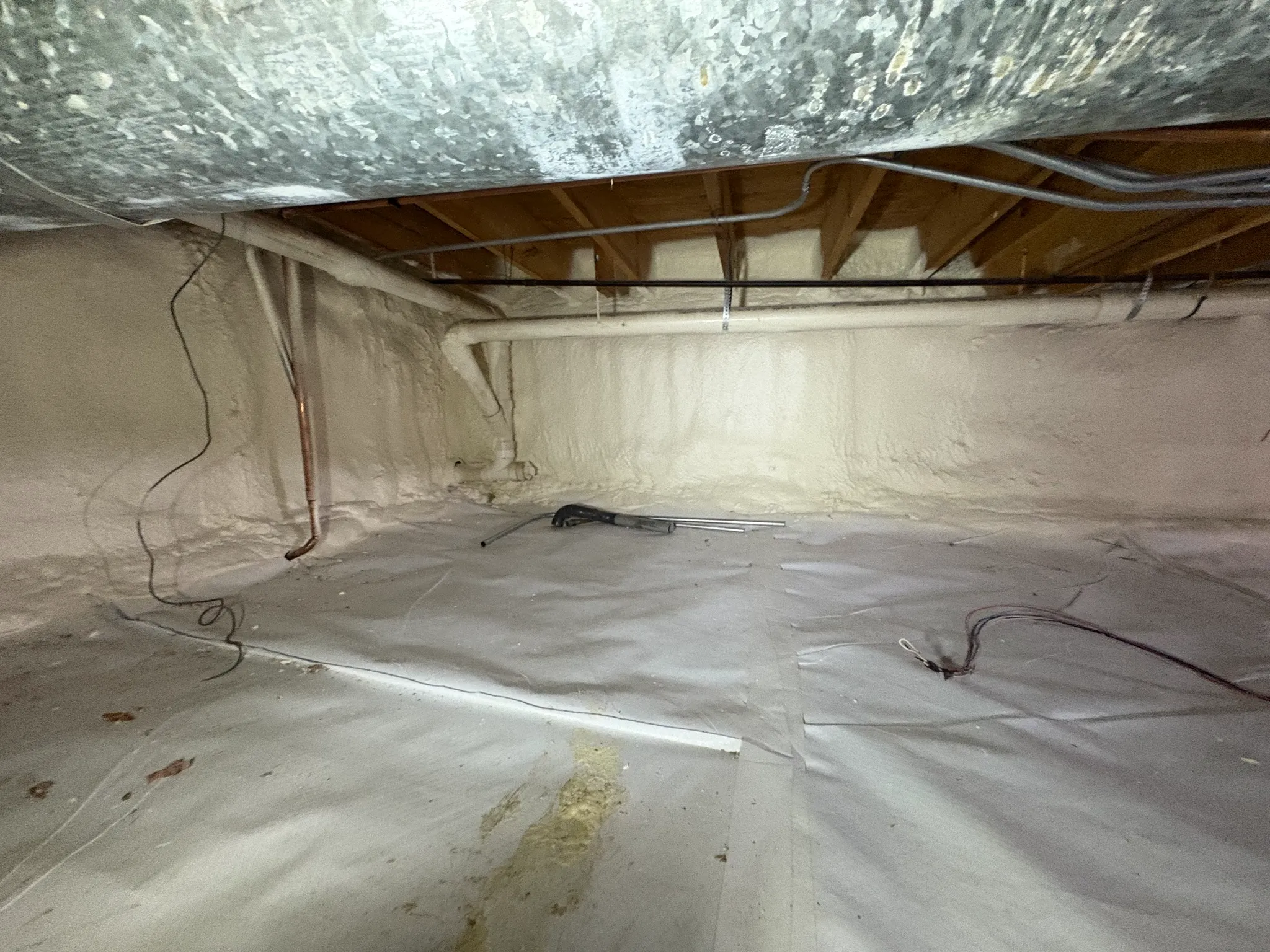
Closed-cell spray foam applied directly to metal panels provides air sealing, vapor retardation, and condensation control in a single application
Fiberglass batts with vinyl facing work for conditioned spaces but rely on proper vapor barrier installation and may sag over time
Ignoring condensation leads to structural damage, mold growth, corrosion of metal components, and ruined stored contents
Proper ventilation must accompany insulation to allow moisture escape without creating new condensation paths
Why Condensation Is the Biggest Threat to Uninsulated Pole Barns in Park Ridge
Pole barns and post-frame buildings are popular in the Park Ridge area because they are affordable, fast to build, and versatile enough to serve as workshops, storage buildings, agricultural shelters, and even finished living spaces. The problem is that most pole barns are built with exposed metal roofing and steel siding. Pole barn insulation helps address this issue by reducing heat transfer and helping maintain more stable interior surface temperatures. Metal is an excellent conductor of heat, which means in winter, the interior surface of your roof panels can drop well below the temperature of the air inside the building.
When warm air from a heater, vehicle exhaust, or even body heat rises and carries moisture with it, that vapor hits the cold metal and immediately condenses into liquid water. Condensation in building construction is recognized as a major cause of dampness, mold, wood rot, corrosion, and energy loss. In an uninsulated pole barn, this cycle repeats every time the temperature difference between inside and outside is large enough, which in a Zone 5 winter means it happens regularly from November through March.
The damage compounds quickly. Water dripping from trusses soaks into fiberglass blanket insulation if any exists, reducing its effectiveness. It pools on concrete floors, creating slip hazards and promoting mold growth. It corrodes metal fasteners, tools, and equipment stored below. It saturates wood framing members, leading to rot and structural weakening over time.
How Insulation Actually Stops Condensation
The mechanics are straightforward. Condensation occurs when water vapor is cooled to its dew point, the temperature at which the air can no longer hold all of its moisture. Insulation addresses this problem in two ways.
First, it creates a thermal break between the cold exterior metal and the warm interior air. When spray foam or fiberglass batts are installed against the metal panels, the interior surface of the insulation stays closer to the room temperature. Since the interior surface never drops low enough to reach the dew point, condensation never forms on it.
Second, the right insulation acts as a vapor retarder and air barrier, preventing moist indoor air from reaching the cold metal in the first place. According to the Building Science Corporation’s Residential Spray Foam Guide, spray foam is unique in its ability to provide continuity of the water control, air control, vapor control, and thermal control layers all at once. This is especially important in Climate Zone 5, where high-density closed-cell spray foam is recommended for condensation control and qualifies as a Class II vapor retarder.
The Building Science Corporation further notes that in IECC Climate Zones 5 and higher, only high-density closed-cell spray foam should be used in unvented roof assemblies. This is because it is difficult and impractical to install an effective vapor control layer over low-density open-cell foam, which has limited success with vapor retarder paints.
Insulation Options for Pole Barn Condensation Control
Not all insulation approaches work equally well for pole barns. The choice depends on your budget, building use, and whether the space will be heated or cooled.
Insulation Type
How It Controls Condensation
Best Applications
Key Limitation
Closed-cell spray foam
Air barrier, vapor retarder, and thermal break in one layer; rated R-6.5 per inch
Roof and walls of conditioned or semi-conditioned pole barns
Higher material cost; requires professional installation
Open cell spray foam
Air barrier and thermal insulation; needs separate vapor retarder
Wall cavities in conjunction with a separate vapor control layer
Not recommended alone for roofs in Climate Zone 5
Fiberglass batts with vinyl facing
Thermal insulation with built-in vapor retarder facing
Conditioned spaces with proper framing and bookshelf girts
Can sag, tear, or lose vapor barrier integrity over time
Radiant barrier / reflective insulation
Reflects radiant heat; reduces temperature differential at metal surface
Unconditioned storage buildings in hot climates
Limited effectiveness for winter condensation in cold climates
Why Closed Cell Spray Foam Leads for Zone 5 Pole Barns
For Park Ridge buildings that need reliable condensation control, closed cell spray foam is the most effective single solution. At 1.5 inches of thickness, it delivers an R-value of approximately R-9.75, provides a Class II vapor retarder rated at less than 1.0 perm, and seals every gap, crack, and fastener penetration that would otherwise allow moist air to reach the metal. The Building Science Corporation specifies that high-density closed-cell spray foam meets code requirements for both condensation control and vapor retardation in IECC Climate Zones 5 through 8.
Our team applies closed-cell spray foam directly to the underside of metal roof panels and wall steel, which eliminates the thermal bridge that metal creates and prevents the “raining inside” effect that plagues so many uninsulated pole barns in the area.
When Fiberglass Makes Sense
For pole barns that will be fully finished and climate-controlled with drywall or liner panel, fiberglass batts with a vinyl facing offer a lower-cost insulation path. The vinyl facing acts as a vapor retarder, and the fiberglass provides thermal resistance. This approach works when the building has bookshelf girts or other framing that creates a cavity for the batts to sit in, while contractor ratings can help property owners compare local insulation professionals before selecting a team for the installation.
The Role of Ventilation in a Complete Condensation Strategy
Insulation alone does not solve every condensation problem. In fact, a tightly insulated building without ventilation can trap moisture inside, creating a different set of problems. Building insulation research shows that high humidity combined with low airflow causes condensation and mold growth even in insulated structures.
For pole barns, ventilation considerations include:
Ridge vents and soffit vents that allow warm, moist air to escape at the peak while drawing drier air in at the eaves
Gable end vents or powered exhaust fans for buildings with low roof pitch where ridge ventilation is less effective
Mechanical ventilation for conditioned spaces where occupancy, heating equipment, or stored materials generate significant moisture
The key principle is that insulation controls where condensation can form, while ventilation controls how much moisture is in the air to begin with. Both are needed for long-term protection.
Pole Barn Insulation Investment in Park Ridge
Based on our project data, pole barn insulation in the Park Ridge area involves the following typical investment ranges:
Project Size
Typical Low
Typical Average
Typical High
Pole barn insulation
$8,000
$14,000
$22,000
Factors that increase pricing include difficult access, steep roof pitch, removal of old or damaged insulation, and larger square footage. Projects where the building owner preps the area to be sprayed can help reduce the overall investment.
What to Look for in a Pole Barn Insulation Contractor
Choosing the right team matters as much as choosing the right material. Here are the indicators that you are working with experienced professionals:
Specific discussion of dew point and Climate Zone 5 requirements, not just R-value sales pitches
Detailed explanation of vapor retarder placement relative to your building’s specific use and heating strategy
Willingness to assess ventilation needs alongside insulation recommendations
Transparent pricing that accounts for access difficulty and building conditions
References from similar pole barn projects in cold climate zones
Our professionals evaluate every pole barn individually, considering the building’s construction, intended use, existing ventilation, and exposure conditions before recommending an insulation approach.
Get Expert Pole Barn Insulation in Park Ridge
South Chicago Insulation provides professional pole barn insulation services throughout Park Ridge and the surrounding area, with deep experience in condensation control for post-frame and metal buildings in IECC Climate Zone 5. Whether you are dealing with dripping roof panels, rust on stored equipment, or planning a new build that needs to be done right from the start, our team can assess your building and recommend the most effective insulation strategy for your situation.
Reach us at [email protected] or call (779) 803-8025 to get started. We will walk through your building, identify the specific condensation risks, and provide a clear plan to protect your investment for years to come.
Frequently Asked Questions
What causes condensation inside a pole barn?
Condensation happens when warm, moisture-laden indoor air contacts a cold metal roof or wall panels, causing the water vapor to convert to liquid droplets that drip onto surfaces below.
Can I insulate my pole barn myself to stop condensation?
Fiberglass batts can be a DIY option for framed cavities with proper vapor retarder installation, but spray foam requires professional equipment and training for correct application and condensation control.
Does pole barn insulation need a vapor barrier?
Yes. In Climate Zone 5, a Class II vapor retarder is required for condensation control. Closed-cell spray foam provides this inherently, while fiberglass systems need a separate vapor retarder facing or membrane.
How long does pole barn insulation last?
Spray foam insulation can last the lifetime of the building when properly installed. Fiberglass batts may degrade, sag, or lose vapor barrier effectiveness after 15 to 25 years if not protected by an interior finish.
Will insulation alone stop all condensation in my pole barn?
Insulation addresses the temperature and vapor drive that causes condensation, but adequate ventilation is also needed to manage moisture from occupancy, heating systems, and stored materials for complete protection.
Sources
Building Science Corporation – Residential Spray Foam Guide – Comprehensive technical guide on spray foam insulation applications, including condensation control requirements for IECC Climate Zones 5 through 8 and Class II vapor retarder specifications.
Wikipedia – Building Insulation – Reference covering thermal insulation principles, condensation prevention through surface temperature management, and the relationship between insulation, vapor barriers, and moisture control in buildings.
Wikipedia – Condensation – Overview of the condensation process, including causes of infrastructure condensation in buildings, thermal bridges, and the role of insufficient insulation in moisture damage.
Wikipedia – International Energy Conservation Code – Reference for IECC climate zone definitions, confirming that northeastern Illinois, including Park Ridge, falls within Climate Zone 5 where specific insulation and condensation control requirements apply.
I’m Bob Gasca, with over 16 years of spray foam experience and training that began in 2007. South Chicago Insulation, LLC was established in January 1984, bringing more than four decades of experience in the insulation industry. I’m a certified Spray Foam Master Installer, SPFA member, and Spray Foam Worldwide Ambassador specializing in moisture and air infiltration solutions.