What Are the Signs That a Property in Park Ridge, IL Has Inadequate Insulation Coverage?
Bob Gasca
August 25th, 2026
The most reliable way to tell if a Park Ridge property lacks sufficient insulation is by observing a combination of comfort problems, visual evidence, and structural warning signs that point directly to heat loss through the building envelope. Park Ridge sits in northern Illinois, placing it in Climate Zone 5, where homes need attic insulation rated at R-49 to R-60 for retrofit projects. Many properties in this area were built well before modern energy codes took effect, and the State of Illinois notes that homes constructed prior to 1970 typically have little or no insulation at all. Homeowners dealing with older or under-insulated properties can use this complete insulation guide to evaluate insulation types, R-value requirements, installation methods, and retrofit considerations. The signs of inadequate coverage generally fall into three categories: comfort and energy indicators, visible material deterioration, and seasonal structural effects like ice dams. Recognizing these signs early allows you to address insulation gaps before they lead to higher energy costs or moisture damage.
TL;DR
Park Ridge falls in Climate Zone 5, where recommended attic insulation for existing homes is R-49 to R-60, yet many older local properties fall far below that standard
Homes built before 1970 in the Park Ridge area are especially likely to have little or no insulation in walls, attics, and crawlspaces
Uneven temperatures between rooms, cold walls and floors, and rising heating bills are the most common early-warning signs
Ice dams along roof eaves after snowfall are a direct indicator that attic insulation and air sealing are insufficient
Dirty, discolored, or compressed insulation in the attic signals that air is passing through it, reducing effectiveness
A professional energy audit using blower door testing and infrared imaging is the most thorough way to confirm insulation gaps
Attic insulation projects for Park Ridge homes typically range from $5,000 to $10,000, depending on square footage and existing conditions
Addressing air sealing before adding insulation is essential, since insulation alone does not block air movement
Why Park Ridge Properties Are Especially Vulnerable
Park Ridge has a substantial housing stock dating back to the early and mid-20th century. The State of Illinois guidance explicitly states that homes built before 1970 are prime targets for insulation upgrades because they were constructed with little to no thermal protection. At the time these properties were built, energy was inexpensive and building codes did not require meaningful insulation levels. The state recommends R-43 for attics, R-13 for existing walls, and R-21 for floors over unconditioned spaces in this region, but many Park Ridge homes can benefit from professional insulation services when they have only a few inches of aged material, or nothing at all.
The EPA’s Region 5 office, which covers Illinois, advises that older homes often contain surprising materials in wall cavities, from corn cobs to newspaper, and that adding modern insulation without first understanding how the house functions as a system can cause moisture problems. This matters in Park Ridge because the cold, wet winters create conditions where any gap in the thermal envelope invites both heat loss and condensation.
The Comfort and Energy Bill Red Flags
The first signs most Park Ridge homeowners notice are comfort-related. These are often gradual enough to dismiss as normal, but they consistently trace back to inadequate insulation coverage.
Uneven temperatures room to room. If one bedroom stays comfortable while a room above the garage or an addition always feels cold, the issue is almost always insulation rather than the heating system. Different parts of the house lose heat at different rates depending on how well each area is insulated.
Cold walls, floors, and ceilings. In a properly insulated home, interior surfaces should feel close to room temperature. If exterior walls, ceilings under unconditioned attic spaces, or floors above crawlspaces feel noticeably cold to the touch, heat is escaping through those surfaces. The Illinois insulation guide identifies floors above unheated spaces, band joists, and attic hatches as common weak points.
High and climbing energy bills. When insulation is insufficient, your heating system runs longer and more frequently to compensate. Comparing winter utility bills year over year is one of the clearest ways to spot a growing problem, especially if your usage habits have not changed.
HVAC system running constantly. A furnace or air conditioner that seems to never cycle off is working overtime to compensate for heat gain or loss through under-insulated walls, ceilings, and foundations. The EPA notes that upgrading insulation and air sealing should be completed before considering HVAC replacement, since these measures reduce the heating and cooling load and can allow a smaller, less costly system.
Sign
What It Indicates
Where to Check
Uneven room temperatures
Gaps or missing insulation in specific zones
Rooms over garages, additions, upper floors
Cold walls or floors
Heat conducting through uninsulated surfaces
Exterior walls, floors above crawlspaces
Rising heating bills
System working harder to compensate
Compare 12-month utility history
HVAC runs nonstop
Total building envelope heat loss
Attic, walls, basement rim joist
Drafts near windows and outlets
Air bypasses around insulation
Attic floor penetrations, rim joist, window frames
Visual and Physical Evidence in the Attic
The attic is the single most important area to inspect, and it is usually the most accessible. Many of the clearest signs of inadequate insulation coverage show up here.
Low or settled insulation depth. In Climate Zone 5, fiberglass batts should be roughly 10 to 14 inches deep to reach the recommended R-49 level for a retrofit. If you can see the ceiling joists through the insulation, the coverage is almost certainly below current standards.
Dirty or discolored insulation. The ENERGY STAR that air is passing through it. Insulation is not an air barrier by itself, and where you see darkened, gray, or dusty material, conditioned air from below is leaking into the attic around plumbing stacks, electrical penetrations, recessed lights, and chimney chases.
Compressed or damaged material. Insulation that has been walked on, stored on, or compressed by boxes loses its effective R-value. Fiberglass and mineral wool rely on trapped air pockets for thermal resistance, and compression eliminates those pockets.
Gaps, voids, and missing coverage. Missing insulation around attic hatches, over exterior wall top plates, and near eaves are especially common. The State of Illinois guide warns that insulation should never be jammed against the roofline at the eaves, since this blocks soffit ventilation and can create the cold spots that contribute to ice damming.
Ice Dams and Winter Structural Warning Signs
Few signs are as visible and damaging as ice dams, and they have a direct, well-documented connection to inadequate attic insulation. According to the Building America Solution Center, ice dam formation requires three conditions: snow on the roof, a poorly air-sealed or poorly insulated attic, and freezing temperatures. When heated air from the living space escapes into the attic, it warms the underside of the roof deck, melting snow that then refreezes at the cold eaves.
The National Weather Service confirms that attic insulation should reach at least R-30, with R-38 being preferable in northern climates like Park Ridge. They also note that good soffit-to-ridge airflow is necessary to keep the attic temperature cold enough to prevent the melt-freeze cycle.
Signs that insulation-related ice dams are forming or have formed include:
Icicles hanging from roof edges after snowfall, especially large or uneven formations
Water stains on ceilings or walls beneath the eaves, indicating water has backed up under shingles
Bare spots on the roof surrounded by snow, showing where heat from below is melting the snowpack
Ice buildup in gutters that prevents normal drainage
Moisture, Mold, and Pest Activity
Inadequate insulation coverage creates temperature differentials that lead to condensation, and condensation leads to a range of secondary problems.
Mold or mildew on walls and ceilings. Where warm indoor air meets cold surfaces, moisture condenses. In poorly insulated wall cavities and attic spaces, this creates conditions for mold growth that can affect indoor air quality and damage building materials.
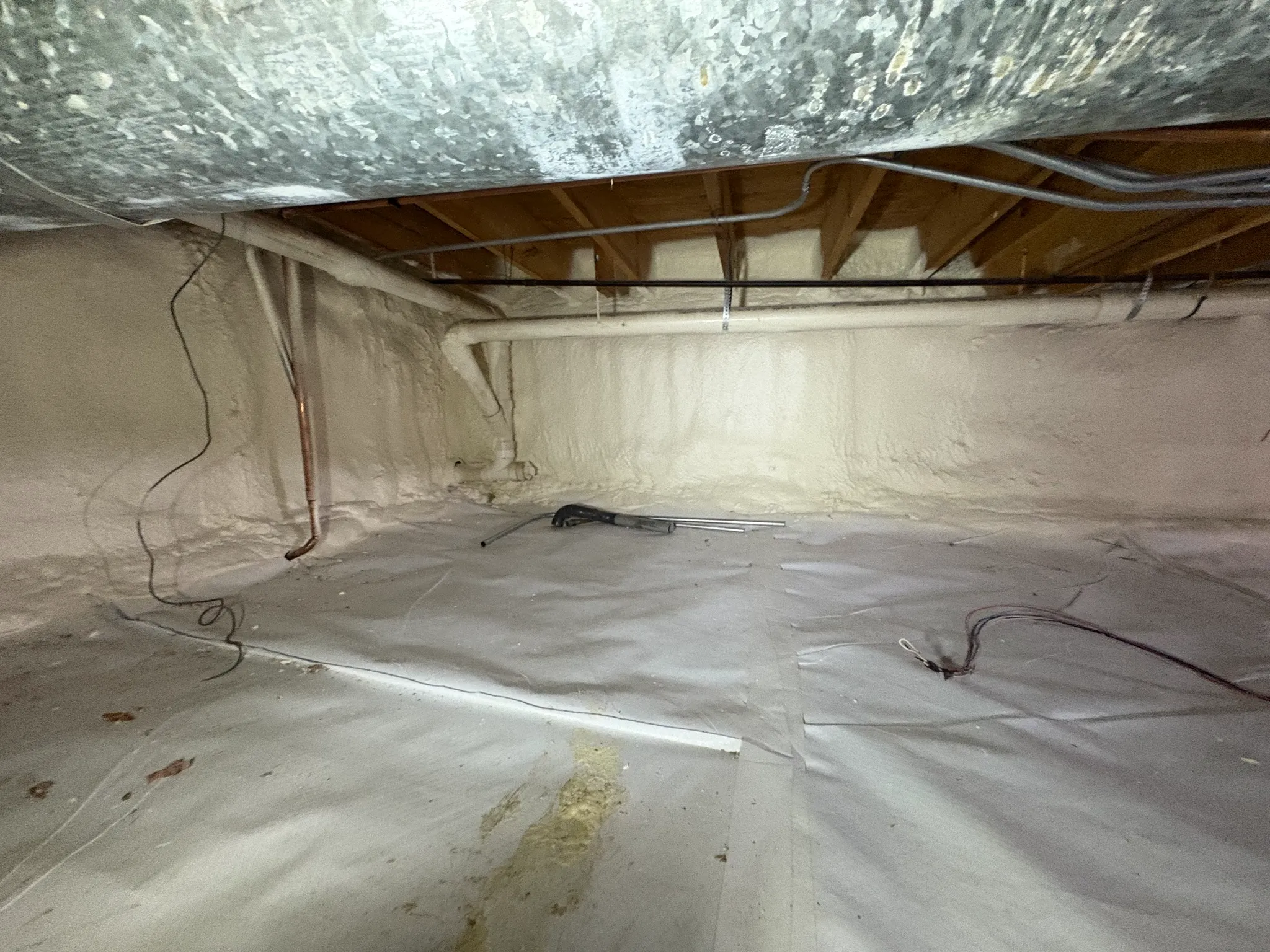
Damp or musty smell in crawlspaces and basements. Uninsulated crawlspaces and basement rim joists allow cold outside air to meet warm interior surfaces, causing condensation that promotes mold and wood rot.
Pest activity in insulation. Gaps, voids, and deteriorated insulation provide nesting spaces for rodents and insects. If you notice droppings, chewed material, or tunneling through insulation in the attic or crawlspace, the insulation has been compromised and is no longer providing effective thermal resistance.
How to Confirm Insulation Gaps in Your Park Ridge Property
A visual inspection of accessible areas like the attic, crawlspace, and basement rim joist can reveal obvious problems. However, many of the most significant insulation gaps are hidden inside finished walls and enclosed cavities.
The EPA recommends a professional energy audit as the most comprehensive method for identifying insulation problems. A thorough audit typically includes a blower door test, which depressurizes the home to locate air leaks, and infrared imaging, which detects temperature anomalies behind walls and ceilings. The auditor should provide a prioritized roadmap of improvements based on where the home is losing the most energy.
For Park Ridge homeowners, the audit should specifically evaluate whether the attic meets the R-49 to R-60 standard for Climate Zone 5, whether air sealing has been completed at the attic floor plane, and whether the basement rim joist and crawlspace have adequate coverage.
What to Do Once You Spot the Signs
Confirming inadequate insulation coverage is only the first step. The State of Illinois guide emphasizes that three things must happen before insulation is added: providing controlled fresh air ventilation, sealing all uncontrolled air leaks in the thermal envelope, and preventing moisture accumulation with proper vapor retarders. Adding insulation over air leaks without sealing them first traps moisture and reduces the effectiveness of the new material.
Priority areas for Park Ridge homes typically include the attic floor, basement or crawlspace walls, rim joist cavities, and any floors over unheated garages or storage areas. Attic insulation projects generally represent the highest return on investment since heat rises and the attic is often the largest single source of energy loss.
Signs You Have Found the Right Insulation Contractor
Choosing the right team to assess and correct insulation problems in your Park Ridge property matters as much as identifying the signs themselves. Look for a contractor who performs a thorough inspection of the entire building envelope rather than quoting a single area in isolation. A strong contractor will explain the relationship between air sealing and insulation, identify specific problem areas with evidence you can see, and recommend a prioritized plan rather than pushing for every possible upgrade at once. They should also understand the specific challenges of older homes in northern Illinois, including knob-and-tube wiring concerns, moisture management, and maintaining proper attic ventilation. For homeowners comparing local options, A Park Ridge insulation professional can provide the type of property-specific assessment these projects require.
Get a Professional Assessment for Your Park Ridge Property
South Chicago Insulation provides detailed insulation evaluations and installation services for homeowners throughout the Park Ridge area. Our team assesses every part of your building envelope, from the attic down to the crawlspace, and recommends targeted solutions based on your home’s specific conditions and the demands of Climate Zone 5. Call us at (779) 803-8025 or email [email protected]. We help Park Ridge homeowners stop heat loss, prevent ice dams, and make their homes comfortable year-round.
FAQs
How do I know if my Park Ridge home’s attic insulation meets current standards?
Measure the depth of existing insulation. In Climate Zone 5, you need roughly 14 to 17 inches of fiberglass batts or blown-in material to reach R-49 to R-60. If joists are visible, coverage is likely below standard.
Can ice dams form even if my attic has some insulation?
Yes. The Building America Solution Center notes that ice dams form when the attic is both poorly air-sealed and poorly insulated. Even moderate insulation levels can fail if warm air is leaking past it through unsealed penetrations.
Is it worth insulating walls in an older Park Ridge home?
The EPA advises completing attic insulation, air sealing, and HVAC tuning before considering wall insulation, since those steps often resolve comfort issues at lower cost and lower risk to the structure.
What does dirty insulation in my attic mean?
Discolored or dusty insulation indicates that air is passing through it from the living space below. The EPA identifies this as a sign of unsealed air bypasses around plumbing, wiring, and other penetrations in the attic floor.
Do I need to air seal before adding insulation?
Yes. The State of Illinois guide states that all uncontrolled air leaks should be sealed before insulation is added, since insulation by itself is not an air barrier and trapped air movement reduces effectiveness.
National Weather Service – Preventing Roof Ice Dams – Federal guidance on ice dam formation, recommended attic R-values for northern climates, and the relationship between insulation, ventilation, and roof temperature.
State of Illinois – Insulation Guide – State-published guidance on recommended R-values for the region, the thermal envelope system, and the specific risks of insulating older homes without proper air sealing and moisture control.
I’m Bob Gasca, with over 16 years of spray foam experience and training that began in 2007. South Chicago Insulation, LLC was established in January 1984, bringing more than four decades of experience in the insulation industry. I’m a certified Spray Foam Master Installer, SPFA member, and Spray Foam Worldwide Ambassador specializing in moisture and air infiltration solutions.