Can Commercial Roof Coatings Help Extend Roof Life and Reduce Maintenance in Addison, IL?
Bob Gasca
August 24th, 2026
Yes. Commercial roof coatings can meaningfully extend the life of an existing roof system and lower ongoing maintenance demands, particularly in a climate like Addison, IL, where seasonal temperature swings and winter freeze-thaw cycles accelerate membrane deterioration. Field-applied reflective coatings create a seamless, monolithic protective layer over the existing substrate, shielding it from UV radiation, thermal cycling, and moisture intrusion. According to research documented on Wikipedia’s roof coating entry, these coatings can add up to 25 years to a roof’s service life when properly installed. The right coating type, substrate condition, and application quality all factor into actual results, making commercial roof coating options an important consideration for structurally sound flat or low-slope roofs in Addison. Coatings represent one of the most cost-effective life-extension strategies available.
TL;DR
Commercial roof coatings are fluid-applied, fully adhered membranes that form a seamless protective layer over existing roofing substrates.
Reflective cool roof coatings can reduce rooftop surface temperatures by over 50°F compared to uncoated dark surfaces, directly reducing thermal degradation.
Studies show cool roofs can deliver up to 15% savings in annual air-conditioning energy use for single-story commercial buildings.
The Chicago/Detroit region, which includes Addison, experiences urban-induced warming of 1 to 3°C, which cool roof deployment can help offset.
Common coating types include acrylic, silicone, polyurethane, and elastomeric formulations, each suited to different substrates and conditions.
Coatings require proper surface preparation and are not a fix for structurally compromised roofs or chronic ponding water issues.
The Cool Roof Rating Council (CRRC) provides verified solar reflectance and thermal emittance ratings for hundreds of roofing products.
Addison’s freeze-thaw climate makes UV protection and thermal cycling resistance especially valuable for long-term roof performance.
Why Roof Coatings Matter for Addison’s Climate
Addison sits in northeastern Illinois, squarely within the Chicago metropolitan area. This region experiences hot summers with peak temperatures regularly exceeding 90°F, cold winters with sub-freezing stretches, and significant temperature fluctuations between day and night across seasons. These conditions are hard on commercial roofing.
Research published in Proceedings of the National Academy of Sciences found that the Chicago/Detroit megapolitan region experiences urban-induced near-surface warming in the range of 1 to over 3°C during summer months, with commercial and industrial roof surfaces absorbing and re-radiating much of that heat. In a mixed climate like ours, roofs endure constant thermal expansion and contraction. Each cycle stresses seams, flashings, and membrane materials. Over years, this thermal cycling is one of the primary drivers of cracking, blistering, and adhesive failure.
A roof coating interrupts this cycle by reflecting a significant portion of solar radiation before it can be absorbed into the membrane. The Lawrence Berkeley National Laboratory Heat Island Group reports that a clean white roof reflecting 80% of sunlight stays approximately 31°C (55°F) cooler than a gray roof reflecting only 20%. This temperature reduction directly translates to less thermal stress on the underlying materials.
How Roof Coatings Extend Roof Life
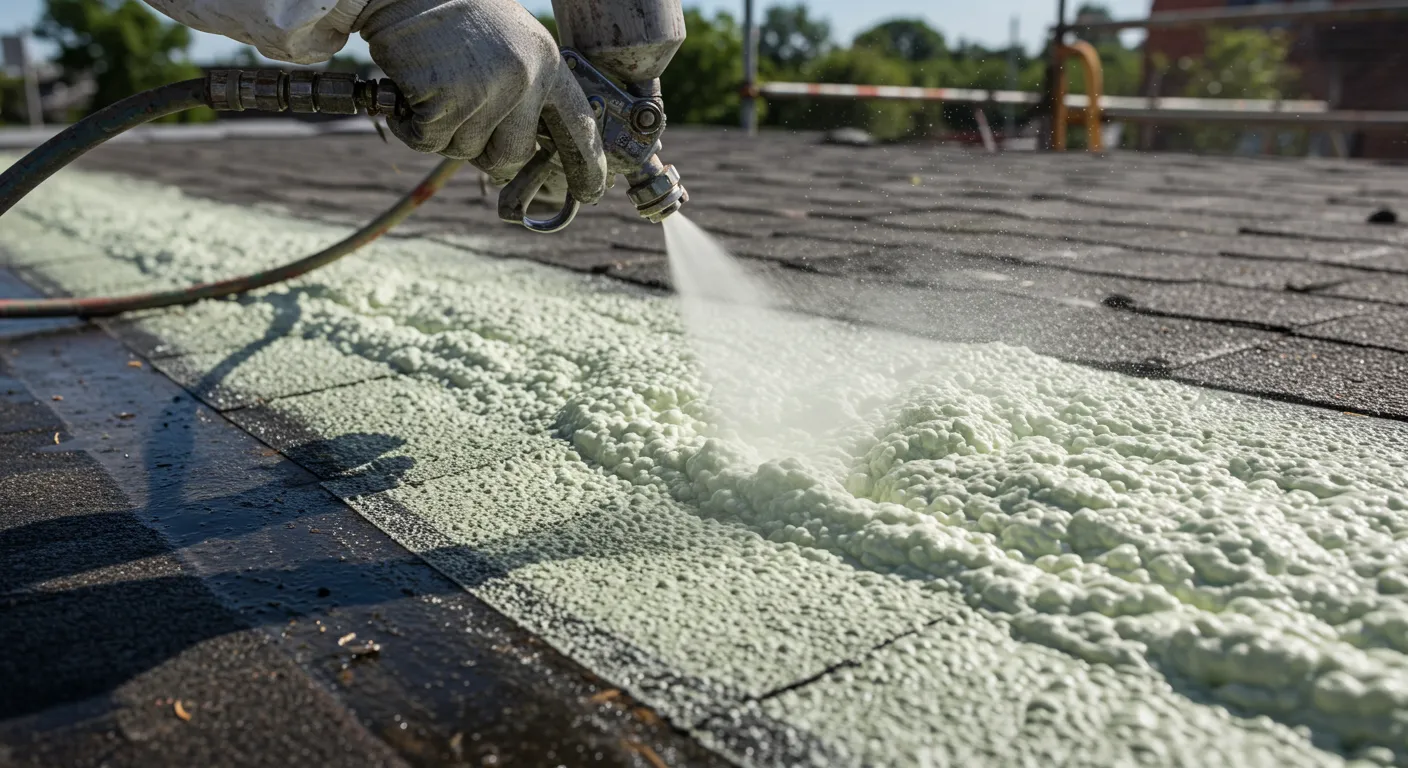
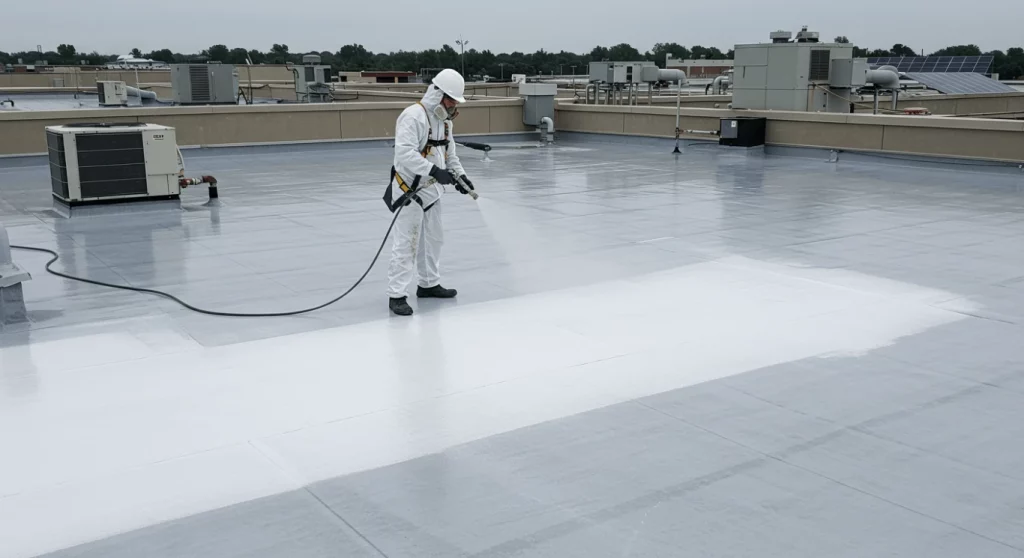
A roof coating is not paint. It is a monolithic, fully adhered membrane applied in liquid form that cures into the topmost protective layer of the roof assembly. Once cured, it becomes the first line of defense against sunlight (both infrared and ultraviolet), rain, hail, and physical traffic, making commercial roof coatings an effective option for protecting existing commercial roofing systems.
The life extension mechanism works on several fronts:
UV and infrared shielding: The coating absorbs or reflects solar radiation that would otherwise break down the underlying membrane through photo-oxidation. UV damage is a leading cause of premature roof failure on exposed commercial roofs.
Reduced thermal cycling: By keeping the roof surface cooler during summer days, coatings minimize the daily expansion and contraction that fatigue seams and flashings over time.
Moisture resistance: Seamless coatings eliminate the joints, laps, and fastener penetrations that are common leak paths on conventional single-ply and built-up roofs.
Weatherproofing: Coatings provide a sacrificial layer that takes the impact of hail, foot traffic, and airborne debris before the primary membrane does.
For flat and low-slope commercial roofs, which make up the majority of Addison’s warehouse, retail, and industrial building stock, this combination of protections can defer a full tear-off and replacement by a decade or more. That deferral has direct implications for capital budgets and operational continuity.
Types of Commercial Roof Coatings
Not all coatings perform the same way, and matching the coating chemistry to the existing substrate is essential. The primary material types used in commercial roof coatings include acrylics, silicones, polyurethanes, and butyl-based formulations.
Coating Type
Best For
Key Properties
Limitations
Acrylic
TPO, modified bitumen, aged BUR
High reflectivity, easy application, good UV resistance
Not suited for ponding water; can lose elasticity in cold
Silicone
EPDM, TPO, metal, sprayed polyurethane foam
Excellent water resistance, handles ponding water, maintains reflectivity
Can attract dirt; difficult to recoat; higher material cost
Polyurethane
Metal roofs, high-traffic roofs
Superior abrasion resistance, excellent adhesion
Sensitive to moisture during application; requires dry conditions
Butyl / Asphaltic
Built-up roofs, modified bitumen
Good adhesion to asphalt substrates, lower reflectivity
Dark color limits cool roof benefits; shorter lifespan than elastomerics
Acrylic elastomeric coatings are the most widely used for cool roof applications because of their high solar reflectance and low cost per square foot. Silicone coatings excel in situations where ponding water cannot be fully eliminated through drainage improvements, since silicone maintains its integrity under standing water in ways acrylic typically does not.
The Cool Roof Rating Council maintains a directory of rated products and standards that verify the solar reflectance and thermal emittance values of coatings. When evaluating products, checking the CRRC directory ensures that the coating’s stated reflectivity has been independently tested and rated under the ANSI/CRRC S100 standard.
Energy Savings and Operational Benefits
Beyond maintenance reduction, cool roof coatings deliver measurable energy savings. The Wikipedia cool roof reference documents that cool roofs can save up to 15% of the annual air-conditioning energy use for single-story commercial buildings. On a large warehouse or distribution center in Addison, this translates to lower utility bills and reduced demand charges during peak summer afternoons.
The mechanism is straightforward. Less heat penetrating the roof means less work for the HVAC system. In a commercial building with rooftop air-handling units, cooler roof surfaces also mean the units operate more efficiently because they are drawing intake air from a cooler environment rather than the superheated air sitting above a dark roof, while local project feedback can help businesses evaluate insulation contractors based on previous customer experiences.
Additional operational benefits include:
Reduced HVAC maintenance: Less cooling load means fewer compressor run hours and longer equipment life.
Improved interior comfort: For buildings without central air conditioning, such as some warehouses and storage facilities, a cooler roof surface directly lowers indoor air temperatures.
Lower peak demand charges: Reduced cooling during the hottest hours of summer days can lower a building’s peak electrical demand, which is often a separate and significant charge on commercial utility bills.
It is worth noting that in Addison’s cold winters, a reflective roof may slightly increase heating costs by reflecting solar heat that could otherwise warm the building. However, LBNL’s research demonstrates that in most of the United States, including the Chicago area, the summer cooling savings outweigh the winter heating penalty. In practice, winter heating impact is also minimal because Addison roofs are often snow-covered during the coldest months, at which point the roof color is irrelevant.
What Coatings Cannot Fix?
Roof coatings are a powerful maintenance and life-extension tool, but they are not a solution for every roofing problem. Understanding their limitations helps building owners and facility managers avoid costly mistakes.
Structural damage: If the roof deck has significant deflection, rot, or structural failure, a coating will not address the underlying problem. Structural issues must be resolved first.
Chronic ponding water: While some silicone coatings are rated for ponding water, standing water is generally a drainage problem that should be corrected. Most acrylic coatings will degrade prematurely if subjected to constant ponding.
Wet insulation: If moisture has infiltrated the roof insulation, applying a coating over it can trap the moisture and accelerate substrate deterioration. Moisture surveys should precede any coating application on older roofs.
Asphalt shingle roofs: The EPA and industry guidelines note that applying reflective coatings over asphalt shingles can inhibit normal drying after rain or dew, potentially causing moisture problems and water damage beneath the shingles. Coatings are best suited for flat and low-slope membrane roofs common on commercial buildings.
Choosing the Right Approach for Your Addison Commercial Building
The best coating strategy depends on the building type, existing roof substrate, budget, and performance goals. Here is a framework for common Addison commercial scenarios:
Building Type / Context
Recommended Coating Approach
Key Considerations
Warehouse / Distribution Center
Silicone or acrylic elastomeric over TPO or metal
Prioritize reflectivity and ponding tolerance; large roof area means energy savings scale
Retail Strip Mall
Acrylic elastomeric over modified bitumen
Lower cost per square foot; good UV protection for aging BUR systems
Office Building (low-rise)
Silicone or polyurethane over existing membrane
Consider appearance and LEED certification potential; CRRC-rated products for green building credits
Industrial / Manufacturing
Polyurethane over metal
Prioritize foot traffic resistance and durability; match coating to metal substrate profile
Multi-tenant Commercial
Acrylic with reinforced fabric at seams
Balance budget with performance; fabric reinforcement at transitions extends coating life
Signs You Have Found the Right Roof Coating Contractor
Choosing the right installer matters as much as choosing the right coating. Here are indicators that a contractor is qualified to handle your Addison commercial roof coating project:
They conduct a thorough inspection before quoting: A qualified contractor will not quote a price without first evaluating substrate condition, drainage, moisture levels, and structural integrity.
They specify CRRC-rated products: Using independently rated and verified coatings shows the contractor prioritizes measurable performance over unverified claims.
They explain coating limitations honestly: If the contractor points out existing ponding water, wet insulation, or other issues that should be addressed before coating, that is a sign of professionalism.
They provide surface preparation details: Proper cleaning, priming, and seam repair are non-negotiable for coating performance. A contractor who skips or glosses over these steps is cutting corners.
They offer maintenance guidance post-application: Coatings perform best with periodic inspections and cleaning. A strong contractor will outline a simple maintenance schedule to protect your investment.
Get a Professional Roof Assessment for Your Addison Commercial Building
South Chicago Insulation provides expert commercial roof coating services for building owners and facility managers throughout the Addison, IL area. Our team evaluates your existing roof substrate, identifies the right coating system for your building type and performance goals, and applies coatings that deliver lasting protection, lower energy costs, and reduced maintenance demands. We work with CRRC-rated products and follow manufacturer specifications to ensure every coating application performs as designed.
Most commercial roof coatings last 10 to 20 years depending on the coating type, substrate condition, and maintenance. Acrylic coatings typically last 10 to 15 years, while silicone coatings can last 15 to 20 years. Proper maintenance and periodic inspections help maximize service life.
Can a roof coating be applied over an existing leaky roof?
Coatings can seal minor leaks and waterproof seams when properly applied, but they should not be used to mask underlying structural or moisture problems. Any wet insulation, significant membrane damage, or structural issues must be resolved before coating application.
Do roof coatings qualify for energy incentives or rebates?
Some utility programs and building certification systems (such as LEED) offer credits or incentives for cool roof installations. The CRRC directory lists products that meet certification requirements. Check with your local utility provider and building code consultant for Addison-specific programs.
Will a reflective roof coating make my building too cold in winter?
In Addison’s climate, the summer cooling savings from a reflective coating typically exceed any winter heating penalty. During winter months, snow cover on the roof naturally reflects sunlight regardless of coating color, and shorter daylight hours limit solar heat gain.
How soon can a coated roof be walked on after application?
Most roof coatings can handle light foot traffic within 24 to 48 hours after application, but full cure times vary by product. Your contractor should provide specific guidance based on the coating system used and expected traffic levels on your roof.
Sources
Wikipedia – Roof Coating – Comprehensive overview of roof coating types, benefits, application methods, and limitations, including life extension data and temperature reduction measurements.
Wikipedia – Reflective Surfaces / Cool Roofs – Detailed reference on cool roof science, energy savings up to 15%, urban heat island mitigation, certification standards (ENERGY STAR, LEED, Green Globes), and climate-specific performance data.
Lawrence Berkeley National Laboratory – Heat Island Group: Cool Roofs – U.S. Department of Energy national laboratory research on cool roof benefits, solar reflectance and thermal emittance science, temperature reduction data (31°C cooler white vs. gray roofs), and winter heating penalty analysis.
Cool Roof Rating Council (CRRC) – Resources – Nonprofit organization providing ANSI/CRRC S100 rating standards for solar reflectance and thermal emittance, product directories, codes, and financial incentive information.
I’m Bob Gasca, with over 16 years of spray foam experience and training that began in 2007. South Chicago Insulation, LLC was established in January 1984, bringing more than four decades of experience in the insulation industry. I’m a certified Spray Foam Master Installer, SPFA member, and Spray Foam Worldwide Ambassador specializing in moisture and air infiltration solutions.