Air Sealing with Attic Insulation: What to Seal Before You Insulate
Air sealing with attic insulation means closing every gap between your living space and attic first, then adding insulation on…


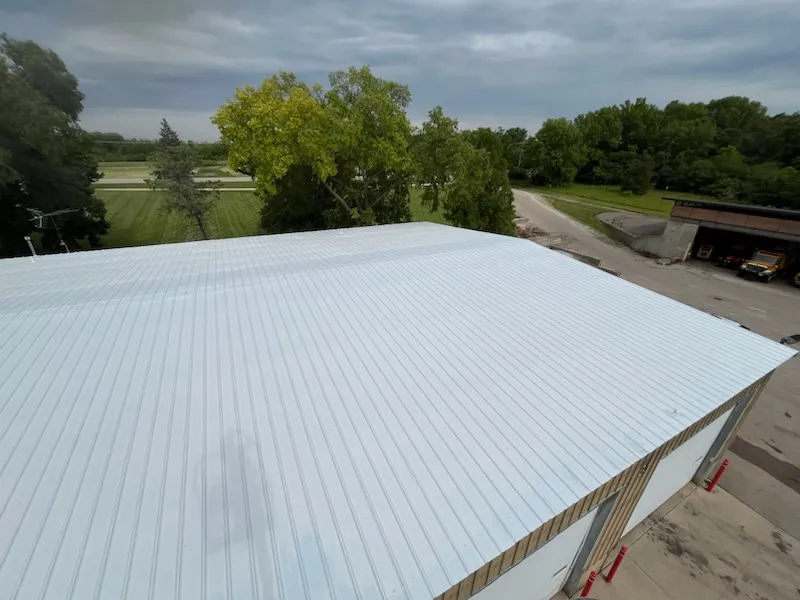
Commercial roof coating square footage calculation starts with measuring each roof section, adding them up, then dividing by the coverage rate on your coating’s data sheet. Add roughly 10 to 15 percent for waste and rough surfaces.
A bad number at the start means a short order or leftover pails. Here’s how to measure so the math holds up.
To calculate commercial roof area, break the roof into simple rectangles and triangles. Measure the length and width of each piece, multiply them, and add everything together. An L-shaped roof just becomes two rectangles. Flat roof area measurement looks easy on paper but goes wrong on site. Walk the roof with a measuring wheel or laser, and don’t trust old drawings. Additions, new units, and patched sections often change the footprint.
Roof measurements for coating include more than the flat deck. Parapet walls, curbs, and penetrations all get coated, which is why GAF built its coverage calculator to ask for perimeter, curb and penetration lengths, and parapet height.
Here’s an example. A 120 by 100 foot deck is 12,000 square feet. Add the inside face of a 2-foot parapet around the 440-foot perimeter, which is 880 more, and you’re at 12,880 square feet. Commercial roofing project measurements like these drive every number that follows.
Once you have the area, the coating’s data sheet does the rest. Rates are usually listed in gallons per roofing square, and one square is 100 square feet. For a better understanding of product selection, application methods, and other important considerations, refer to our guide to commercial roof coating before estimating your material requirements.
The commercial roof coating coverage rate tells you how thick the film will be. Divide your total area by 100, then multiply by the gallons per square your product calls for. Use the rate for your product and substrate, not a rule of thumb.
For roof coating material estimation, take our example. The 12,880 square feet is 128.8 squares. At an example rate of 2 gallons per square, that’s about 258 gallons before waste. If your data sheet lists thickness instead, Building Enclosure explains the math. A gallon covers 1,604 square feet at 1 mil, so divide 1,604 by your target thickness. Dry film equals wet film times percent solids by volume. A roof coating quantity calculator can speed this up, but it only repeats what you feed it. Wrong area in, wrong pails out.
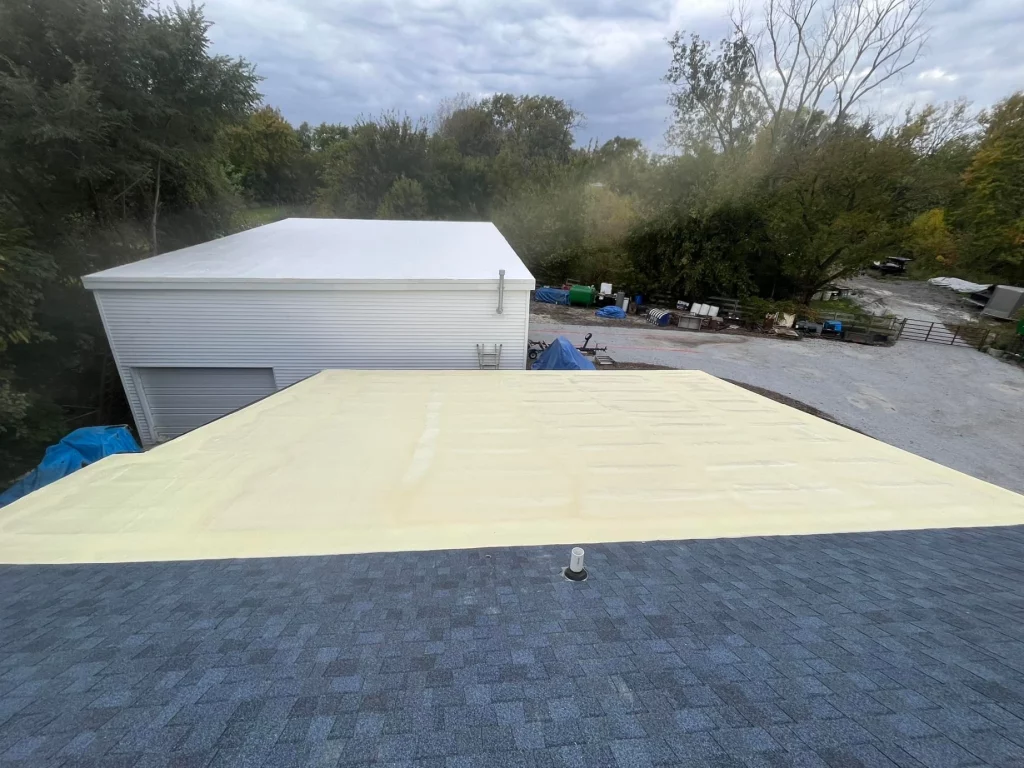
Manufacturer rates describe ideal conditions. Your roof rarely matches them, so you need a cushion. Carlisle’s coverage chart states that its published yields are theoretical, assume zero waste, and apply to a perfectly smooth surface. Applicators typically add 10 to 15 percent to those rates. Rough or porous substrates, spills, leftover material in containers, and technique all push the number higher.
Weather matters too. Winds above 20 mph can cut film thickness by 20 to 30 percent, according to Building Enclosure. Thinning the coating can also hurt how it weathers, so add margin on windy sites. Primers and cleaners are separate line items. The same Carlisle chart lists their own per-square rates for substrates such as EPDM, PVC, and rusted metal. It also recommends adhesion testing on each unique substrate.
Most shortages trace back to the same few errors, and each one is easy to avoid.
If you’d like someone to check your measurements before you order, South Chicago Insulation is happy to talk it through. Send us your roof dimensions and the coating’s data sheet, and we’ll go over the math with you.
Call us at (779) 803-8025 or email [email protected].
Plan around the total thickness on the data sheet, not the number of coats. Some sheets list both a per-coat rate and a completed rate, so confirm which one you’re reading.
Slightly. Most flat roofs have only a gentle drainage slope, so length times width gets you close, but a clearly pitched section should be measured along the slope.
Divide 5 by the gallons per square, then multiply by 100. At 1.5 gallons per square, a pail covers about 333 square feet.
Use a wet mil gauge right after application, then multiply the reading by the percent solids by volume to estimate dry film thickness. Read it quickly, because solvent evaporation can skew the result.
Often, yes. Seams, penetrations, and flashings usually get detail work with their own material rates, so count their linear feet separately from the deck area.