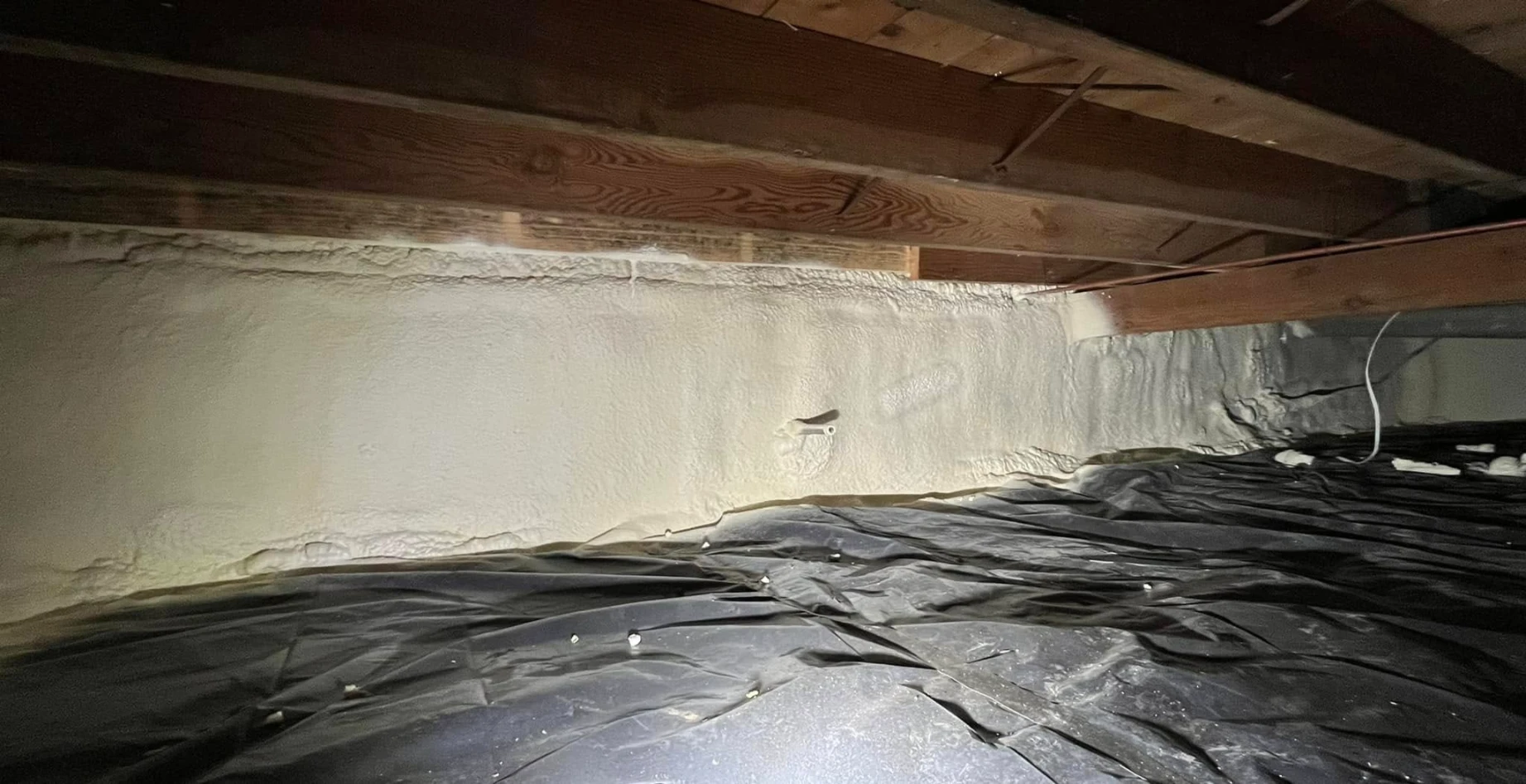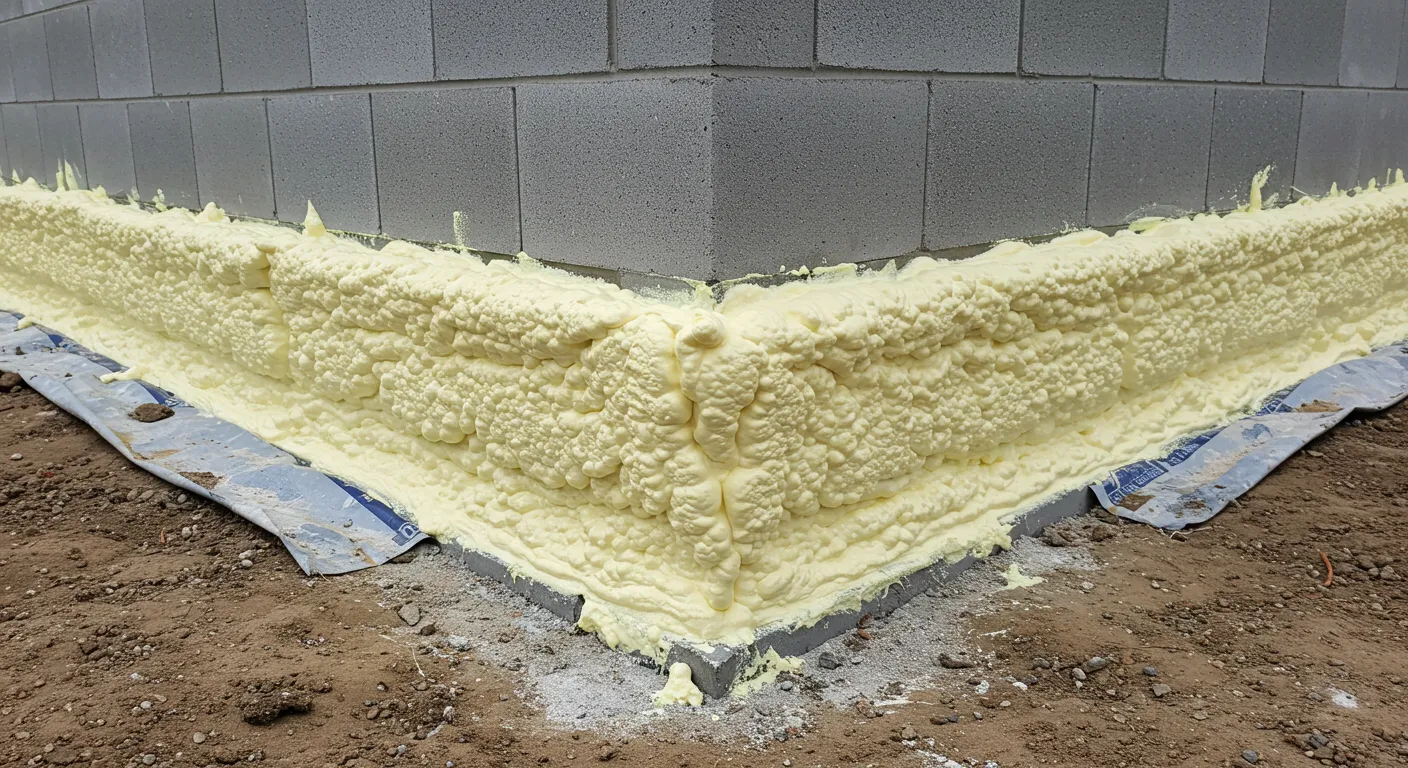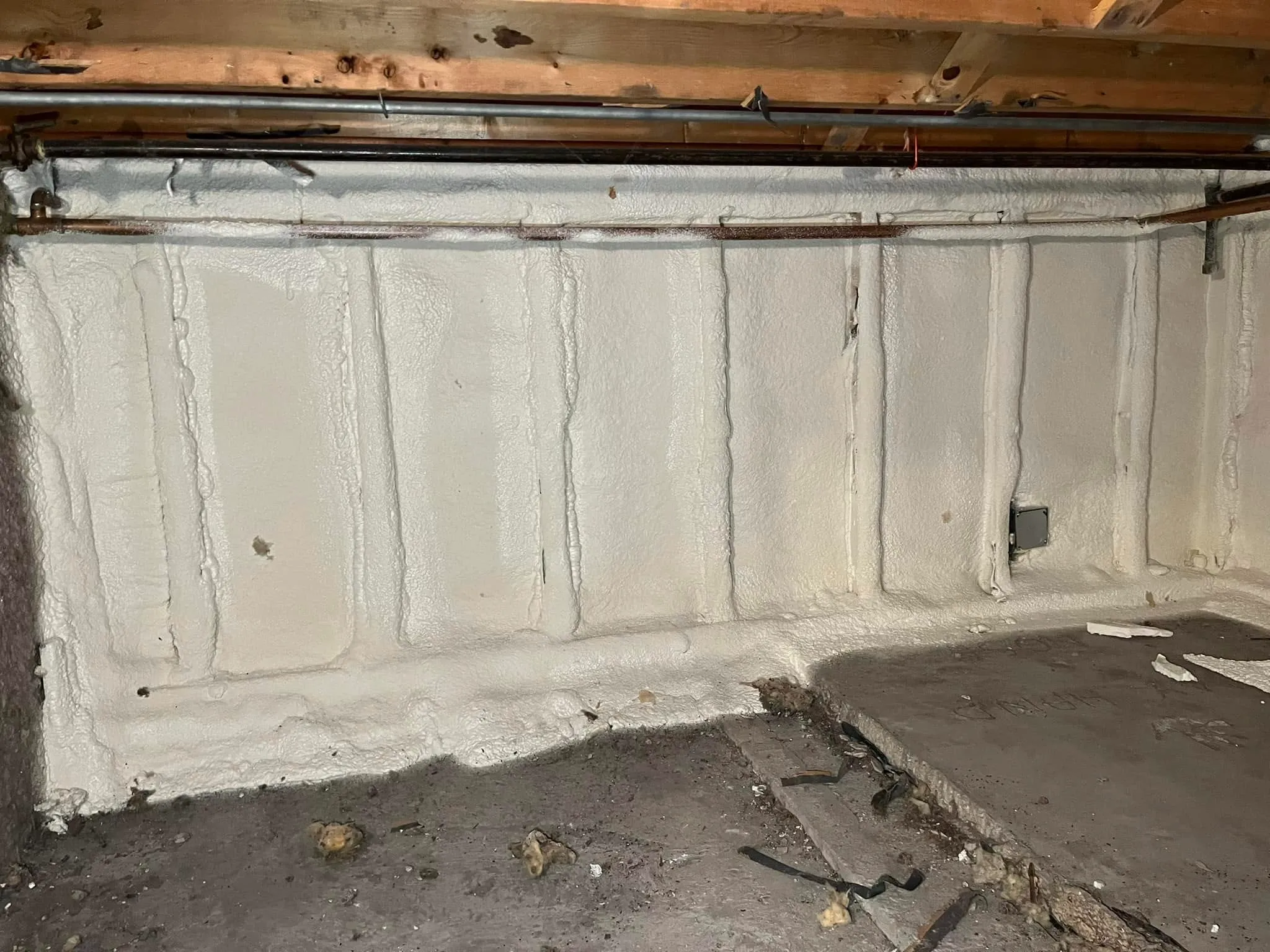
What Is Foundation Insulation and Why Is It Important for Residential Buildings?
Foundation insulation is the application of thermal materials to the walls, floors, or slabs of a building’s foundation to create…


Making a pole barn comfortable enough for daily work in Evanston requires three things working together: the right insulation, proper moisture control, and adequate ventilation. Evanston sits in Climate Zone 5, which means winters are cold, humid, and windy, with January lows regularly dropping near 5°F and temperatures ranging from 21°F in winter to 82°F in summer. Those extremes make uninsulated pole barns nearly unusable for most of the year. The right approach depends on how you use the space, how often, and whether you need year-round climate control. This guide covers the insulation types, code requirements, moisture management, and comfort upgrades that matter most for pole barn workshops in the Evanston area.
Illinois adopted the 2018 IECC (International Energy Conservation Code) with amendments, and the state falls into either Climate Zone 4 or 5. Northern Illinois, including Evanston, is squarely in Climate Zone 5. Under the code, the prescriptive path requires R-20 for wood-frame walls (or R-13 cavity plus R-5 continuous exterior insulation) and R-49 for ceilings. While these minimums are written for residential buildings, they provide a reliable baseline for any conditioned structure, including pole barns that you intend to heat and cool.
Evanston winters bring freezing temperatures, lake-effect wind off Lake Michigan, and high indoor-outdoor temperature differentials. When the interior of a pole barn is heated to 65°F or 70°F and the exterior drops to single digits, water vapor generated inside the building will migrate toward cold surfaces. Without a properly placed vapor retarder and continuous insulation, that vapor condenses inside wall cavities and on the underside of metal roofing, leading to hidden rot, mold, and corrosion over time. Proper moisture control is a key consideration in any pole barn insulation guide.
Choosing the right insulation material is one of the most important decisions for making a pole barn workspace comfortable. Each material has strengths and trade-offs depending on your building’s construction, budget, and intended use.
| Insulation Type | R-Value Range | Best For | Moisture Control | Limitations |
|---|---|---|---|---|
| Closed-cell spray foam | R-6 to R-7 per inch | Full climate control, year-round use | Acts as vapor barrier and air seal | Higher upfront cost |
| Open-cell spray foam | R-3.5 to R-3.7 per inch | Budget-friendly full-fill cavities | Not a vapor barrier on its own | Requires separate vapor retarder |
| Fiberglass batts (faced) | R-13 to R-19 (2×4/2×6) | Standard wall cavities with regular framing | Vinyl facing adds Class II retarder | Gaps around framing reduce effectiveness |
| Rigid foam board | R-3.8 to R-6.5 per inch | Continuous insulation layers, walls and roofs | Varies by facer type (foil = Class I) | Must be sealed at all joints |
| Reflective/barrier insulation | R-1 to R-8 | Radiant heat rejection, unconditioned spaces | Excellent condensation control on metal | Low thermal resistance alone |
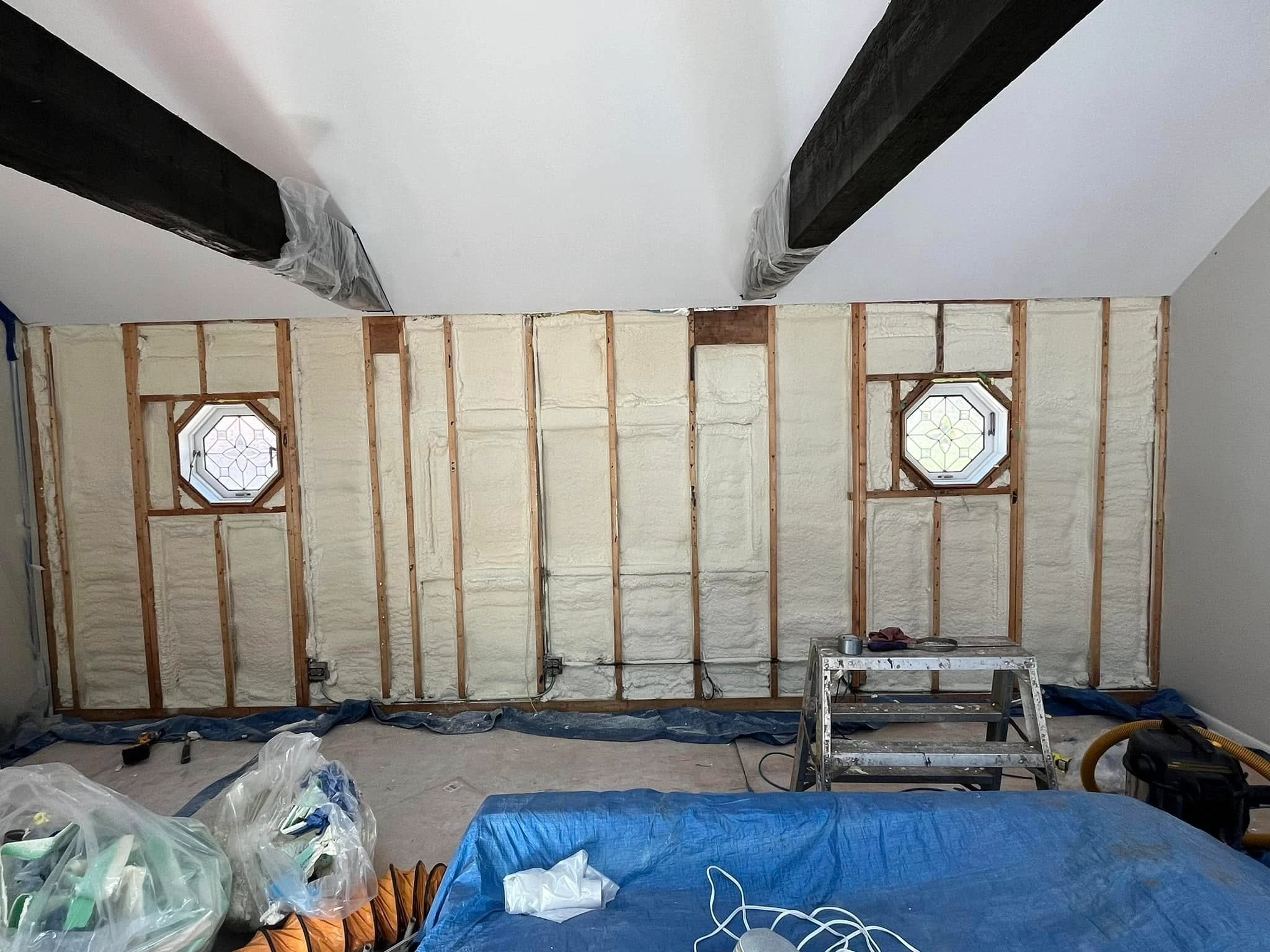
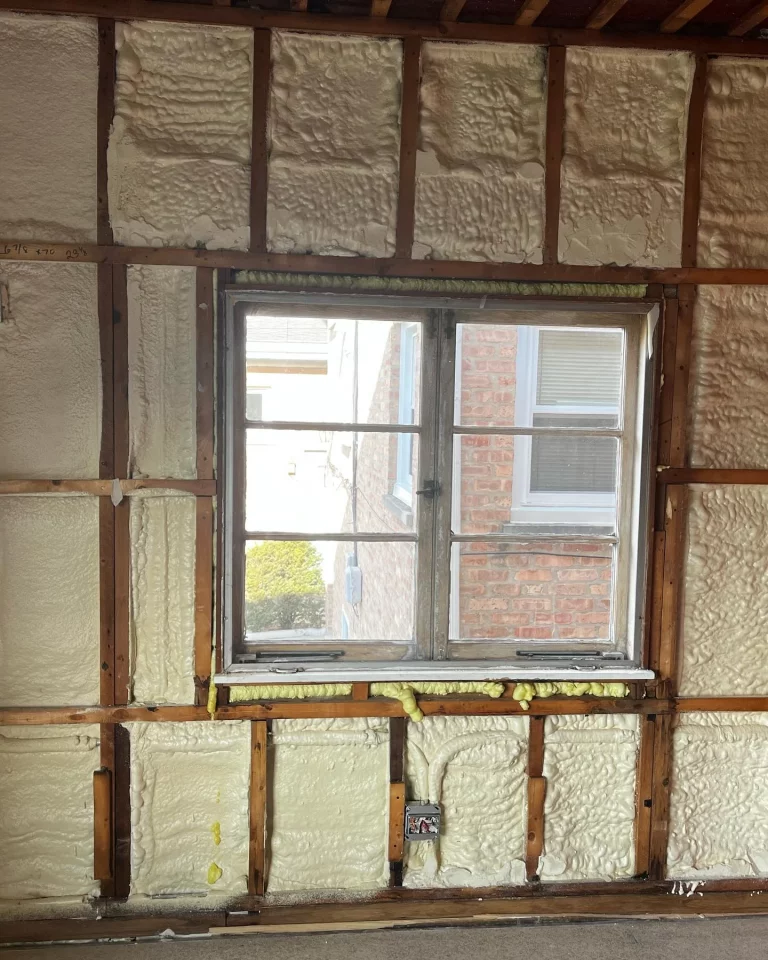
For a pole barn in Evanston that you want to use as a daily workshop, studio, or office, closed-cell spray foam delivers the most complete solution. It expands to fill every gap and crack around framing, trusses, and penetrations, creating an air barrier that dramatically reduces heat loss. In Climate Zone 5, where air sealing and insulation quality directly affect comfort and energy costs, spray foam also serves as a vapor retarder, reducing the risk of condensation within the building envelope.
Open-cell spray foam costs less per inch but does not qualify as a vapor retarder on its own. If you choose open-cell, you still need a separate vapor control layer on the interior side of the insulation. This is one of the key considerations when evaluating pole barn spray foam protection.
Vinyl-faced fiberglass batts are a common choice for pole barns with regular stud or truss spacing. They deliver R-13 to R-19 depending on cavity depth, and the vinyl facing doubles as a Class II vapor retarder. The main drawback is that fiberglass does not seal air leaks. Any gaps around framing members, electrical boxes, or framing irregularities allow conditioned air to escape and unconditioned air to infiltrate. For this reason, fiberglass works best when paired with careful air sealing work or as part of a layered insulation assembly.
Vapor control is not optional in a Climate Zone 5 pole barn. Without it, moisture from heating systems, people, and tools will condense on cold surfaces inside the wall and roof assemblies. The Insulation Institute classifies vapor retarders into three categories based on their permeability rating in perms:
In Climate Zone 5, the IRC requires a Class II or lower vapor retarder on the interior side of insulated wall and floor assemblies. For ventilated roof assemblies, a Class III retarder is permitted. This matters because installing a vapor barrier that is too restrictive can trap moisture inside the assembly and prevent it from drying outward, which can actually worsen moisture damage over time.
As explained in the Building Science Corporation’s research on vapor barriers, the goal is not simply to block moisture from entering assemblies, but also to allow assemblies to dry if they do get wet. Vapor barriers installed on both sides of a wall cavity create a “double vapor barrier” situation that prevents drying in either direction and should be avoided.
Insulation without ventilation creates problems of its own. In a pole barn, the roof cavity is especially vulnerable. Warm, moist air from the conditioned space will rise and contact cold roof panels. Without a path to escape, that moisture condenses and drips back down. The solution is a combination of soffit vents at the eaves and ridge vents at the roof peak. Together, they create natural convective airflow that exhausts humid air and brings in fresh, dry air. This cycle keeps insulation dry, prevents condensation on metal roofing, and extends the life of the entire roof assembly.
For pole barns without attic space, where insulation is applied directly to the underside of the roof deck, ventilation options are more limited. In those cases, closed-cell spray foam applied directly to the metal provides both the thermal barrier and the condensation control layer without requiring a ventilated cavity. This is one reason many property owners choose professional spray foam services for pole barn insulation projects.
| How You Use the Barn | Insulation Priority | Recommended Approach | Comfort Add-Ons |
|---|---|---|---|
| Daily workshop / full-time workspace | High (year-round) | Closed-cell spray foam on walls and roof, vapor-controlled ceiling | Ductless mini-split HVAC, insulated floor slab |
| Part-time hobby shop | Medium (seasonal) | Fiberglass or mineral wool in walls, rigid foam on roof | Portable heater, ceiling fans |
| Seasonal storage with occasional work | Low to medium | Reflective barrier on the roof, faced batts on the walls | Ventilation only, no HVAC |
| Home office / studio | High (comfort-sensitive) | Full spray foam envelope, dedicated vapor barrier at ceiling | Mini-split with zoning, dehumidifier |
Working with a qualified insulation contractor makes a measurable difference in the outcome of your pole barn project. Here are indicators that you are on the right track:
South Chicago Insulation has the experience and expertise to evaluate your pole barn’s specific needs and recommend the right insulation strategy for your workspace. Our team works with spray foam, fiberglass, and rigid foam systems, and we understand the moisture challenges that come with Climate Zone 5 pole barn construction. Whether you need a full climate-controlled workshop or targeted insulation for seasonal use, we can help you find the right solution.
Call us at (779) 803-8025 or email [email protected]. Let’s make your pole barn a place where you actually want to work, no matter what the Evanston weather throws at it.
Under the Illinois energy code for Climate Zone 5, walls require a minimum of R-20 and ceilings require R-49. Spray foam can meet these targets with fewer inches than fiberglass or batt insulation, but any insulation material works as long as it reaches the required R-value and is properly installed with air sealing.
Fiberglass batts and rigid foam board are feasible DIY projects if you have regular framing and can carefully seal all joints and penetrations. Spray foam requires specialized equipment and training, and improper application can lead to gaps, off-ratio mixing, and moisture problems that are expensive to fix later.
Condensation on metal roofing occurs when warm, moist indoor air comes into contact with the cold metal surface. The solution is a combination of proper insulation with a vapor retarder on the warm side, air sealing to prevent moisture-laden air from reaching the roof cavity, and ventilation (soffit and ridge vents) to exhaust any humidity that does accumulate.
Spray foam expands to fill gaps, creating an air barrier and providing thermal resistance. In a pole barn where framing irregularities, truss connections, and penetrations are common, the air-sealing benefit of spray foam can reduce energy loss significantly compared to fiberglass alone, which leaves small air gaps around studs and at framing intersections.
Ductless mini-split systems are a popular choice because they provide both heating and cooling, do not require ductwork, and can be zoned for different areas within the building. Radiant floor heating is effective for spaces with concrete slabs. The key is to insulate first so the HVAC system can be properly sized rather than oversized.