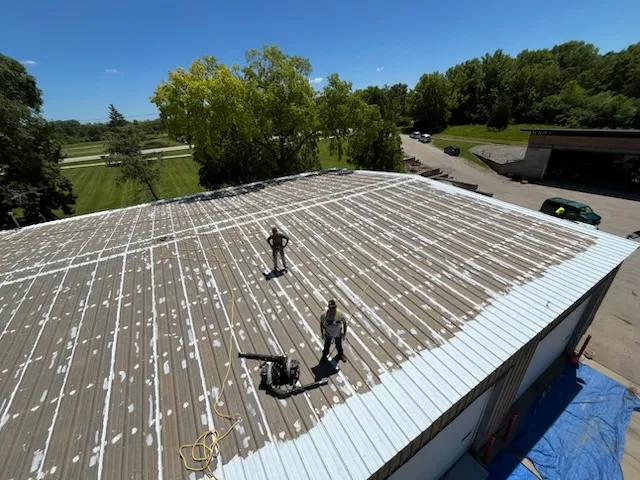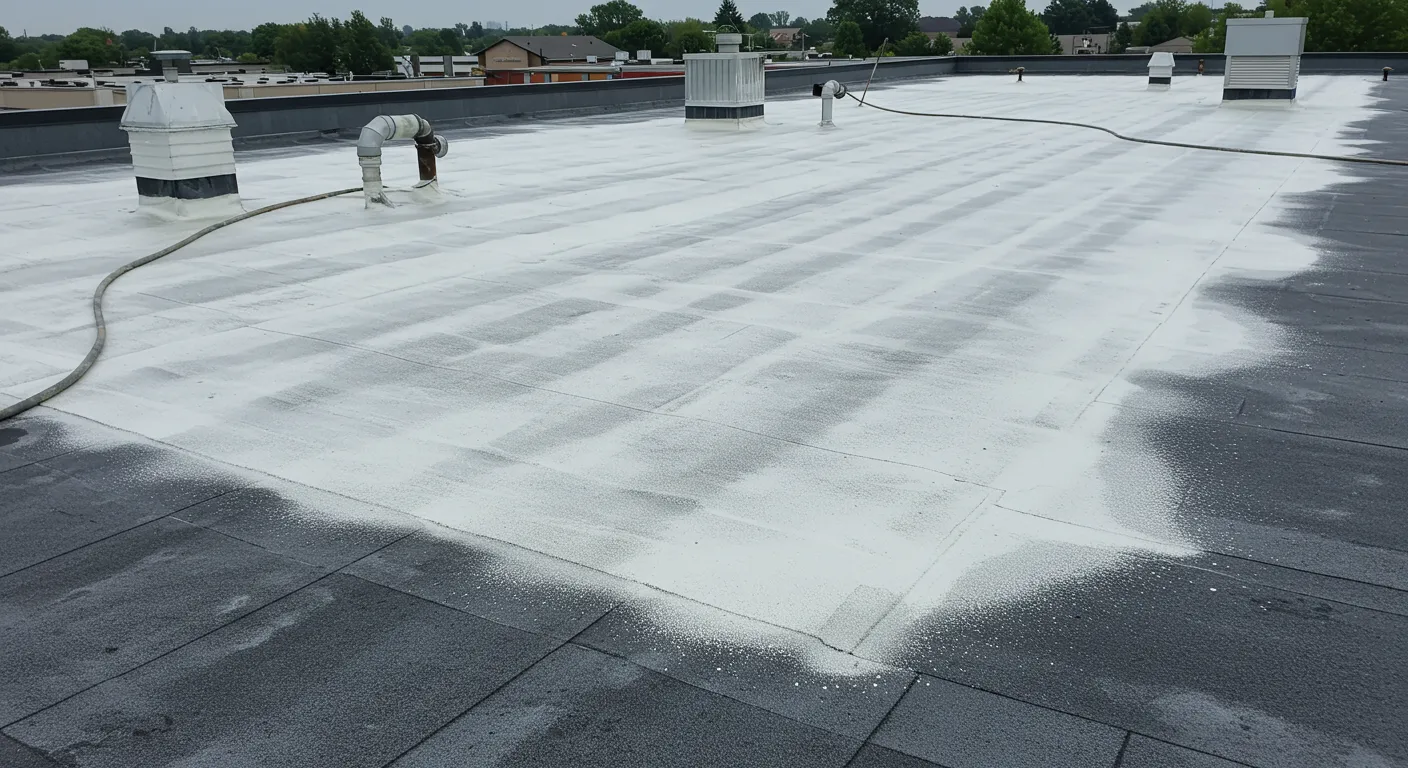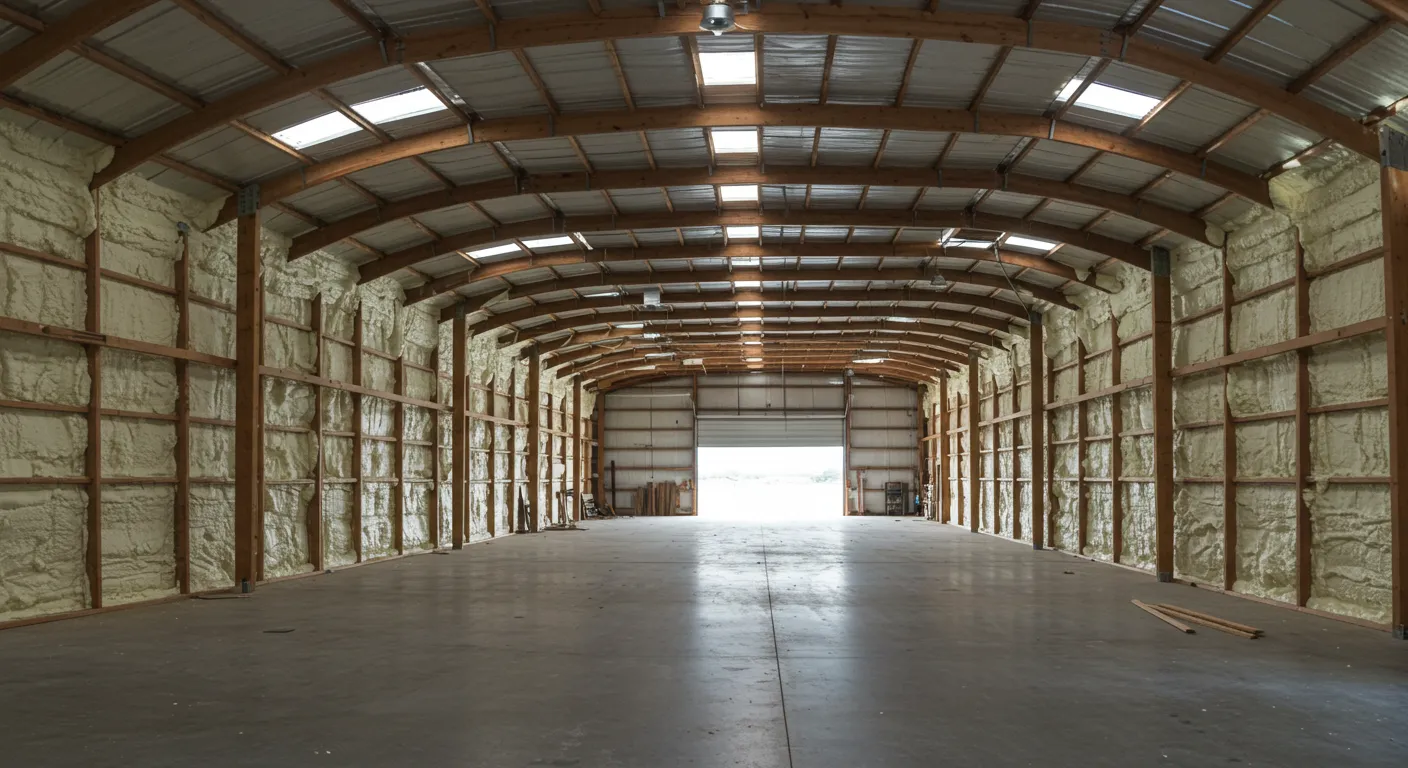
Why Is Your Pole Barn in Carpentersville, IL Too Hot in Summer and Cold in Winter?
Pole barn insulation services can help address the extreme temperature swings common in Carpentersville, IL pole barns. Bare steel panels…


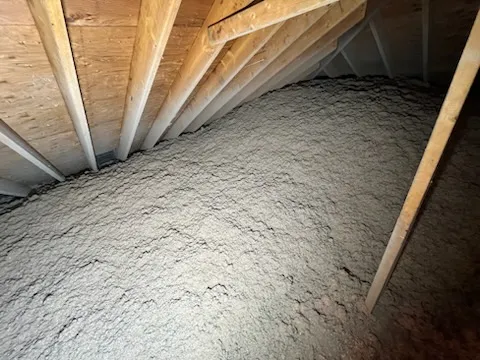
In New Lenox, IL, blown-in cellulose insulation typically ranges from $2,500 to $7,500, depending on your project size, accessibility, and the condition of your existing insulation. For most single-family homes, our team sees projects averaging around $5,000 for complete attic and wall coverage. This cost includes materials, labor, and professional installation, though final pricing depends on factors like the amount of square footage being covered, required R-value for climate zone 5, and whether any moisture remediation or old insulation removal is needed before installation.
Blown-in cellulose remains one of the most cost-effective insulation choices for Illinois homeowners. Cellulose delivers an R-value of approximately 3.2 to 3.8 per inch, making it roughly 20% more efficient than fiberglass at equivalent thickness. For New Lenox homes built during the housing boom of the 1990s and early 2000s, upgrading from thin R-11 or R-19 insulation to modern R-49 or R-60 standards can reduce heating costs significantly during bitter Chicago winters.
When you invest in blown-in cellulose insulation, your project cost breaks down into several components. Material costs for cellulose typically range from $0.30 to $1.80 per square foot, depending on whether you choose standard loose-fill or dense-pack formulations. Labor accounts for $0.70 to $1.70 per square foot when working with experienced professionals who understand regional building codes and climate requirements.
Our pricing structure in the New Lenox area accounts for the specific challenges of Will County homes. Older properties often have limited attic access, unconventional ceiling configurations, or previous insulation that settled unevenly over decades. These variables influence how our team approaches each project and why we provide custom estimates rather than relying on generic calculators.
| Insulation Type | Cost per Sq. Ft. Installed | R-Value per Inch | Best Application |
|---|---|---|---|
| Blown-in Cellulose | $1.20 – $2.80 | 3.2 – 3.8 | Attics, walls, retrofit applications |
| Blown-in Fiberglass | $1.00 – $2.80 | 2.2 – 2.9 | Attics, cost-sensitive projects |
| Batt Insulation | $0.80 – $2.60 | 2.5 – 3.5 | New construction, accessible cavities |
| Spray Foam | $1.50 – $5.00 | 3.5 – 7.0 | Air sealing, crawl spaces, high-performance needs |
Cellulose’s higher R-value per inch means you achieve better thermal resistance with less material depth. For New Lenox attics requiring R-49 to R-60 coverage, cellulose typically needs 12 to 16 inches of settled depth, whereas fiberglass would require 15 to 20 inches to reach equivalent performance.
The following examples represent typical insulation projects our team has completed in the greater New Lenox area. Each project considers home size, existing insulation condition, and target R-value for the climate zone.
| Home Type | Location | Attic Size | Target R-Value | Project Cost Range |
|---|---|---|---|---|
| 1990s Ranch | New Lenox (60451) | 1,200 sq. ft. | R-49 | $3,200 – $4,800 |
| 2000s Colonial | Mokena (60448) | 1,600 sq. ft. | R-60 | $4,500 – $6,200 |
| 1970s Split-Level | Frankfort | 900 sq. ft. | R-49 | $2,800 – $3,900 |
| New Construction | New Lenox | 2,200 sq. ft. | R-60 | $5,500 – $7,500 |
These estimates include air sealing preparation and professional installation. Projects requiring extensive moisture remediation, old insulation removal, or structural repairs would fall toward the higher end or beyond these ranges.
The complexity of accessing your attic and wall cavities plays a significant role in determining project cost. Homes with scuttle hatch access typically cost less to insulate than those requiring temporary opening creation or ladder navigation through tight spaces. Vaulted ceilings, knee walls, and soffit obstructions all increase labor time and material handling requirements.
Before installing new cellulose, our team evaluates whether moisture has compromised existing insulation or structural components. Illinois summers bring humidity, and older homes without proper ventilation often develop moisture problems that must be addressed before adding insulation. If remediation is required, costs increase accordingly but ensure your investment performs as intended for decades.
Achieving higher R-values requires more material. A project targeting R-49 requires less cellulose than one targeting R-60, but the difference provides meaningful energy savings during New Lenox winters when temperatures regularly drop below zero. Our team helps homeowners balance upfront investment against long-term heating cost reductions.
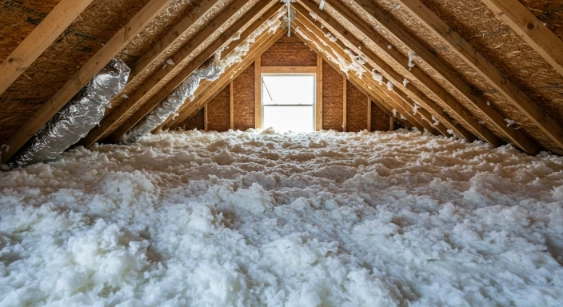
Many New Lenox homeowners delay insulation upgrades because they view it as a discretionary expense. However, homes with inadequate insulation lose significant heat during Chicago winters. A property with R-11 insulation in the attic loses substantially more heat than one upgraded to modern R-49 standards, meaning your heating system works harder, runs longer, and wears out faster.
Each month you delay an insulation upgrade, you essentially pay a hidden tax in the form of elevated utility bills. Over a 20-year period, the cost difference between an uninsulated attic and a properly insulated one often exceeds the original investment by a factor of three or four. Beyond financial considerations, inadequate insulation creates comfort problems, cold floors, drafty rooms, and inconsistent temperatures throughout your home.
Blown-in cellulose insulation typically performs effectively for 20 to 30 years or longer when properly installed and maintained. The material is treated with fire retardants during manufacturing, which helps maintain its integrity over time. Periodic inspection for settling, moisture intrusion, or pest activity ensures you get maximum value from your investment.
Not necessarily. If your current insulation is dry, free of mold, and not heavily contaminated with pests, our team can often add cellulose directly over it. This approach reduces project costs and minimizes disruption. We assess each attic individually and recommend removal only when existing materials would compromise the new installation.
Yes, cellulose settles approximately 10% after installation as the material compresses under its own weight. Our team accounts for this settling when calculating material quantities and target depth, ensuring your insulation achieves the stated R-value once settlement completes. Proper installation at the correct density minimizes long-term settling.
Absolutely. Wall insulation is a common application for blown-in cellulose, particularly in retrofit situations where homeowners want to improve energy performance without removing drywall. Our team drills small access holes in each wall cavity, fills them with dense-pack cellulose, then patches and paints the holes to match your existing walls.
For the Chicago area (Climate Zones 5 and 6), the Department of Energy recommends attic insulation between R-49 and R-60. Our team typically installs R-49 or R-60 depending on your heating and cooling costs, budget, and long-term plans for the property. Achieving these R-values requires 12 to 16 inches of settled cellulose depth.
South Chicago Insulation has served the New Lenox area and surrounding Will County communities for years, helping homeowners reduce energy costs and improve comfort through professional insulation installation. Our team understands the specific challenges of Chicago-area homes, from the freeze-thaw cycles that stress building envelopes to the humidity challenges of Midwestern summers.
Whether you are ready to upgrade from a thin layer of aging fiberglass or need comprehensive coverage for a property you recently purchased, we provide detailed estimates that account for your specific situation. No generic quotes, no hidden fees, just honest pricing for quality work.
Contact us at [email protected] or call (779) 803-8025 to schedule your free evaluation.