Why Is Your Pole Barn in Carpentersville, IL Too Hot in Summer and Cold in Winter?
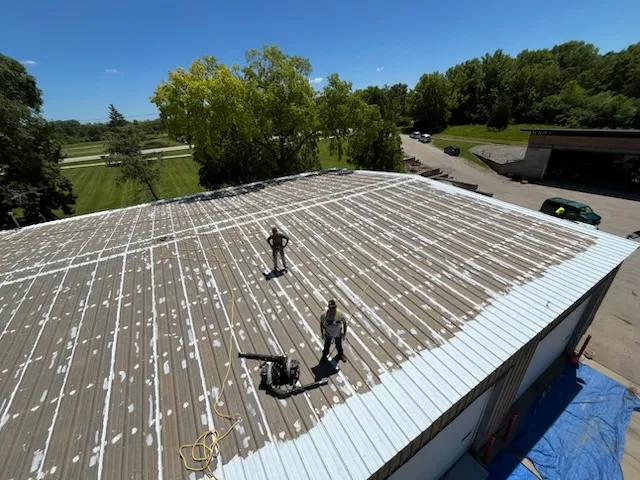
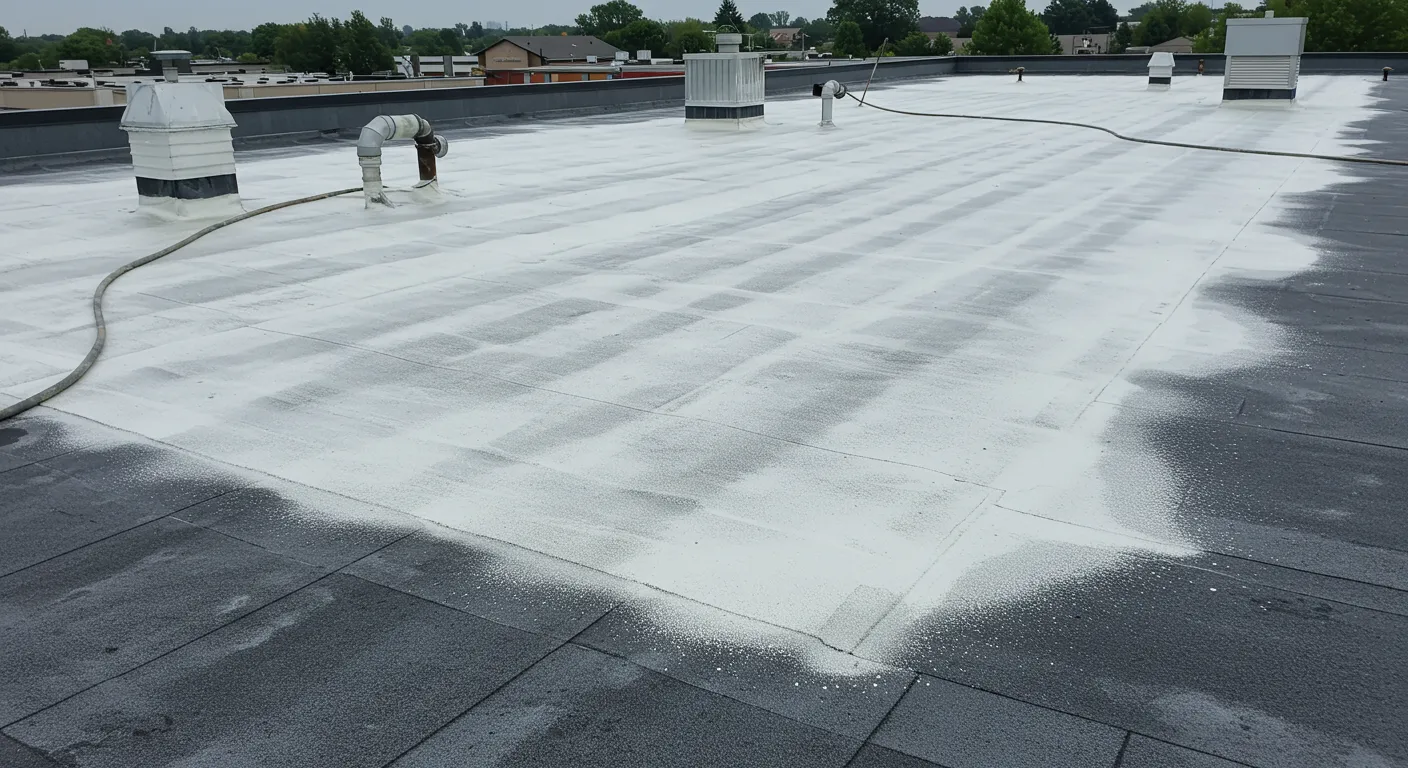
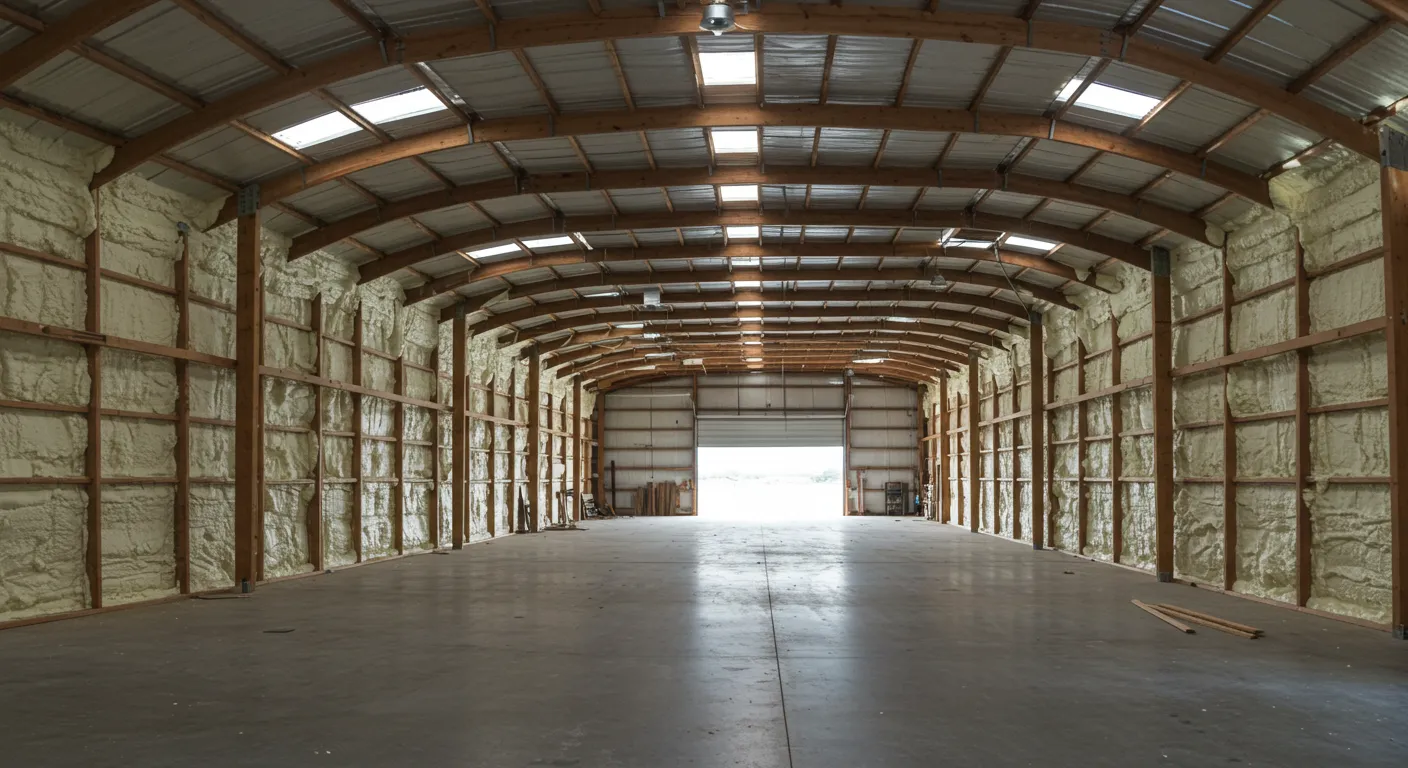
Pole barn insulation services can help address the extreme temperature swings common in Carpentersville, IL pole barns. Bare steel panels…


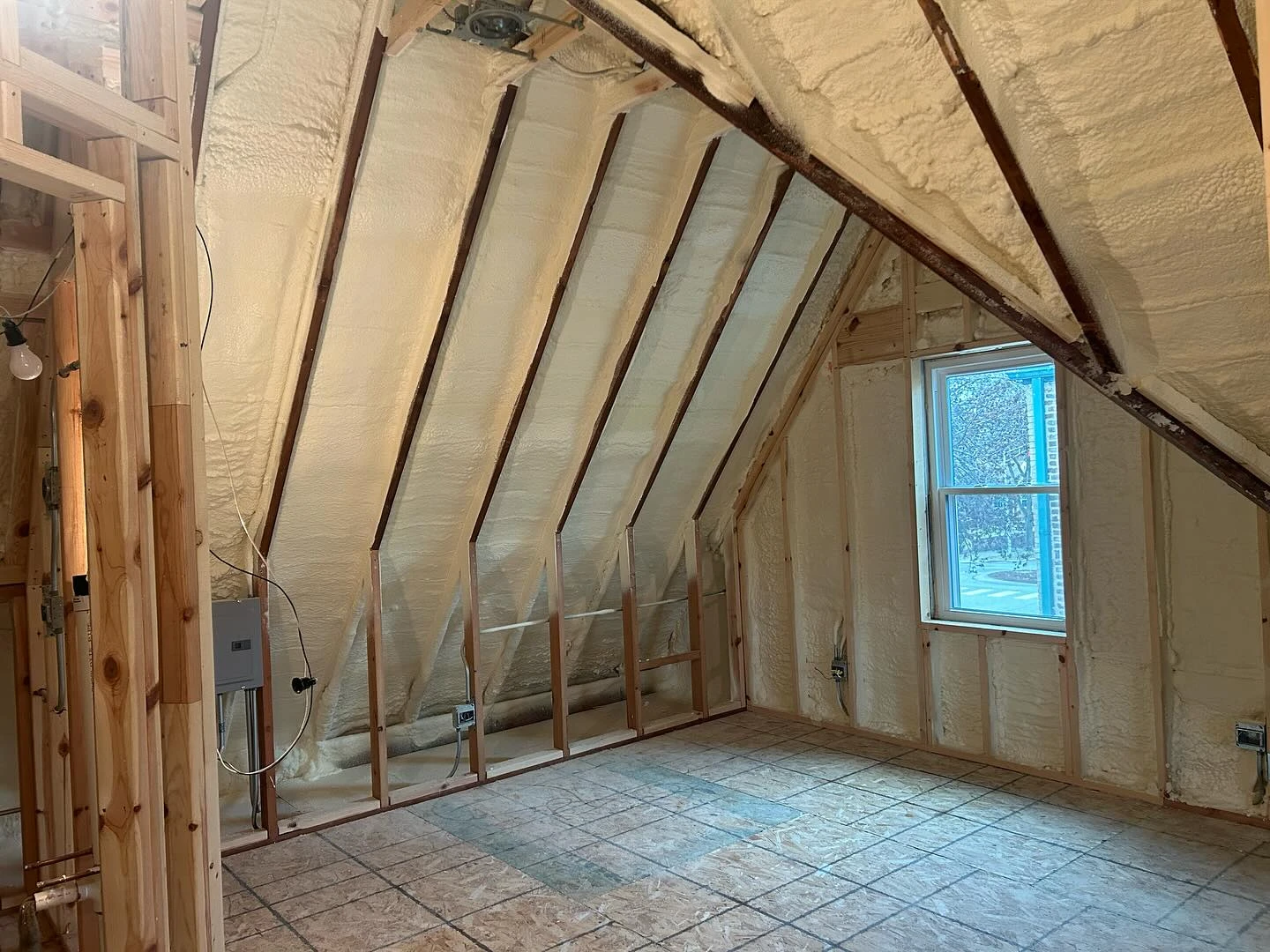
When your attic lacks proper insulation, your heating and cooling system works overtime to maintain comfortable indoor temperatures. Heat naturally flows from warm spaces to cooler ones, meaning your HVAC unit must constantly combat heat loss in winter and heat gain in summer. Adequate attic insulation creates a thermal barrier that slows this heat transfer, allowing your system to operate more efficiently, cycle less frequently, and extend its operational lifespan.
For homeowners in the Chicago area, where temperature extremes between seasons create substantial heating and cooling demands, attic insulation is not a luxury but a practical investment in home comfort and system longevity. The U.S. Department of Energy estimates that adding insulation to attics, floors, and crawl spaces can save up to 20% on heating and cooling costs when combined with air sealing throughout the home. This guide explores the science behind how insulation reduces HVAC strain and how you can optimize your home’s thermal performance.
Heat flows through three primary mechanisms: conduction, convection, and radiation. Your home’s envelope, particularly the attic, is constantly subject to all three. In winter, heated air inside your home rises and escapes through the attic if the insulation is insufficient. In summer, radiant heat from the sun penetrates the roof and radiates down into living spaces, forcing your air conditioner to work harder to maintain desired temperatures.
When your attic insulation lacks adequate R-value, your HVAC system must compensate by running longer and more frequently. This increased runtime accelerates wear on components like compressors, blowers, and motors. The strain manifests in higher utility bills, more frequent repairs, and shorter equipment lifespan.
The solution lies in understanding R-value, which measures an insulation material’s thermal resistance. According to the Department of Energy, the higher the R-value, the greater the insulating effectiveness. For homes in climate zones 5 and 6, which include the greater Chicago metropolitan area, recommended attic insulation ranges from R-49 to R-60, which also directly impacts overall attic insulation cost factors.
Attic insulation establishes a consistent thermal boundary between your conditioned living space and the unconditioned attic environment. When insulation is properly installed with adequate coverage and density, it significantly slows heat flow through the ceiling. This means your heating system does not lose warmth as quickly during winter nights, and your cooling system does not absorb heat as rapidly during summer afternoons.
An under-insulated attic causes temperature swings that trigger frequent HVAC cycling. Each startup puts stress on the compressor and motor. With proper attic insulation, your system maintains more stable indoor temperatures, resulting in fewer on-off cycles and more efficient operation overall.
The Department of Energy explains that insulation works by slowing conductive and convective heat flow. When your attic has high R-value insulation, it reduces the thermal load your HVAC system must handle, allowing the equipment to operate within designed parameters rather than straining to meet excessive demand.
Attic insulation, when combined with proper air sealing, prevents moist outdoor air from entering your home and reduces the workload on humidity control systems. Many insulation installations now include air sealing as a complementary measure, addressing gaps around pipes, wires, and ductwork that would otherwise allow conditioned air to escape.
For existing homes in different climate zones, the Department of Energy and ENERGY STAR recommend specific insulation levels based on current conditions in your attic.
| Climate Zone | Uninsulated Attic | Existing 3-4 inches of Insulation | Recommended R-Value |
|---|---|---|---|
| Zone 1 (Hot) | R30-R49 | R19-R38 | R30-R49 |
| Zone 2 (Mixed) | R49 | R38 | R49 |
| Zone 3 (Mixed-Hot) | R49 | R38 | R49 |
| Zone 4 (Mixed) | R60 | R49 | R49-R60 |
| Zone 5 (Cold) | R60 | R49 | R49-R60 |
| Zone 6 (Very Cold) | R60 | R49 | R60 |
| Zone 7-8 (Extreme Cold) | R60 | R49 | R60 |
Homes in northern Illinois and the Chicago area fall primarily into climate zones 5 and 6, where attic insulation of R-49 to R-60 provides optimal protection against heat loss and heat gain. Many existing homes in this region were built with only R-19 to R-30 insulation, falling well below current recommendations.
Recognizing when your attic insulation is inadequate helps you prioritize improvements before HVAC damage occurs.
The EPA’s ENERGY STAR program provides specific savings estimates based on modeling of typical existing U.S. homes. Their methodology estimates that homeowners can save an average of 15% on heating and cooling costs by air sealing and adding insulation in attics, floors over crawl spaces, and accessible basement rim joists.
Regional data shows that savings vary by climate. Homes in northern climate zones 7 and 8 can achieve heating and cooling savings of 18-19% respectively, while homes in southern zones 1 and 2 see more modest savings of 7-9%. The national average for total home energy savings is 11%, with heating and cooling specifically averaging 15%.
According to the Department of Energy’s insulation guide, properly insulating your home can save up to 20% on heating and cooling costs, or up to 10% on total energy costs, when insulation is combined with air sealing throughout the building envelope.
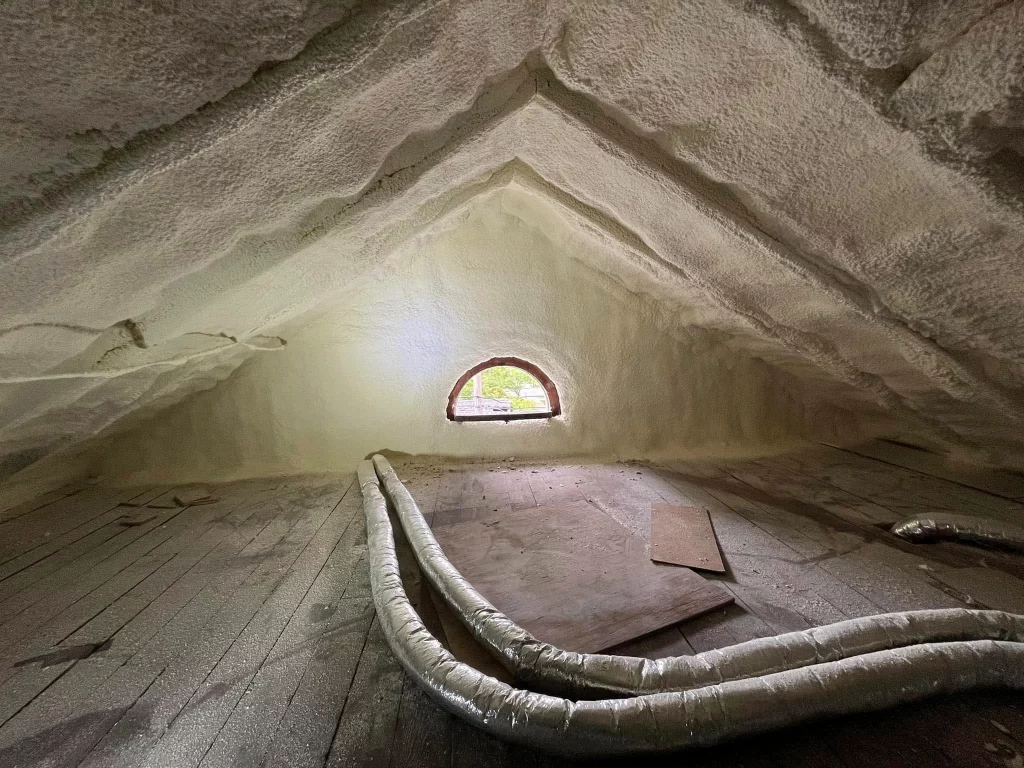
Several insulation materials work well for attic applications, each with distinct characteristics.
Blown-in insulation: Cellulose or fiberglass fibers blown into attic spaces conform to irregular shapes and fill gaps around framing. This approach works effectively over existing insulation and requires professional installation for optimal coverage.
Batts and blankets: Pre-cut fiberglass or mineral wool panels lie between ceiling joists. These work well for accessible attics where you can reach all areas directly, though gaps around obstacles can reduce effectiveness.
Spray foam: Two-component foam sprayed into attic spaces provides high R-value per inch and excellent air sealing. Spray foam works well in hard-to-access areas and around obstructions, though costs tend to be higher than other options.
Radiant barriers: Reflective materials installed under roof rafters reduce radiant heat gain from the sun. These work best in hot climates but can provide some benefit in cooling-dominated regions.
Measuring your current attic insulation helps determine whether upgrades are needed. The Minnesota Commerce Department suggests measuring insulation depth in inches and multiplying by the R-value per inch of your existing material. Most insulation materials provide 2.5 to 4.0 R-value per inch. Roughly 12 to 20 inches of insulation, depending on material type, will provide an R-50 rating.
For a professional assessment, consider scheduling an energy audit. Certified auditors use tools like blower door tests and infrared cameras to identify insulation gaps and air leakage throughout your home’s envelope.
When evaluating insulation improvements for your home, several indicators suggest you are on the right track.
Your heating and cooling system represents a significant investment in your home, and its longevity depends largely on how hard it has to work. Attic insulation provides one of the most cost-effective ways to reduce HVAC strain, lower utility bills, and extend equipment life.
Our team at South Chicago Insulation specializes in comprehensive attic insulation solutions for homeowners throughout the Chicago area. We assess your current insulation conditions, recommend appropriate R-values for your climate, and install high-quality materials with professional workmanship. Whether your attic needs additional blown-in cellulose, new batt insulation, or spray foam for maximum thermal performance, we have the expertise to help.
Contact our team today to discuss your insulation needs. Reach us by email at [email protected] or call (779) 803-8025 to schedule a consultation. Let us help you reduce your HVAC strain while improving your home comfort and lowering your energy costs.
Proper attic insulation can reduce HVAC workload by 15-40%, depending on the starting condition of your home. ENERGY STAR estimates that adequate insulation and air sealing save an average of 15% on heating and cooling costs, which directly correlates to reduced system strain.
Homes in climate zones 5 and 6, which include the Chicago metropolitan area, should target attic insulation of R-49 to R-60 for optimal thermal performance. Many existing homes in this region have only R-19 to R-30, well below current recommendations.
Adding attic insulation does not void HVAC warranties. However, maintaining your equipment according to the manufacturer specifications and having it serviced regularly helps ensure warranty coverage remains valid.
Most attic insulation materials last 20-30 years or more before requiring replacement. However, settling, moisture damage, or installation errors can reduce effectiveness over time.
In most cases, you do not need to remove existing attic insulation unless it is wet, moldy, or severely damaged. Adding new insulation on top of existing material can achieve target R-values more cost-effectively than removal and replacement.