Could Open-Cell Spray Foam Solve Your Persistent Allergy Issues?
admin_southchica
November 27th, 2025
Open-cell spray foam insulation can significantly reduce the environmental factors that trigger persistent indoor allergies, but it is not a standalone solution for complex health problems. The primary benefit for allergy sufferers comes from the material’s ability to act as an effective air barrier, sealing small cracks and gaps that conventional insulation allows to remain open. By stopping uncontrolled air exchange, open-cell foam drastically limits the entry of external allergens like pollen, dust, and mold spores into the home’s envelope.
Addressing indoor air quality requires moving beyond traditional batting materials that merely slow heat transfer. Achieving a truly tight building envelope is essential for controlling the environment inside the home, allowing existing HVAC and filtration systems to work efficiently against airborne particles. This is important because, as the Environmental Protection Agency highlights, air leakage often accounts for up to 40% of residential energy use. This approach demonstrates a practical understanding of how building science directly impacts resident health.
The Fundamental Role of Air Sealing in Allergy Control
Most homeowners underestimate the amount of outdoor air that infiltrates their houses through unintentional holes. This uncontrolled air movement carries everything floating outside directly into your living spaces: tree pollen in the spring, ragweed in the fall, and dust that settled on the exterior structure. Fiberglass batt insulation does little to stop this movement because air flows right through it.
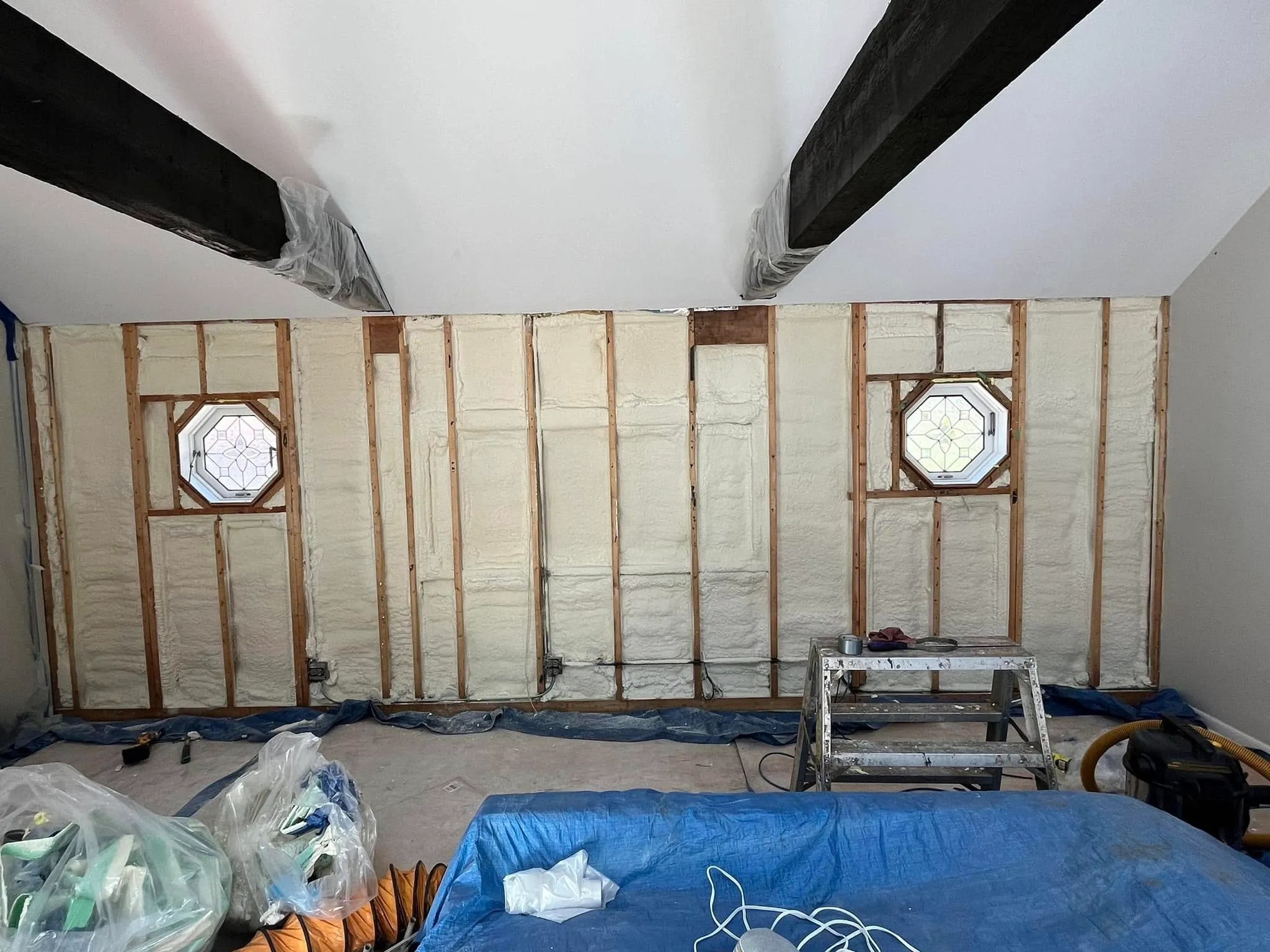
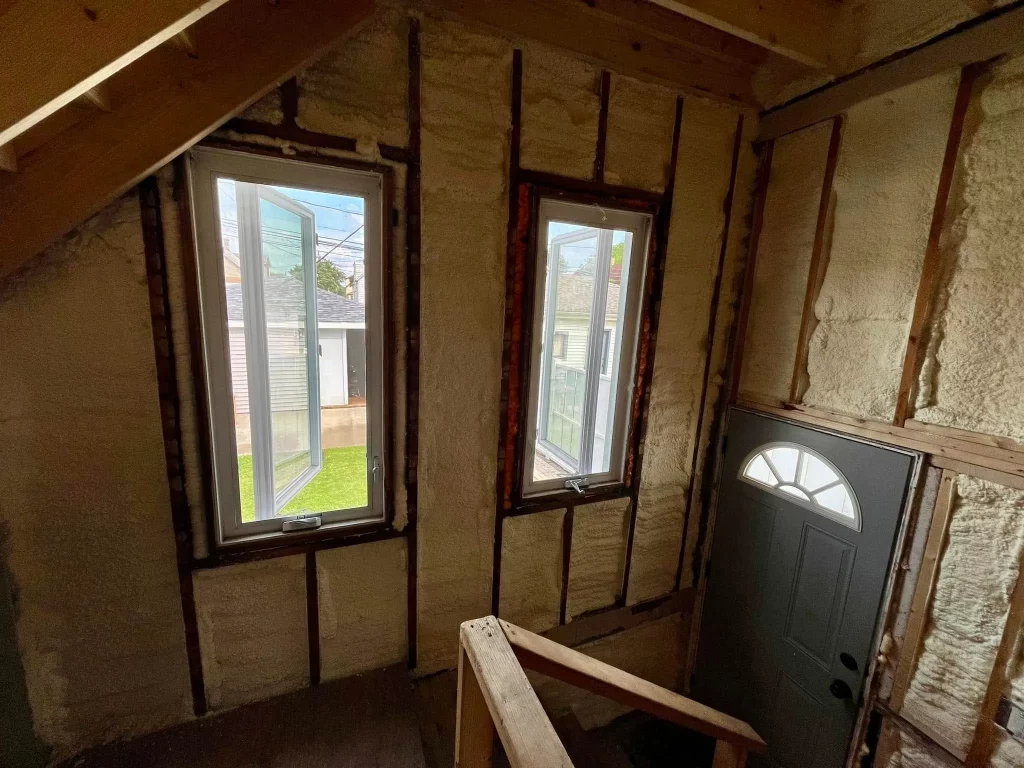
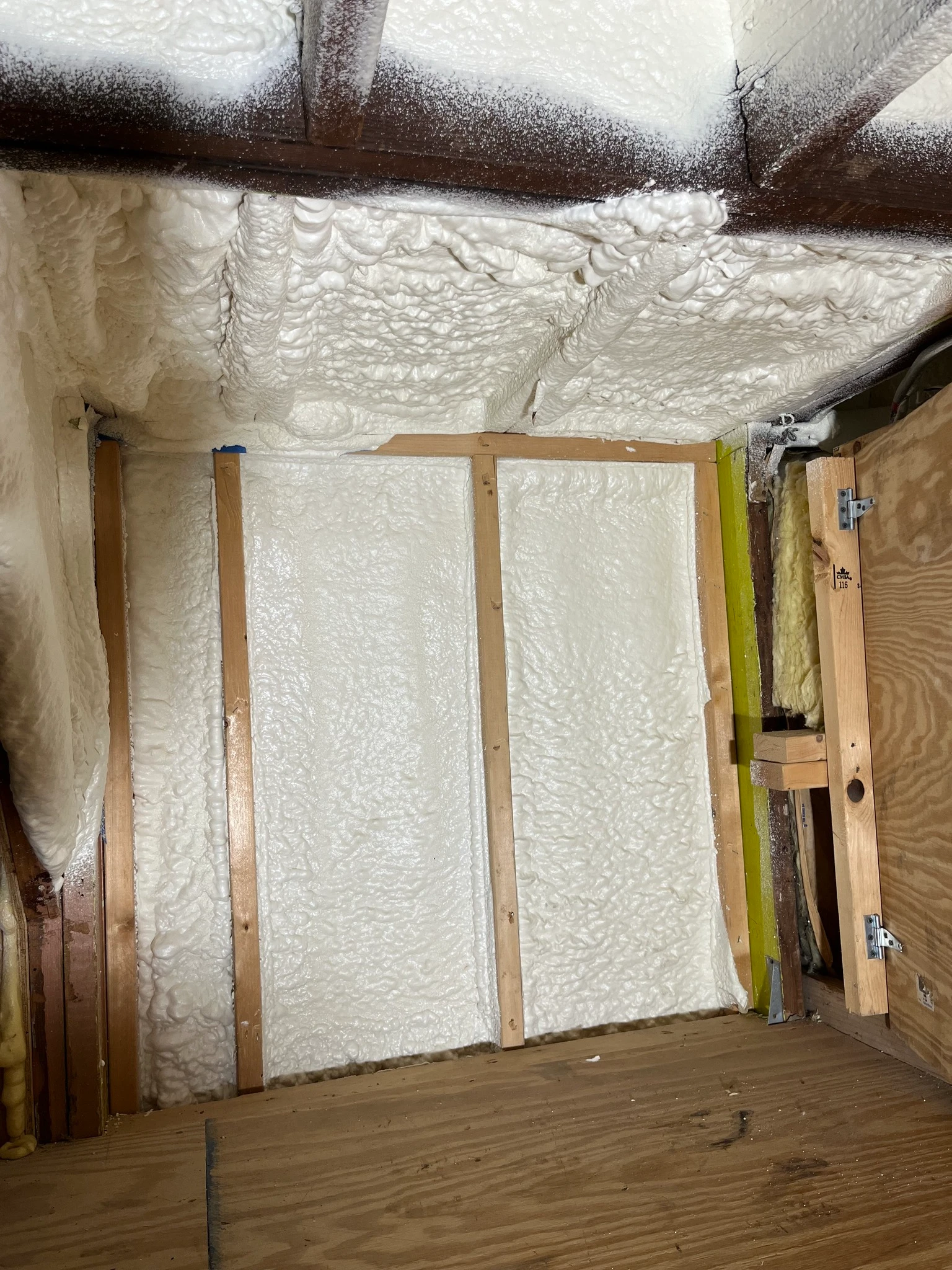
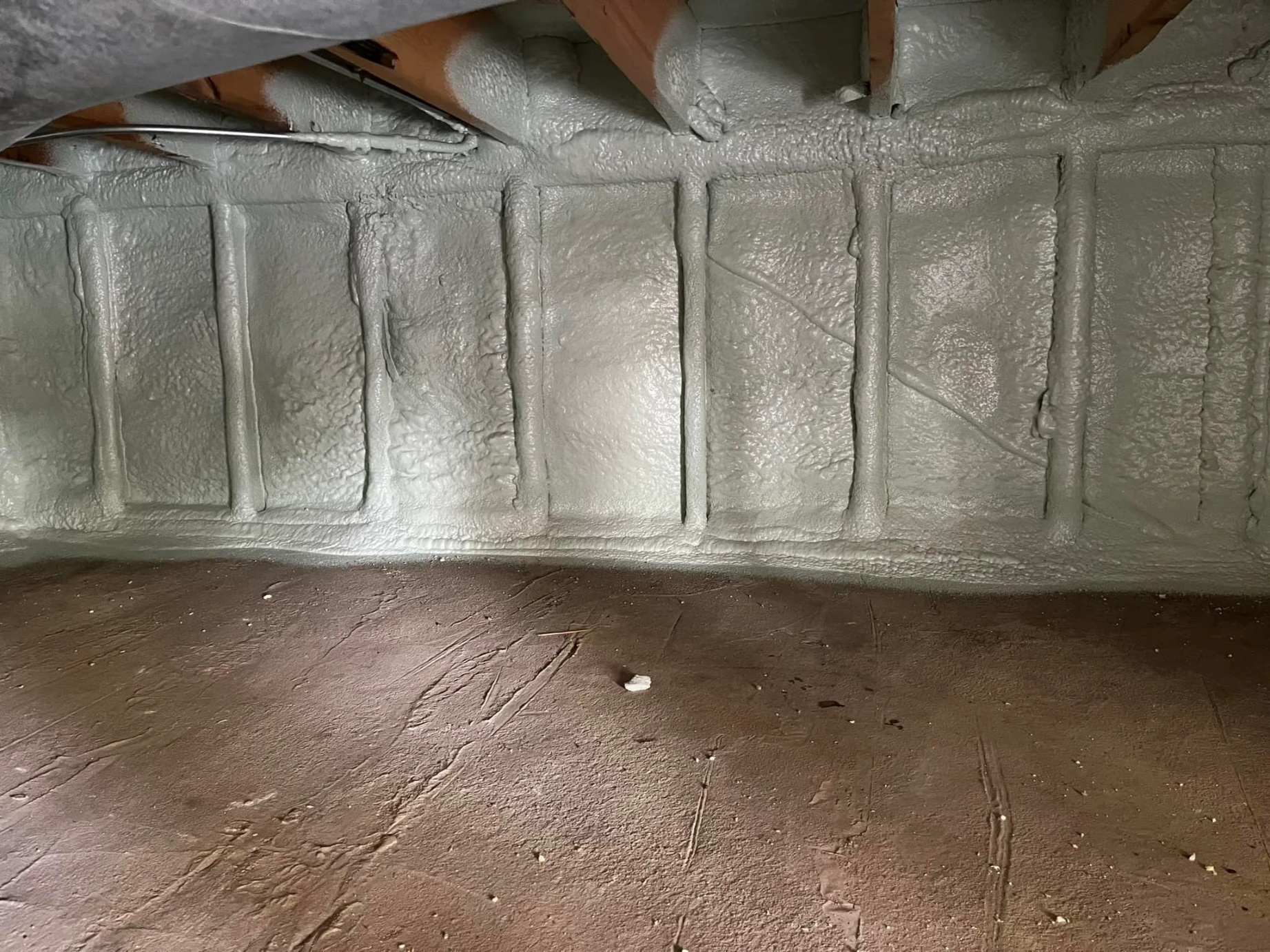
Open-cell spray foam, applied in the attic or wall cavities, expands to fill every void, creating a monolithic seal. This prevents exterior air from mixing with conditioned interior air, keeping those seasonal irritants outside where they belong.
Bonus Tip: When planning a spray foam installation specifically for allergy mitigation, prioritize areas experiencing the greatest pressure differences, such as the attic floor and basement rim joists. Sealing these two areas will yield the biggest immediate improvement in air infiltration.
Managing Moisture and Mold
One of the most concerning indoor allergens is mold, which thrives in areas with elevated humidity and condensation. Uncontrolled moisture often results from warm, humid air entering a cool wall cavity, hitting a cold surface, and condensing into liquid water.
Open-cell foam, unlike closed-cell foam, is permeable to water vapor. This means that if moisture somehow gets into the wall or roof assembly, it can dry out. In colder, moisture-prone climates like Chicago, this permeability is often preferred, particularly in roof assemblies or cathedral ceilings, because it helps prevent moisture from getting trapped and leading to long-term structural issues or hidden mold growth.
However, proper moisture management depends heavily on climate. For regions with extreme cold and high indoor humidity, professional analysis of the wall assembly is necessary to determine if open-cell foam needs additional vapor control layers or if a dense material like closed-cell foam is more appropriate for a specific application.
Comparison of Insulation Types for Air Quality
Selecting the right insulation is critical because different materials have vastly different effects on air movement and moisture handling. Here is a look at how open-cell foam compares to other common options based on factors affecting allergens:
Feature
Open-Cell Spray Foam
Closed-Cell Spray Foam
Fiberglass Batts
Cellulose
Air Barrier Effectiveness
Excellent (Expands to seal)
Excellent (Rigid, seals gaps)
Poor (Allows air passage)
Fair (Dense packing helps)
R-Value per Inch
Medium (R-3.5 to R-3.7)
High (R-6.5 to R-7.0)
Low (R-3.0 to R-4.0)
Low to Medium (R-3.2 to R-3.8)
Moisture Permeability
High (Permeable)
Very Low (Vapor barrier)
High (Wicks moisture)
High (Absorbs moisture)
Contributes to Allergen Reduction
High (By stopping infiltration)
High (By stopping infiltration)
Low (Allows particle entry)
Medium (Reduces air flow when dense)
Internal Allergen Mitigation and Ventilation
While air sealing stops outdoor air and moisture-related mold, it does not eliminate indoor-generated allergens like dust mites, pet dander, or cooking fumes. In fact, a tightly sealed home requires proper mechanical ventilation.
A study published in Healthy Housing highlighted the need for controlled ventilation in energy-efficient homes to avoid trapping pollutants inside. Installing an Energy Recovery Ventilator (ERV) or Heat Recovery Ventilator (HRV) is often recommended when achieving a high level of air tightness with spray foam. These systems exchange stale indoor air with fresh outdoor air while recovering energy, and they also include filtration to remove fine particulates.
Bonus Tip: After installing foam insulation, monitor humidity levels closely. Keep indoor relative humidity below 50% to discourage dust mites and mold growth, especially during heating and cooling seasons.
Things to Consider Before Making a Decision
Before deciding if open-cell spray foam is the right choice for your specific allergy concerns, evaluate these practical elements:
Existing Air Quality Issues: Determine if your allergy triggers are primarily outdoor (pollen, seasonal spores) or indoor (dust mites, pets, poor ventilation). Foam helps most with the former.
Ventilation Plan: Does the home have adequate existing ventilation? If not, budgeting for an ERV or HRV should be factored into the overall project cost.
Installation Quality: The effectiveness of the air seal is entirely dependent on the quality of the application. Gaps left unsealed defeat the purpose. Using a company experienced in air barrier requirements is essential.
Curing Time: After application, spray foam requires a set curing time. The air quality benefits are often noticeable quickly. However, ensure the property is properly ventilated during and immediately after installation to clear any off-gassing associated with the application process.
Evaluating Your Needs
Understanding how spray foam contributes to better indoor air quality requires moving past marketing claims and focusing on building science: stop the air leaks, control the temperature, and manage the moisture. Open-cell spray foam is a highly effective tool that addresses the first two points directly. Remember that insulation is one part of a healthy home system; it works best when paired with effective mechanical ventilation and filtration to handle internal air pollutants. Evaluate your existing home vulnerabilities and long-term health goals before committing to any insulation project.
Ready to Discuss Air Sealing Options
If you are evaluating options to improve your indoor environment and reduce allergen exposure, contacting local insulation professionals is the logical next step. For residents in the area, South Chicago Insulation provides detailed consultations to determine the optimal strategy for improving the air seal and thermal performance of your property. Connect with the experts by emailing [email protected] or calling (779) 803-8025 to discuss if open-cell spray foam fits your home and health needs.
Frequently Asked Questions
Is open-cell foam better than closed-cell foam for allergies?
For allergy control, both open-cell and closed-cell foam provide excellent air sealing properties, which is the main factor. Open-cell is often chosen in residential settings because it allows the structure to breathe, making long-term moisture management simpler in cold climates, reducing the risk of hidden moisture issues that lead to mold growth.
What specific allergens does foam help reduce?
Foam helps reduce the presence of outdoor allergens such as pollen, smog particles, seasonal molds, and dust carried in on wind currents. It also indirectly controls indoor allergens by regulating humidity, which prevents the proliferation of dust mites and reduces the conditions necessary for mold and mildew growth.
Do I still need an air filter if I use spray foam?
Yes. Spray foam provides the essential air seal, but an HVAC system equipped with a high-efficiency particulate air (HEPA) filter is still necessary to clean the air circulating inside the home, removing internal particles like pet dander, cooking smoke, and internal dust.
Where should open cell foam be applied for best results?
The highest impact applications are typically the attic ceiling (creating a conditioned attic) and the perimeter rim joists in the basement. Sealing these two areas dramatically reduces stack effect and air leakage, cutting off major entry points for external pollutants.
Sources
Environmental Protection Agency – Data on residential air leakage and energy consumption, relevant for demonstrating the mechanism of external allergen entry.
Healthy Housing – Information from the National Center for Healthy Housing discussing the need for controlled ventilation in tightly sealed homes for pollutant removal.
U.S. Department of Energy – General information regarding insulation types and their R-values and general performance characteristics.
Open-cell spray foam insulation in Burr Ridge, IL, presents significant problems primarily related to moisture management, structural suitability, and long-term…
Poor insulation in cold rooms directly causes significant operational problems, including temperature instability, excessive energy consumption, equipment strain, and product…