How commercial roof coatings create a monolithic seal against rain in Mount Greenwood, IL
admin_southchica
January 19th, 2026
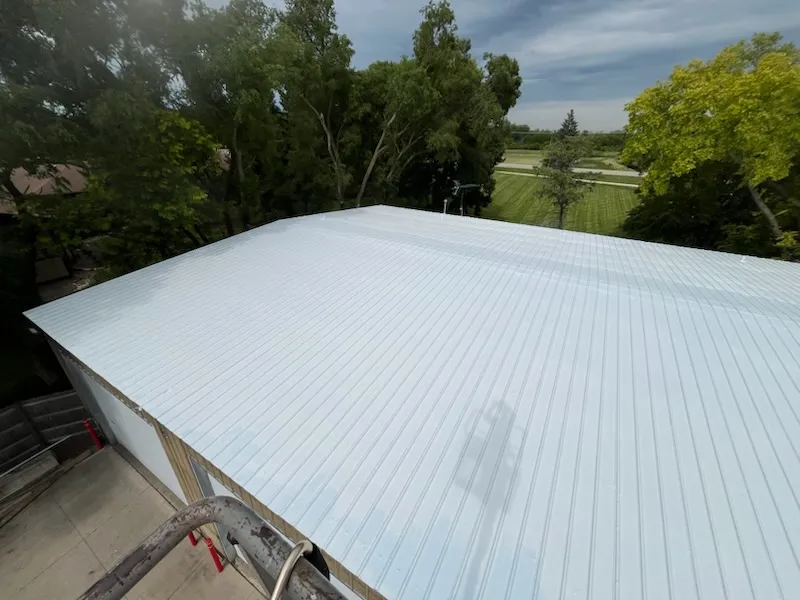
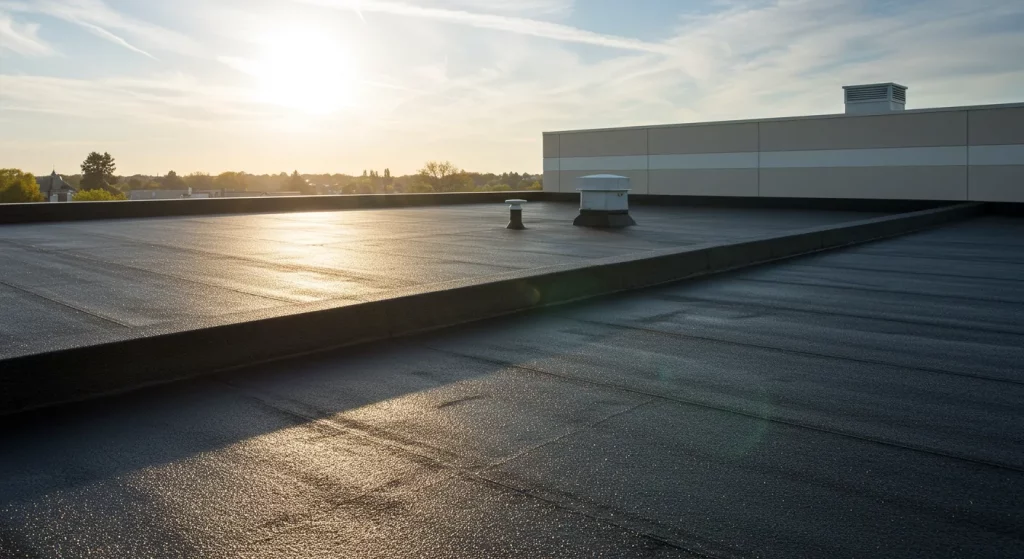
Commercial roof coatings create a continuous, seamless membrane that completely covers the existing roof surface, eliminating joints, seams, and gaps where water typically penetrates. Applied as a liquid that cures into a solid sheet, these coatings form what roofing professionals call a “monolithic seal” – a single, unified barrier that’s completely waterproof when properly installed. In Mount Greenwood’s climate, with its heavy spring rains and freeze-thaw cycles, this seamless protection prevents water from finding pathways through roof penetrations, flashing, or membrane seams, which are the most common failure points in traditional roofing systems.
This guide explains the science behind monolithic sealing created by commercial roof coatings, the specific challenges of Mount Greenwood’s weather, and practical considerations for property owners evaluating this waterproofing solution. Drawing from years of hands-on application experience in the Chicago area, the information focuses on proven techniques that work in local conditions.
The Science of Monolithic Sealing
Liquid-applied roof coatings create monolithic seals through a simple but effective process. The coating material starts as a fluid that can flow into every microscopic crack, crevice, and imperfection on the roof surface. As it cures, it transforms into a flexible, rubber-like membrane that physically bonds to the substrate. This bond occurs at the molecular level, creating a barrier that prevents water from separating from the roof deck.
The monolithic nature comes from the fact that the coating is applied continuously across the entire roof surface. Unlike traditional roofing systems that involve multiple pieces joined together with seams, a coated roof is essentially one piece. There are no seams to fail, no joints to separate, and no fasteners that can work loose over time. The coating also cures to form a skin with no pinholes or voids that might allow water passage.
Material Properties That Enable Sealing
Different coating materials achieve monolithic sealing through various properties:
Acrylic coatings provide excellent UV resistance and maintain flexibility across a wide temperature range, making them ideal for Mount Greenwood’s climate variations. They’re water-based and environmentally friendly, with reflectivity values that can reduce cooling costs by up to 15% according to Energy Star.
Silicone coatings offer superior waterproofing characteristics and can withstand ponding water indefinitely without degradation. They’re particularly valuable for flat or low-slope commercial roofs where drainage issues might exist.
Polyurethane coatings deliver exceptional impact resistance and durability against hail and foot traffic, which is valuable for commercial properties in the Chicago area.
The table below compares these materials for monolithic sealing applications:
Material
Temperature Range
Ponding Water Resistance
UV Resistance
Typical Application Thickness
Acrylic
-40°F to 200°F
Poor to Fair
Excellent
20-30 mils
Silicone
-100°F to 350°F
Excellent
Good to Fair
30-50 mils
Polyurethane
-30°F to 250°F
Good
Fair to Poor
30-40 mils
Mount Greenwood’s Unique Weather Challenges
Mount Greenwood’s specific roof coatings weather patterns make monolithic sealing particularly valuable. The area receives approximately 36 inches of precipitation annually, with heavy spring rains that can overwhelm drainage systems. Summer brings intense UV exposure that degrades unprotected roofing materials, while winter freeze-thaw cycles create expansion and contraction stress on roof components.
During winter, snow accumulation can create ponding water as it melts and refreezes. Traditional roofing membranes often develop micro-cracks under these conditions. A monolithic coating maintains flexibility at low temperatures, preventing crack formation even when the substrate beneath contracts.
Bonus Tip: For Mount Greenwood properties, consider coatings with reflective properties rated by the Cool Roof Rating Council (CRRC). These reduce thermal cycling by reflecting up to 85% of solar radiation, which extends the life of both the coating and the underlying roof system.
Preparation Requirements for Effective Sealing
Achieving true monolithic sealing requires meticulous surface preparation. Any contamination on the roof surface will prevent proper adhesion, creating weak spots where water can eventually penetrate. The preparation process typically includes:
Cleaning the roof surface to remove dirt, dust, oils, and loose materials. Pressure washing or mechanical scrubbing might be necessary for heavily soiled surfaces.
Repairing all existing damage, including cracks, blisters, and deteriorated sections. These areas must be patched before coating application.
Priming the surface when required by the coating manufacturer. Some formulations need specific primers to ensure chemical bonding to the substrate.
Ensuring proper drainage by addressing any low spots or areas where water tends to collect. While silicone can handle ponding water, proper drainage extends roof life.
The moisture content of the roof substrate must also be controlled. Trapped moisture beneath the coating can cause blistering and adhesion failure, destroying the monolithic seal.
Things to Consider Before Making a Decision
Roof condition assessment is the first step. Coatings cannot fix structural issues or severely deteriorated decks. If the roof structure is compromised, replacement may be more cost-effective than coating.
Building access matters significantly. Some commercial insulation of buildings in Mount Greenwood have limited roof access, which can complicate equipment setup and increase project costs. High-rise properties may require specialized rigging and safety measures.
Budget considerations should include life-cycle costs, not just initial price. While coating systems cost less upfront than complete replacement, high-performance materials and professional installation represent a significant investment.
Timing affects project success. Weather conditions in Mount Greenwood can limit application windows. Coatings require specific temperature ranges and dry conditions for proper curing. Spring and early fall typically provide optimal installation conditions.
Final Considerations for Property Owners
The effectiveness of monolithic sealing depends heavily on proper installation. Even the best coating materials will fail if applied incorrectly. Professional installers understand the specific requirements for different substrates and can identify potential issues before they become problems.
Property owners should request documentation of manufacturer certifications and warranties. Reputable installers typically provide workmanship warranties that complement manufacturer material warranties. Documentation of the coating system components, including material safety data sheets and technical specifications, should be provided for building records.
The choice of coating technology should be based on specific building requirements, roof conditions, and budget considerations. A professional roof assessment can help determine the most appropriate system for each property.
Get Professional Roof Coating Evaluation
For property owners in Mount Greenwood considering roof coating solutions, South Chicago Insulation provides comprehensive roof assessments and coating system recommendations. Contact the experts at [email protected] or call (779) 803-8025 to schedule a detailed evaluation of your commercial roofing needs. Professional analysis helps ensure the right coating system for specific building conditions and climate challenges.
FAQ About Commercial Roof Coatings
How long do commercial roof coatings last in Chicago’s climate?
Quality coating systems applied by experienced professionals typically last 10-20 years in the Chicago area. The exact lifespan depends on coating type, substrate condition, and maintenance routine. Silicone systems often last 15-20 years, while acrylic systems generally provide 10-15 years of service before reapplication is needed.
Can roof coatings be applied over existing roofing materials?
Yes, most commercial roof coatings are designed for application over existing single-ply membranes, modified bitumen, metal roofs, and built-up roofing systems. The existing roof must be clean, dry, and in sound structural condition. Coatings cannot be applied over loose gravel, wet insulation, or deteriorated substrates.
Are roof coatings environmentally friendly?
Modern commercial roof coatings are significantly more environmentally friendly than roof replacement. Water-based acrylic coatings have low VOC (Volatile Organic Compound) content, and some formulations even qualify as environmentally preferred products. Coatings also reduce landfill waste by extending existing roof life rather than requiring replacement.
Do roof coatings reduce energy costs?
Reflective coatings can reduce commercial building cooling costs by 10-25% according to Lawrence Berkeley National Laboratory. The reduction varies based on climate zone, building insulation, and HVAC system efficiency. In Mount Greenwood’s climate, cooling cost savings are most noticeable during hot summer months.
What maintenance is required after coating application?
Annual inspections should identify any damage or developing issues. Minor repairs can often be made with compatible coating material. Keeping the roof surface clean, especially of debris that might trap moisture, helps maintain coating performance. Most coating systems require little maintenance beyond routine inspection.
Sources
Energy Star – Government program providing information on energy-efficient roofing materials and their performance characteristics
Open-cell spray foam insulation in Burr Ridge, IL, presents significant problems primarily related to moisture management, structural suitability, and long-term…
Poor insulation in cold rooms directly causes significant operational problems, including temperature instability, excessive energy consumption, equipment strain, and product…