How Closed-Cell Spray Foam Prevents Ice Dams on Roofs in Chicago, IL
admin_southchica
December 17th, 2025
Closed-cell spray foam prevents ice dams by creating a monolithic air seal and high-performance thermal barrier directly against the underside of the roof deck. This application prevents the transfer of indoor heat into the attic, keeping the roof sheathing temperature consistent with the outdoor air temperature. When the roof deck stays cold, snow accumulated on the shingles does not melt from underneath. This prevents the meltwater from running down to the cold eaves and refreezing, which is the mechanical cause of ice dam formation.
Chicago winters frequently bring heavy snowfall followed by fluctuating temperatures, creating ideal conditions for ice dams to form on poorly insulated homes. South Chicago Insulation recognizes that standard insulation materials often fail to stop the air leakage that causes the roof deck to heat. By stopping heat loss at the source, closed-cell spray foam addresses the root cause of the problem rather than just managing the symptoms.
The Physics Behind Ice Dam Formation
To understand how spray foam works, you must first understand why ice dams happen. Ice dams occur when the roof temperature is uneven in a typical Chicago home with traditional fiberglass or cellulose insulation. Warm air from the living space leaks into the attic through light fixtures, plumbing stacks, and gaps in the drywall. This warm air rises, heating the underside of the roof deck.
Snow on the upper, warmer sections of the roof melts. The water runs down the roof slope until it reaches the eaves (the overhangs). Since the eaves are not over the heated living space, they remain cold. The water hits this cold zone and freezes instantly, forming an ice ridge. As more snow melts, water backs up behind this ice ridge, forcing its way under the shingles and into the home.
According to the University of Minnesota Extension, air leakage is a primary contributor to ice dams, often carrying more moisture and heat into the attic than diffusion through materials. Closed-cell spray foam solves this by sealing those leaks completely.
How Closed Cell Foam Breaks the Cycle
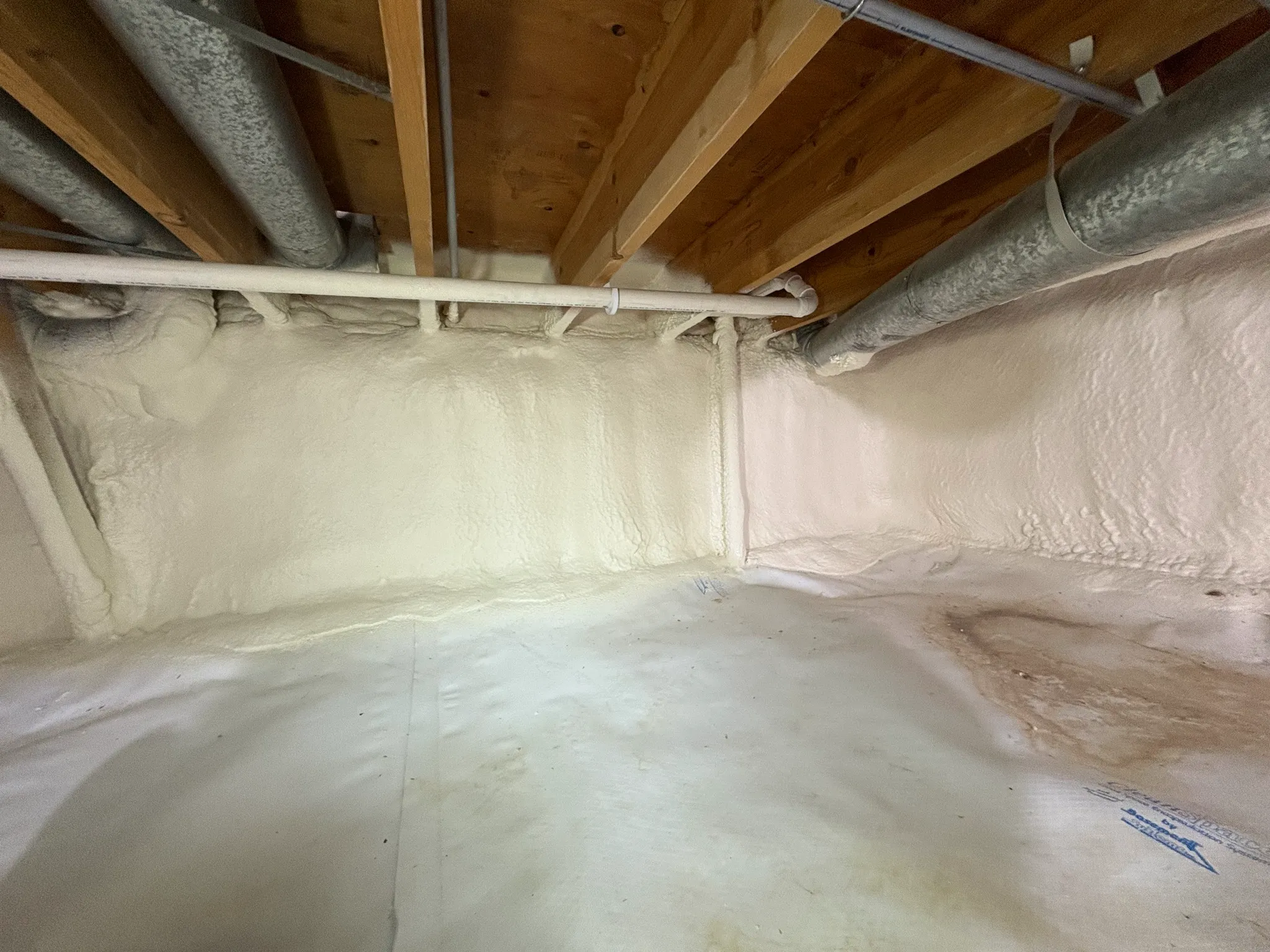
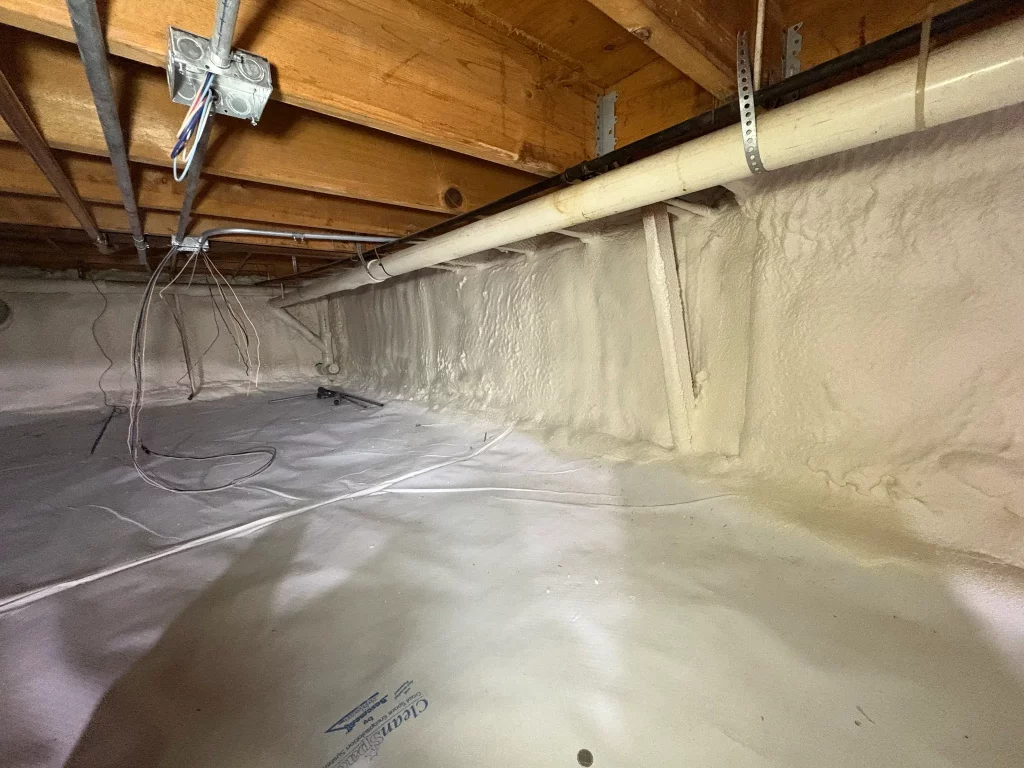
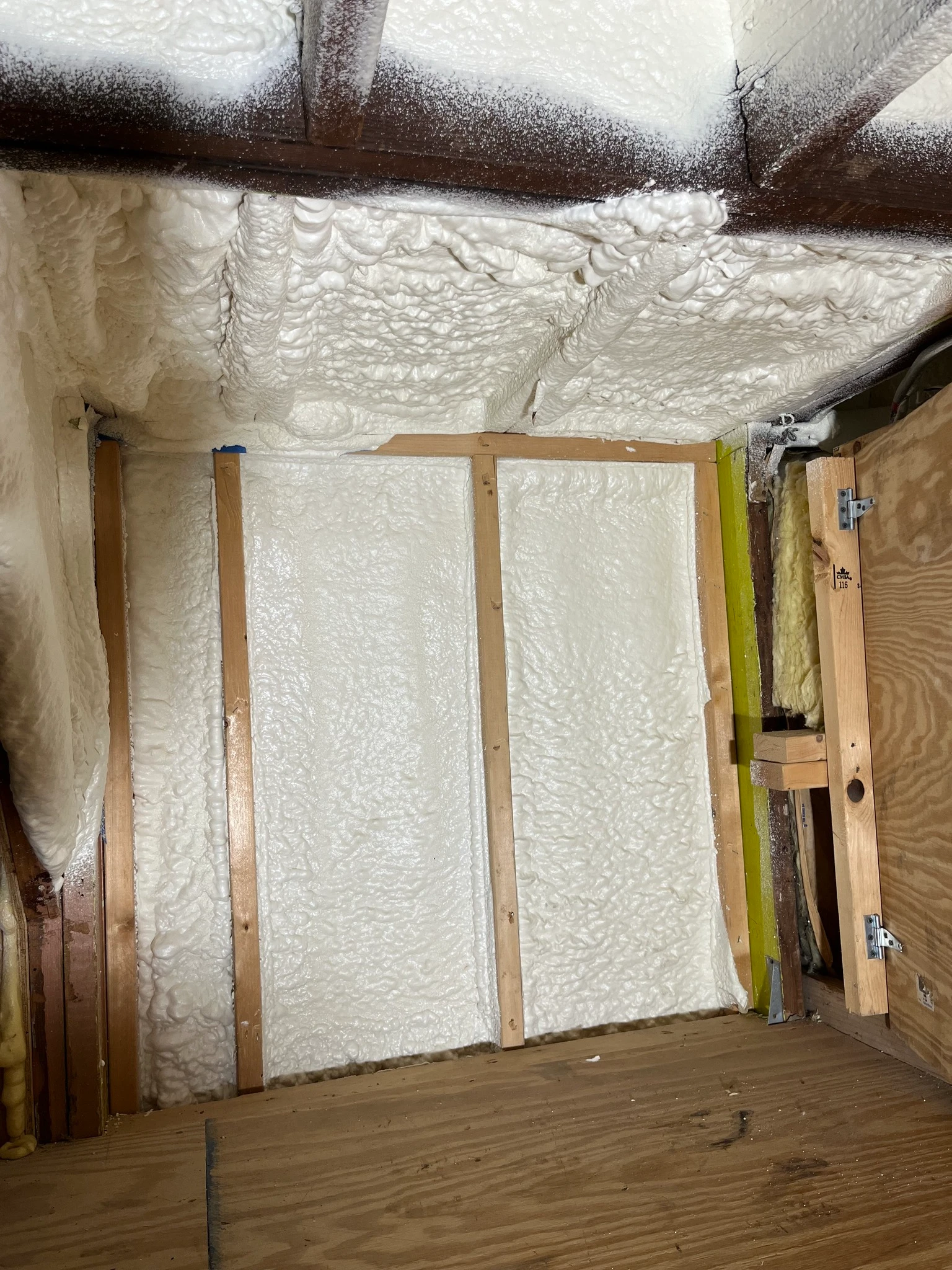
Closed-cell spray foam (CCSF) differs from other insulation types because of its density and chemical structure. When applied, it expands to fill every crack, crevice, and gap, hardening into a rigid plastic that adheres directly to the building envelope.
The Air Barrier Advantage
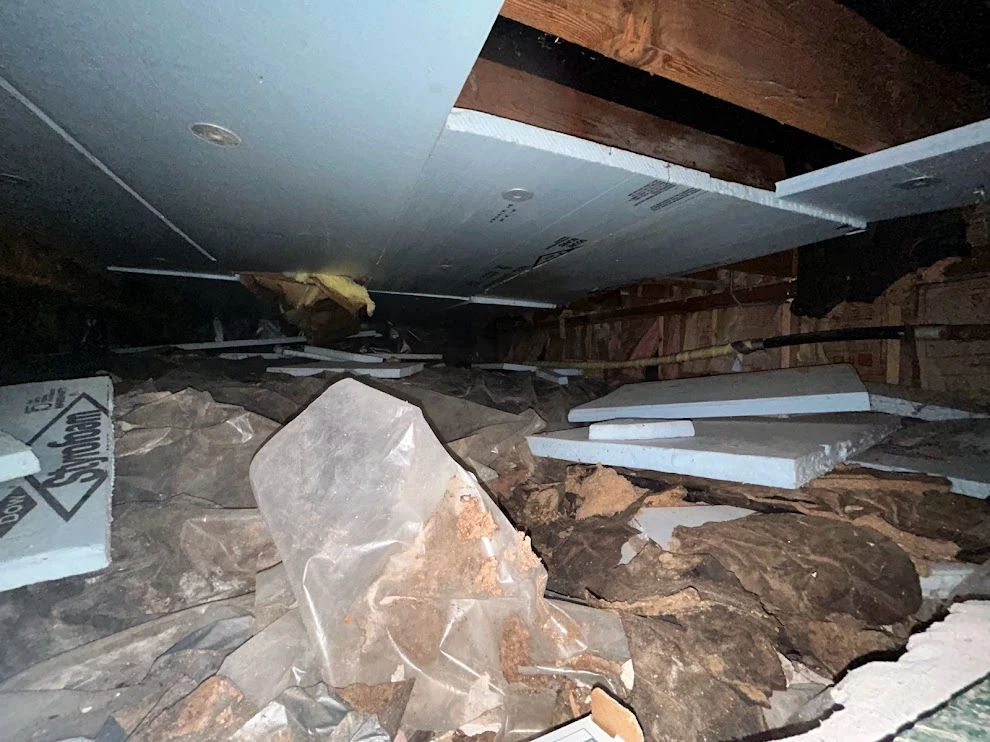
Fiberglass batts and blown-in cellulose function like a wool sweater: they keep you warm, but wind blows right through them. They slow the conductive transfer of heat but do very little to stop air movement. Warm air passes through these materials, heating the attic space.
Closed-cell foam acts like a windbreaker over that sweater. It is an air-impermeable material. By applying it to the underside of the roof deck (a method often called a “hot roof” or unvented attic assembly), you stop warm indoor air from ever reaching the roof sheathing.
High R-Value per Inch
Space in an attic is often limited, specifically near the eaves where the roof pitch meets the wall plates. Traditional insulation often compresses in these tight spaces, reducing its insulating value. Closed cell foam offers an R-value of approximately R-6 to R-7 per inch. This provides high thermal resistance even in shallow spaces, ensuring the roof edge remains properly insulated.
Moisture Vapor Control
Moisture control matters immensely in Chicago’s humid winters. Warm air carries moisture. If that moisture hits a cold roof deck, it condenses, causing mold and rot. Closed-cell spray foam acts as a Class II vapor retarder. It prevents moisture from passing through the insulation and condensing on the roof deck, protecting the structural integrity of the home Building Science Corporation.
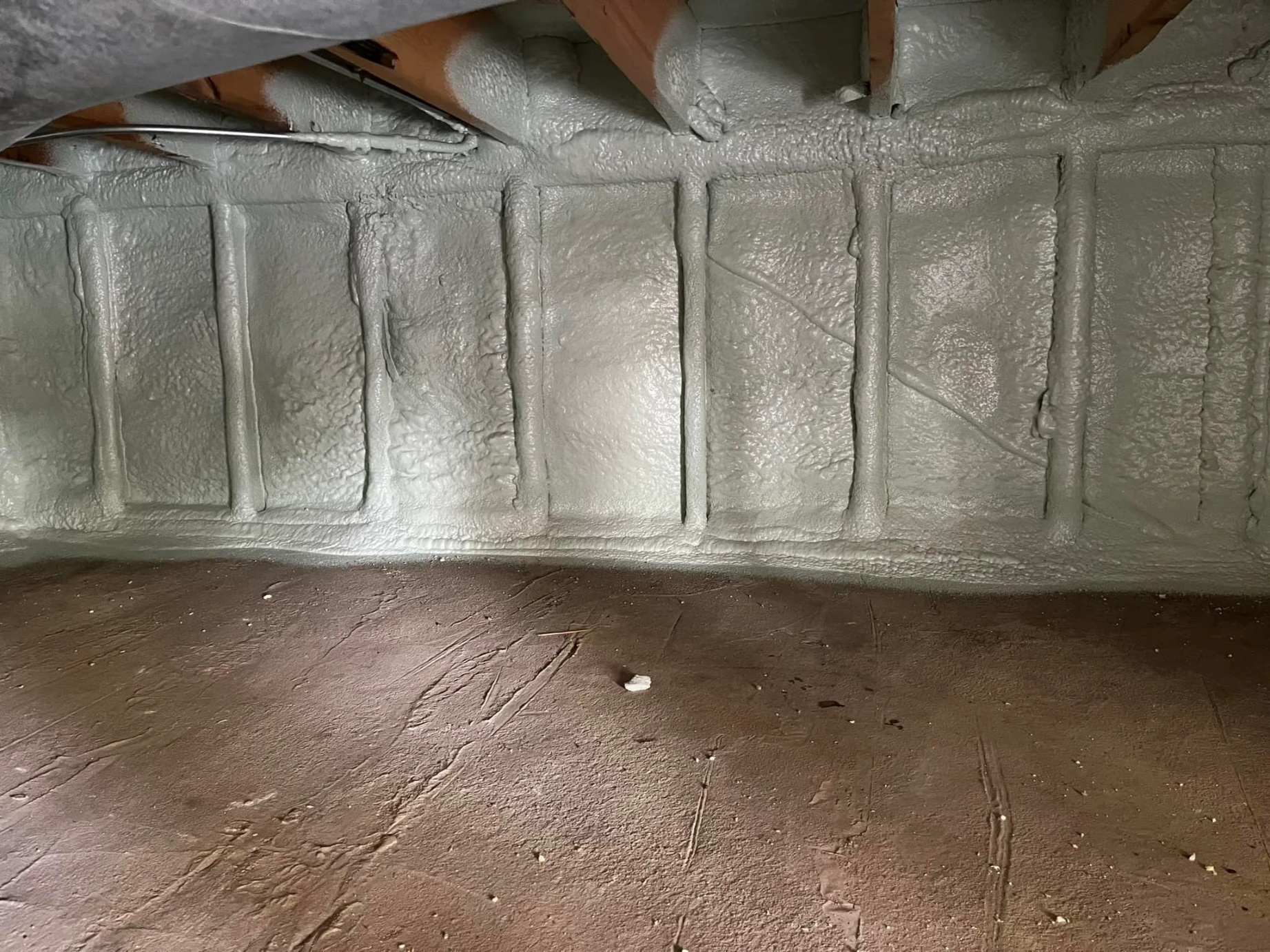
Bonus Tip: Pay close attention to the rim joists in the basement or crawl space. While the roof is the focus for ice dams, the “stack effect” pulls cold air in at the bottom of the house and pushes warm air out the top. Sealing the rim joists with spray foam reduces the upward pressure of warm air, improving the overall system performance.
Comparison of Insulation Materials for Ice Dam Prevention
Selecting the right material determines the long-term performance of the roof system. The table below outlines how common insulation types perform with respect to factors that cause ice dams.
–Feature
Fiberglass Batts
Blown-in Cellulose
Closed-Cell Spray Foam
Air Seal Capability
Poor (Air moves through it)
Fair (Slows air, doesn’t stop it)
Excellent (Air impermeable)
R-Value per Inch
~ R-3.0 to R-3.5
~ R-3.2 to R-3.7
~ R-6.0 to R-7.0
Moisture Resistance
Absorbs water / Mold risk
Absorbs water / Mold risk
Water resistant / Vapor retarder
Space Requirements
Requires significant depth
Requires significant depth
Compact / Fits tight eaves
Ice Dam Prevention
Low (Unless perfectly vented)
Moderate (Settles over time)
High (Eliminates heat source)
Chicago Climate Factors and Roof Performance
The Chicago area presents a specific challenge known as the freeze-thaw cycle. Data indicates that Chicago experiences frequent fluctuations around the freezing point during the winter months. This constant shifting between freezing and thawing can accelerate ice dam formation if the roof system is inconsistent.
A report from the Department of Energy indicates that air sealing combined with insulation can save homeowners an average of 15% on heating and cooling costs. Still, in a climate like Chicago’s, the structural preservation benefit is arguably more immediate. The weight of ice dams can tear off gutters and damage fascia boards. By utilizing closed-cell foam, the roof deck handles the snow load as designed, without the added stress of hundreds of pounds of ice accumulation at the eaves.
Things to Consider Before Making a Decision
Applying spray foam is a commitment that changes how the house breathes and functions.
Ventilation Changes
When applying closed-cell foam to the underside of the roof deck, the attic typically becomes an unvented, conditioned space. This means existing soffit vents and ridge vents may need to be sealed off. This changes the thermal boundary of the house. The HVAC equipment in the attic will now operate in a conditioned environment, improving efficiency, but the change must be planned carefully.
Existing Roof Condition
Spray foam adheres aggressively to the roof deck. If the roof sheathing (the wood under the shingles) is rotten or near the end of its life, it should be replaced before spraying. If you spray over damaged wood, you cannot replace that wood later without cutting out the foam.
Cost vs. Value
Closed-cell foam costs more upfront than fiberglass. However, the cost calculation should include the cost of preventing water damage, gutter replacement, and the long-term energy savings from a tighter building envelope.
Bonus Tip: If you choose to insulate the attic floor instead of the roof deck, ensure the foam does not block the soffit vents. Airflow from the soffits is mandatory in a vented attic system to wash the underside of the roof with cold air.
FAQS: Solving Winter Roofing Issues
Is closed-cell foam better than open-cell foam for ice dams?
Yes. Closed cell foam is rigid, has a higher R-value per inch, and acts as a vapor retarder. Open cell foam is permeable to moisture. In a cold climate like Chicago, warm indoor humidity can pass through open cell foam and condense on the freezing roof deck, leading to rot. Closed cell prevents this moisture drive.
Does spray foam completely guarantee no ice dams?
While it eliminates the primary cause (heat loss), weather conditions can still create ice. If snow melts due to solar gain (sunlight) and then temperatures drop rapidly at night, minor icing can occur. However, these are environmental ice formations, not the massive, destructive dams caused by attic heat loss.
Can spray foam be applied during a Chicago winter?
Yes, but it requires specialized equipment. The chemical drums must be heated, and the hose lines must maintain specific temperatures. Professional installers use heated trailers to condition the material before it reaches the spray gun, allowing for year-round installation.
How thick should the foam be applied?
For the roof deck in Climate Zone 5 (which includes Chicago), code typically requires a specific R-value. However, even 2 to 3 inches of closed cell foam provides the air seal and thermal break necessary to stop the heat loss that causes ice dams. Consult local building codes for specific R-value compliance.
Conclusion
Ice dams are not merely a weather phenomenon; they are a symptom of a building failure. The heat that you pay for is escaping, melting snow, and damaging the home. Closed-cell spray foam offers a definitive solution by addressing the physics of heat transfer and air leakage simultaneously. By keeping the roof deck cold and the living space warm, this method protects the property from water damage and improves overall energy efficiency.
Homeowners should evaluate their current attic ventilation and insulation levels before winter sets in. Addressing the thermal boundary now prevents emergency ice-removal calls later.
Contact South Chicago Insulation
Protecting your home from the severity of Chicago winters requires the right materials and expert application. South Chicago Insulation provides precise assessments and professional installation of closed-cell spray foam to secure your thermal envelope.
Open-cell spray foam insulation in Burr Ridge, IL, presents significant problems primarily related to moisture management, structural suitability, and long-term…
Poor insulation in cold rooms directly causes significant operational problems, including temperature instability, excessive energy consumption, equipment strain, and product…