Maximizing Efficiency: A Deep Dive into Closed-Cell Spray Foam Solutions
admin_southchica
December 13th, 2025
If you have ever stood in a drafty room in the middle of a Chicago winter or watched your air conditioning bill climb higher every August, you know that insulation is not just about pink fiberglass rolls in the attic. It is about the complete control of your building’s environment. The difference between a home that bleeds energy and one that retains it often comes down to the integrity of the building envelope. This is where closed-cell spray foam (ccSPF) stands apart. While traditional insulation materials slow down heat transfer, closed-cell foam stops it, seals air leaks, and blocks moisture in a single pass. It is arguably the most capable insulation product available on the market today.
However, moving to closed-cell foam represents a significant investment compared to standard batt insulation. You need to know if the performance justifies the cost. This guide covers every aspect of closed-cell spray foam. We will look at the chemistry that gives it strength, the specific applications where it outperforms everything else, and the installation realities you need to understand. At South Chicago Insulation, we have seen firsthand how the right insulation strategy changes how a building operates. Let’s get into the details so you can make an educated decision for your property.
Understanding the “Closed-Cell” Difference
To understand why this material performs the way it does, you have to look at it on a microscopic level. Spray polyurethane foam (SPF) comes in two main varieties: open-cell and closed-cell. The names refer to the structure of the tiny bubbles that make up the foam.
In closed-cell foam, the cells are fully encapsulated and packed tightly together. Imagine millions of tiny, rigid balloons glued together. They are filled with a specialized gas (a blowing agent) that conducts heat very poorly. Because the cells are closed, air and moisture cannot pass through the foam itself.
This structure creates a material that is dense, rigid, and heavy. While open-cell foam is sponge-like and weighs about 0.5 pounds per cubic foot, closed-cell foam typically has a density of 2.0 pounds per cubic foot. This density provides distinct advantages in structural strength and thermal resistance.
The R-Value Advantage
R-value measures a material’s resistance to heat flow. The higher the number, the better it insulates. Closed-cell foam boasts the highest R-value per inch of any standard insulation material.
Generally, closed-cell foam offers an R-value of R-6.0 to R-7.0 per inch. Compare this to fiberglass batts (roughly R-3.0 per inch) or open-cell foam (approximately R-3.5 per inch). This means you can achieve the same thermal performance with half the thickness. This is particularly valuable in areas with limited space, such as 2×4 wall cavities or cathedral ceilings, where you need maximum insulation without losing headroom.
The Three Pillars of Protection
Most insulation products do one thing: they resist heat transfer. Closed-cell spray foam is unique because it functions as three different building systems simultaneously.
1. Thermal Insulation
As mentioned, the high R-value reduces the load on your HVAC system. By keeping heat out in the summer and in during the winter, your mechanical systems run less often and last longer.
2. Air Barrier
The Department of Energy notes that air leakage can account for 25% to 40% of the energy used for heating and cooling in a typical home. Traditional fiberglass acts like a wool sweater; it keeps you warm, but wind blows right through it. Closed-cell foam expands 30 to 50 times its liquid volume upon application, filling every crack, gap, and crevice. It effectively creates a windbreaker for your building, eliminating drafts and air leakage.
3. Vapor Retarder
This is a major differentiator. Because of its density and closed structure, closed-cell foam is a Class II vapor retarder. It repels water. This makes it the only suitable choice for continuous insulation in high-moisture areas such as basements, crawl spaces, and pole barns. It prevents warm, moist air from reaching cold surfaces, which stops condensation from forming inside your walls.
Expert Tip: If you are insulating a metal building or a shipping container, do not use open-cell foam or fiberglass. The metal conducts heat, and without a vapor barrier like closed-cell foam, you will eventually have “raining” ceilings from condensation.
Comparing Insulation Types
It helps to see the data side by side to understand where closed-cell foam fits in the market.
Feature
Closed-Cell Spray Foam
Open-Cell Spray Foam
Fiberglass Batts
R-Value (per inch)
R-6.0 to R-7.0
R-3.5 to R-3.8
R-2.9 to R-3.8
Air Barrier
Excellent
Excellent
Poor (requires separate sealing)
Vapor Retarder
Yes (Class II)
No (Permeable)
No (Requires facing/poly)
Water Resistance
Waterproof (won’t absorb)
Absorbs water
Absorbs water
Structural Strength
Adds rigidity (up to 300%)
None
None
Cost
High
Moderate
Low
Strategic Applications: Where to Use Closed-Cell Foam
Because of its premium cost, it is smart to use closed-cell foam where its specific properties are required. You may not need it on an interior wall for soundproofing (open-cell is better there), but for the exterior envelope, it is unmatched.
Basements and Crawlspaces
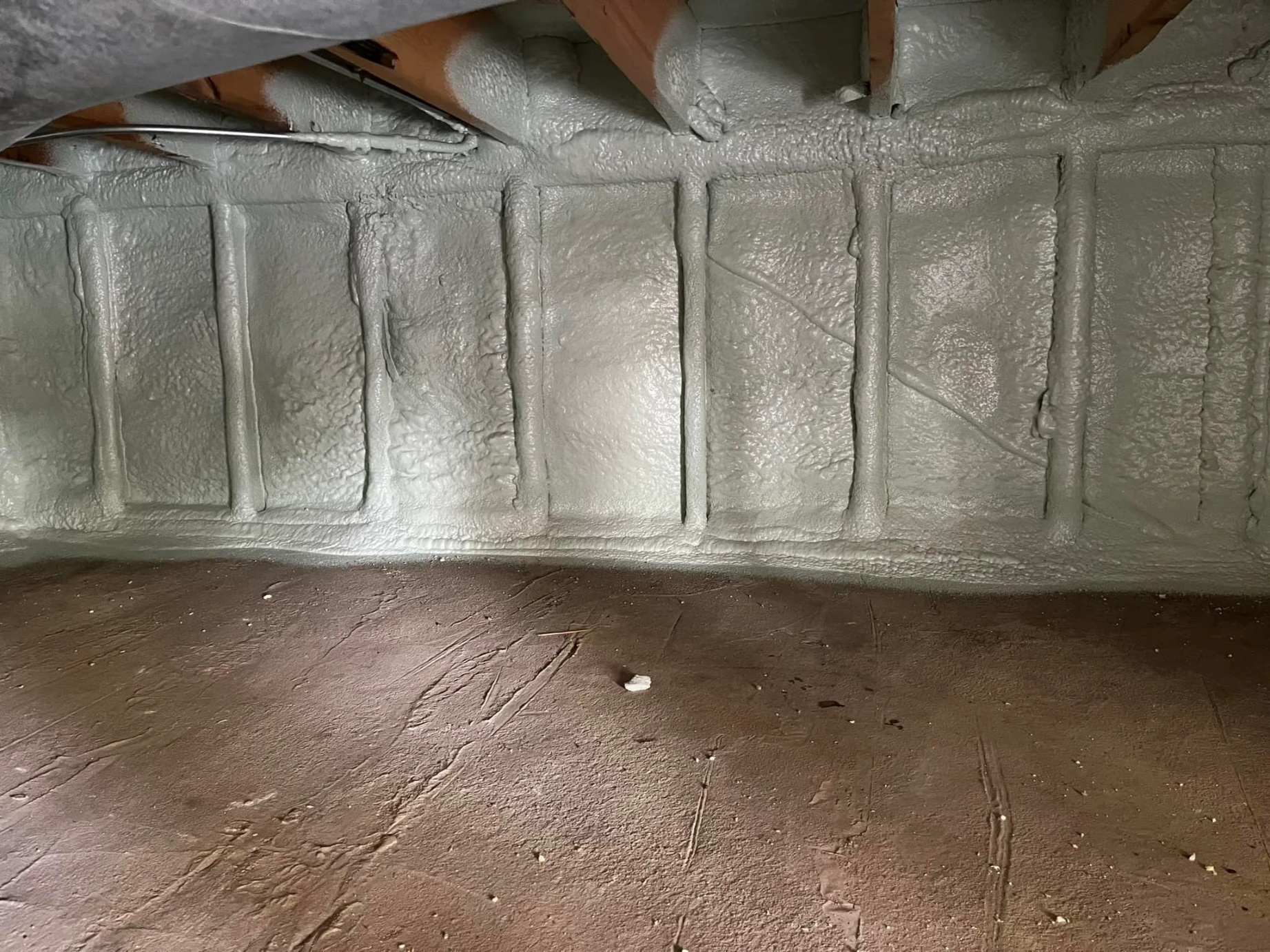
These are the wettest parts of a building. Concrete is porous and constantly wicks moisture from the ground. Applying closed-cell foam to rim joists and foundation walls seals out that moisture and the soil gases (like radon) that can seep in. It is not affected by potential flooding; if it gets wet, it dries out without losing its R-value or growing mold.
Pole Barns and Metal Buildings
Metal structures transfer heat rapidly. In the winter, the interior metal surface stays cold. When you heat the air inside, humidity hits that cold metal and turns to water. Closed-cell foam bonds directly to the metal skin, eliminating the air gap where condensation forms. It also adds significant rigidity to the structure, reducing panel flutter in high winds.
Cathedral Ceilings and Flat Roofs
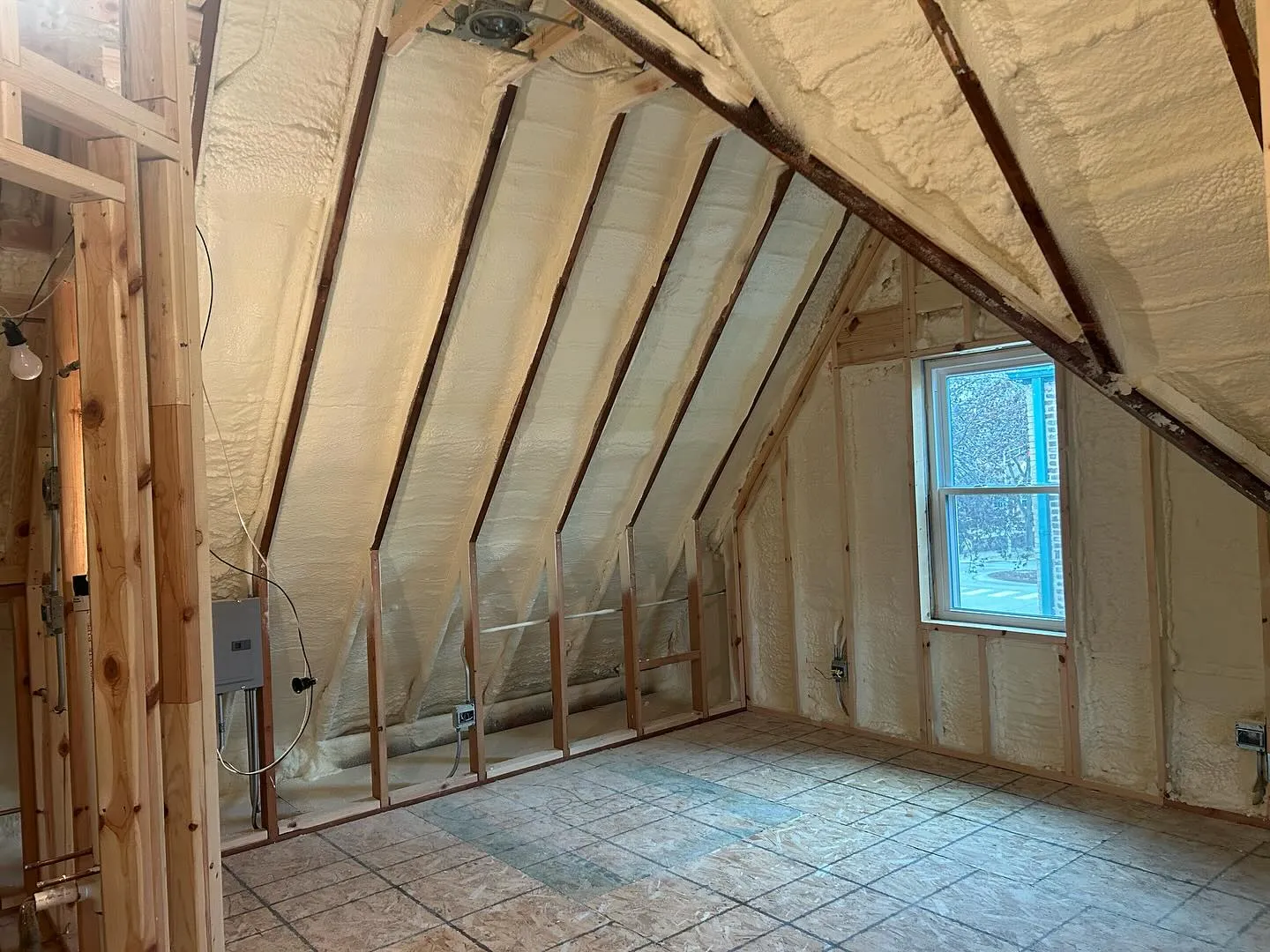
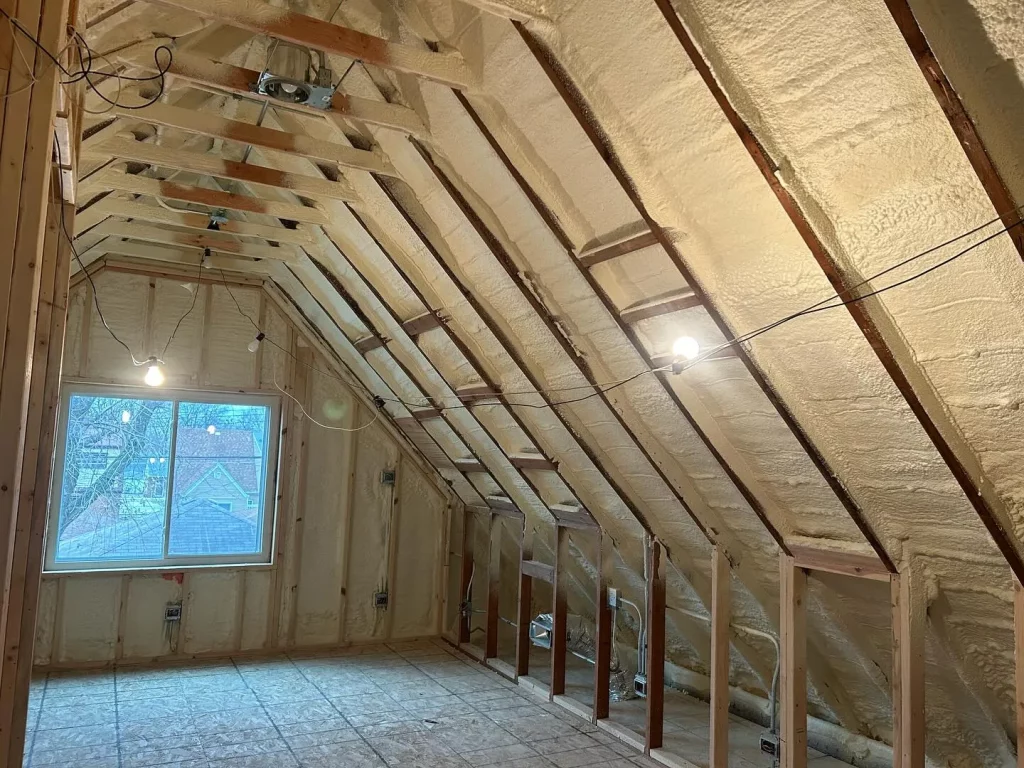
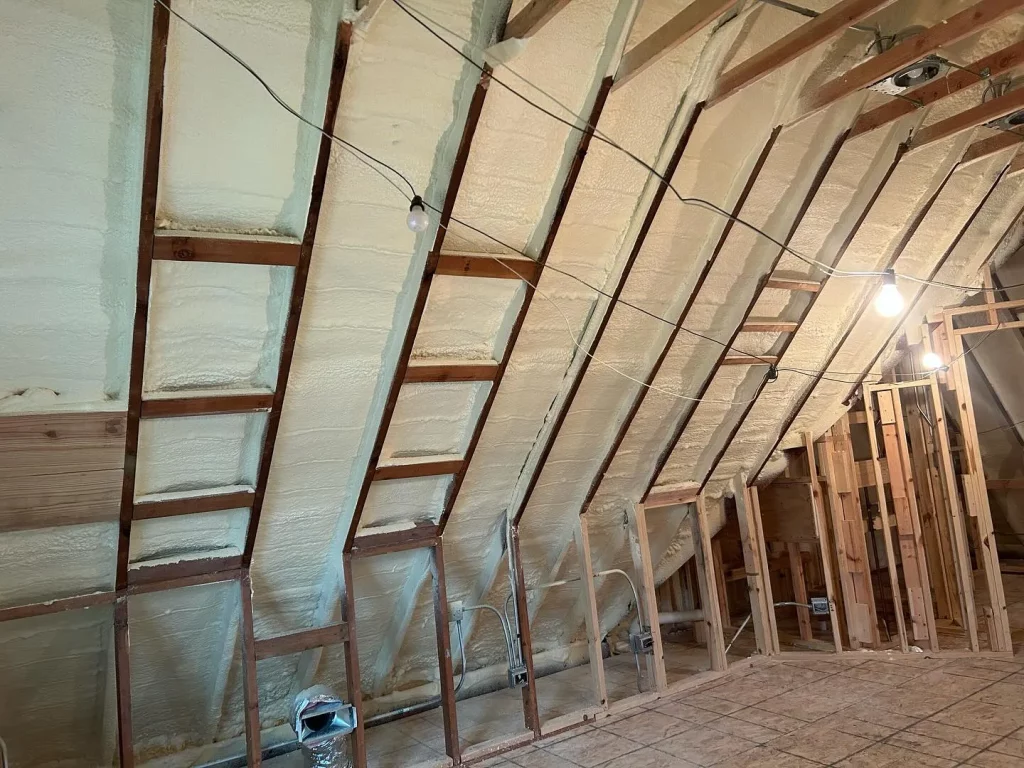
In unvented roof assemblies, you need to prevent moisture from reaching the underside of the roof deck. Closed-cell foam is often the preferred method for “hot roof” designs, where the attic space becomes part of the conditioned envelope. Since space is often limited between rafters, the high R-value per inch allows you to meet code requirements that would be impossible with fiberglass.
Flood Zones
The Federal Emergency Management Agency (FEMA) classifies closed-cell spray foam as a flood-damage-resistant material. It is the only insulation type approved for use in areas below the base flood elevation because it can survive floodwater contact without requiring replacement.
The Installation Process: What to Expect
Installing closed-cell foam is a chemical manufacturing process that happens inside your home. It requires specialized equipment and trained professionals.
1. Site Preparation
The area must be clear. Technicians mask off windows, doors, and floors to protect them from overspray. Since the foam bonds to almost anything, covering surfaces you don’t want insulated is vital.
2. The Application
The foam is created by mixing two liquids—Side A (isocyanate) and Side B (polyol resin)—at high pressure and heat in a spray gun. When they hit the surface, a chemical reaction occurs instantly.
Expansion: The liquid expands roughly 30-50 times its volume in seconds.
Heat: The reaction is exothermic, meaning it generates heat. Installers must spray in “lifts” or layers (usually no more than 2 inches at a time) to allow the heat to dissipate safely.
3. Trimming and Clean Up
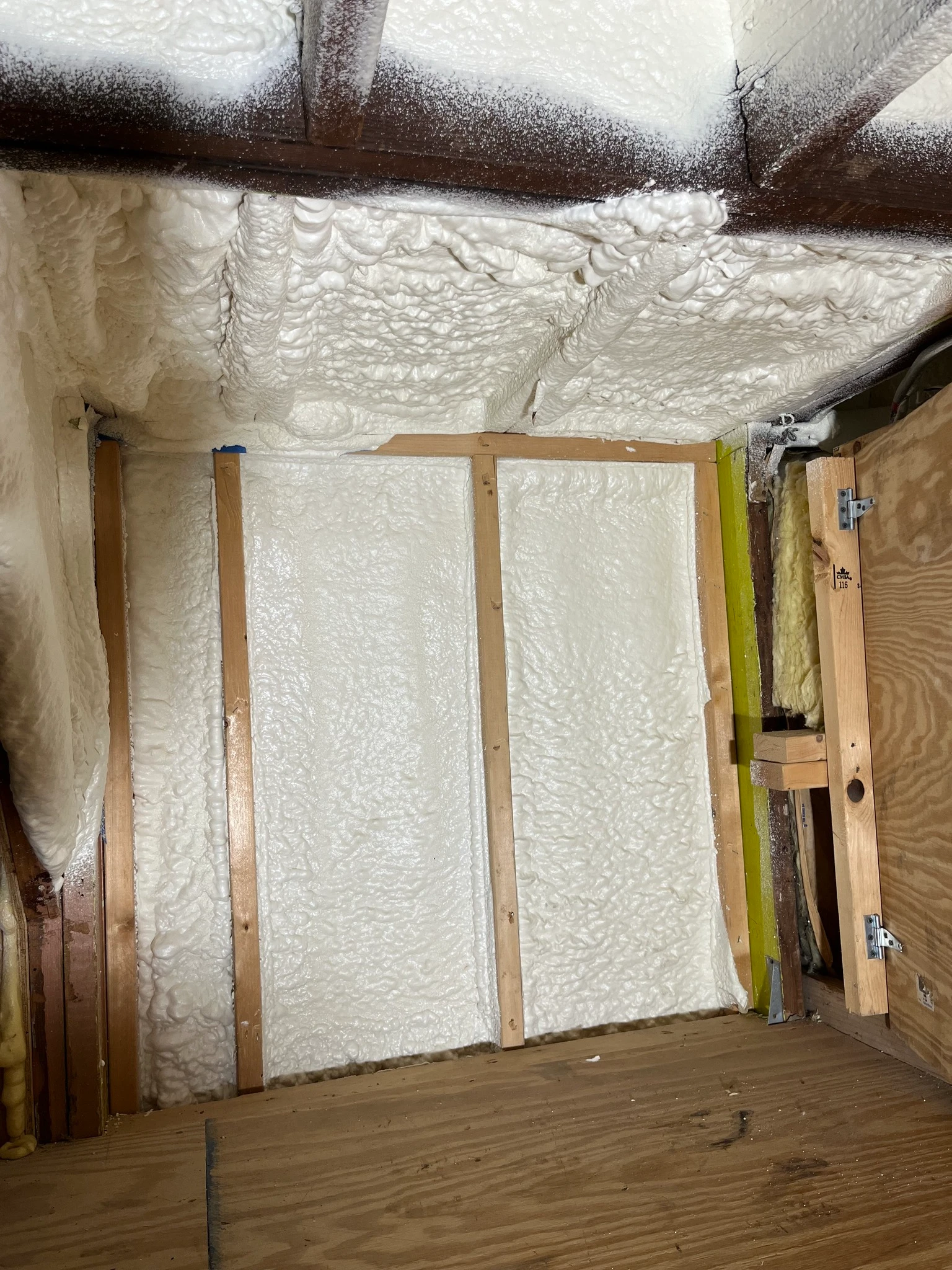
Closed-cell foam cures to a rock-hard finish. Unlike open-cell foam, which can be easily trimmed flush with studs using a saw, closed-cell foam is difficult to cut. Experienced sprayers aim to spray it smoothly, slightly below the stud face, to minimize the need for trimming.
4. Safety and Re-entry
During application and curing, the foam releases volatile organic compounds (VOCs). Professional crews use fresh-air supply respirators. A report from the Environmental Protection Agency (EPA) emphasizes that occupants should vacate the premises during spraying and for a period of usually 24 hours afterward to ensure all vapors have dissipated.
Key Takeaways
Closed-cell foam is the only insulation that acts as a thermal insulator, air barrier, and vapor retarder in one.
It is ideal for high-moisture areas, such as basements and metal buildings.
Installation requires vacating the home for 24 hours, typically due to off-gassing during cure time.
It adds structural integrity to walls and roofs.
Analyzing the Return on Investment (ROI)
The “sticker shock” is real. Closed-cell spray foam can cost two to three times more than fiberglass batt insulation. However, focusing on the upfront price tag ignores the building’s operational costs.
Energy Savings
By eliminating air leakage, you reduce the workload on your furnace and AC. The Spray Polyurethane Foam Alliance suggests that spray foam can reduce heating and cooling costs by up to 40% compared to traditional insulation methods. For a large home or commercial building, this monthly saving pays for the difference in installation cost over 3 to 5 years.
HVAC Sizing
Because the building envelope is so tight, you often need smaller HVAC equipment. A “Manual J” load calculation will likely show that you can downsize your furnace and AC units, saving thousands in capital expenditure that offsets the insulation cost.
Durability and Lifespan
Fiberglass settles over time. It sags, absorbs moisture, and can be displaced by pests. Cellulose settles, leaving gaps at the top of walls. Closed-cell foam does not shrink, settle, or degrade. It is a permanent solution. Unless you physically remove it, it will perform at the same level 50 years from now as it did on day one.
Common Challenges and Solutions
No building material is perfect, and closed-cell foam has specific challenges that must be managed.
The “Too Tight” Myth
You might hear that “a house needs to breathe.” This is a misunderstanding. People need to breathe; houses do not. Houses need to dry. When you build an airtight home with spray foam, you stop accidental ventilation (drafts). This gives you control. The solution is mechanical ventilation, such as an Energy Recovery Ventilator (ERV), which brings in fresh, filtered air while retaining your energy.
Odor Issues
If the A and B chemicals are not mixed at the exact right ratio or temperature, the foam might not cure properly, leading to lingering odors. This is almost exclusively due to installer error or equipment failure. This is why hiring a certified, experienced contractor is non-negotiable.
Termite Inspections
In some regions, termite inspectors worry that spray foam hides termite tunnels on foundation walls. Most codes now require a “view strip,” a 3-inch gap left uninsulated at the top of a basement wall so inspectors can see any activity.
Expert Tip: If you are planning a renovation, install electrical wiring and plumbing before the spray foam. Once the foam cures, it becomes very difficult to fish new wires through the walls. If you need future wiring, run empty conduit pipes through the walls before we spray.
Environmental Impact and Future Trends
The spray foam industry has undergone a significant shift regarding blowing agents. Older versions used HFCs (hydrofluorocarbons), which had high Global Warming Potentials (GWPs).
Modern closed-cell foams, often referred to as “fourth-generation” foams, use HFO (hydrofluoroolefin) blowing agents. These have an ultra-low GWP (usually less than 1) and zero ozone depletion potential. They offer the same high performance but are much friendlier to the planet.
Furthermore, by significantly reducing the energy consumption of buildings, closed-cell foam is a massive net positive for carbon reduction over the life of the structure.
Putting Your Strategy Into Action
Choosing closed-cell spray foam is a commitment to performance. It changes a building from a leaky, inefficient structure into a sealed, controlled system. While the initial investment is higher, the dividends in monthly energy savings, structural durability, and moisture control are substantial.
Whether you are building a new barndominium, finishing a basement, or trying to fix an ice dam issue on your roof, closed-cell foam offers a solution that fiberglass simply cannot match. It creates a permanent barrier against the elements, protecting your property and your wallet for decades.
Frequently Asked Questions About Closed-Cell Foam
Can I install closed-cell foam myself using a DIY kit?
Technically, yes, but it is rarely recommended for large projects. “Froth packs” are expensive per board foot and difficult to control. Achieving consistent thickness and proper chemical ratio requires professional heated equipment. Improper application can lead to a sticky mess that doesn’t cure or insulate properly.
Does closed-cell foam cause mold?
No, it actually prevents it. Mold requires moisture, food, and oxygen. Closed-cell foam is inorganic (no food source) and blocks moisture from entering wall cavities. Keeping the wall cavity dry inhibits mold growth.
How long does spray foam insulation last?
It is considered a material with an indefinite lifespan. It does not degrade, sag, or lose R-value over time. As long as it is protected from direct sunlight (UV rays will degrade it), it lasts for the life of the building.
Is closed-cell foam soundproof?
It provides some sound damping by making walls denser and sealing air gaps where sound travels. However, open-cell foam is generally better for acoustic sound absorption because of its softer, sponge-like texture. Closed-cell foam is better at blocking outside noise, like traffic, but less effective at room-to-room soundproofing.
Will spray foam adhere to everything?
It bonds aggressively to wood, metal, concrete, and masonry. It does not bond well to polyethylene (plastic sheeting), silicone, or waxy surfaces. Installers use this to their advantage by masking off areas with plastic.
Need Expert Guidance?
Insulation is not a one-size-fits-all product. If you are unsure if closed-cell foam is the right choice for your specific project, or if you want to compare the numbers for yourself, we are here to help. Reach out to South Chicago Insulation at (779) 803-8025 or email us at [email protected]. We will help you build a more efficient, comfortable future.
Sources
Department of Energy – Information on insulation types, R-values, and air leakage statistics.
FEMA – Guidelines on flood-damage-resistant materials for building in flood zones.
Open-cell spray foam insulation in Burr Ridge, IL, presents significant problems primarily related to moisture management, structural suitability, and long-term…
Poor insulation in cold rooms directly causes significant operational problems, including temperature instability, excessive energy consumption, equipment strain, and product…