Why Pole Barns Need Spray Foam Insulation Protection
Direct Answer Pole barns need spray foam insulation protection because traditional insulation methods fail to address the unique structural challenges…


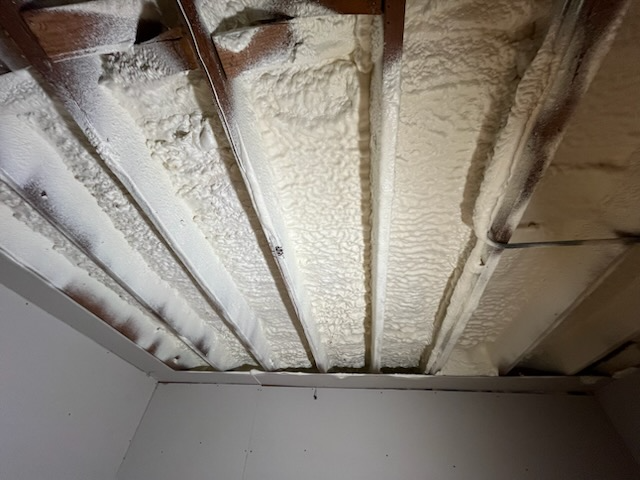
Spray foam insulation keeps rooms cooler in the summer primarily by creating a comprehensive air seal. When applied, the foam expands to fill every crack, gap, and crevice within a structure, which effectively stops the biggest sources of summer heat gain: air leakage and direct heat transfer. This airtight barrier prevents hot, humid outdoor air from entering the home and stops cool, conditioned air from escaping. At the same time, the material’s structure resists the flow of heat through the building’s walls and roof.
This article will explain the specific mechanisms that make spray foam an effective solution for controlling heat gain during warm weather. By understanding how it manages different forms of heat transfer, homeowners can get a clear picture of why it helps maintain a more comfortable and consistent indoor temperature. The information presented is based on years of field experience installing various insulation materials in residential properties across different climates.
To understand how insulation works, it’s helpful to know how heat moves. Heat always migrates from a warmer area to a cooler one, and during the summer, it’s constantly trying to get inside your air-conditioned house. It accomplishes this in three different ways:
A truly effective insulation system must be able to combat all three of these heat transfer methods to keep a home cool and comfortable.
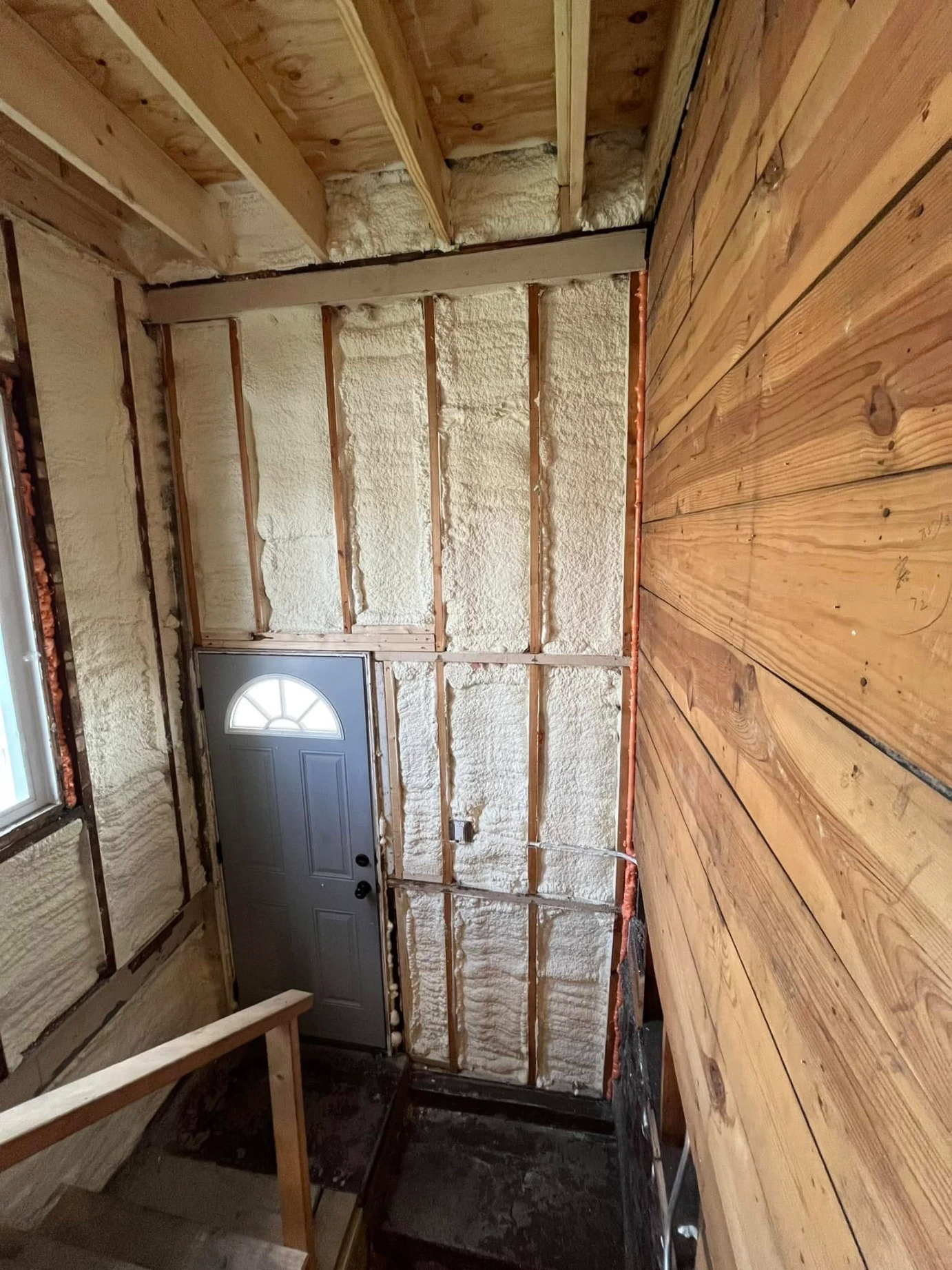
Spray foam’s unique properties and application method make it particularly well-suited to manage each type of heat transfer. Unlike traditional insulation materials that are cut and fit into place, spray foam is applied as a liquid that expands on contact, creating a custom-fitted layer of insulation.
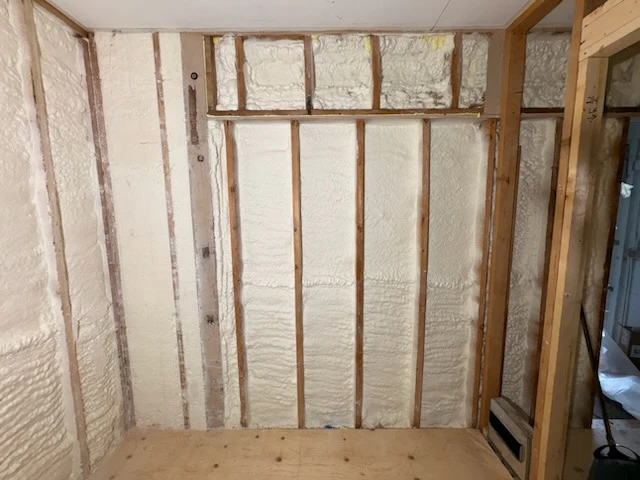
The most significant advantage of spray foam is its ability to function as both an insulator and an air barrier in a single application. According to the U.S. Department of Energy, this air leakage can account for up to 40% of the energy used for heating and cooling a typical home. By expanding to fill every possible opening, spray foam drastically reduces this unwanted air exchange.
This comprehensive seal stops hot, humid summer air from pushing its way into the home while also preventing the expensive, cooled air from your HVAC system from leaking out. The result is a much more stable indoor temperature and less work for your air conditioner.
Bonus Tip: If you can feel a draft around electrical outlets or along your baseboards on a windy day, it’s a clear sign that your home has a weak air barrier and is losing conditioned air.
An insulation material’s ability to resist conductive heat flow is measured by its R-value. A higher R-value indicates better thermal resistance, and data from the U.S. Department of Energy confirms that spray foam insulation has a higher R-value per inch than many traditional insulation types.
| Insulation Material | Average R-Value per Inch |
|---|---|
| Closed-Cell Spray Foam | 6.0 – 7.0 |
| Open-Cell Spray Foam | 3.5 – 3.9 |
| Cellulose (loose-fill) | 3.2 – 3.8 |
| Fiberglass (batts) | 2.9 – 3.8 |
This high thermal resistance means less heat can conduct its way through the home’s walls and ceilings and into your living space.
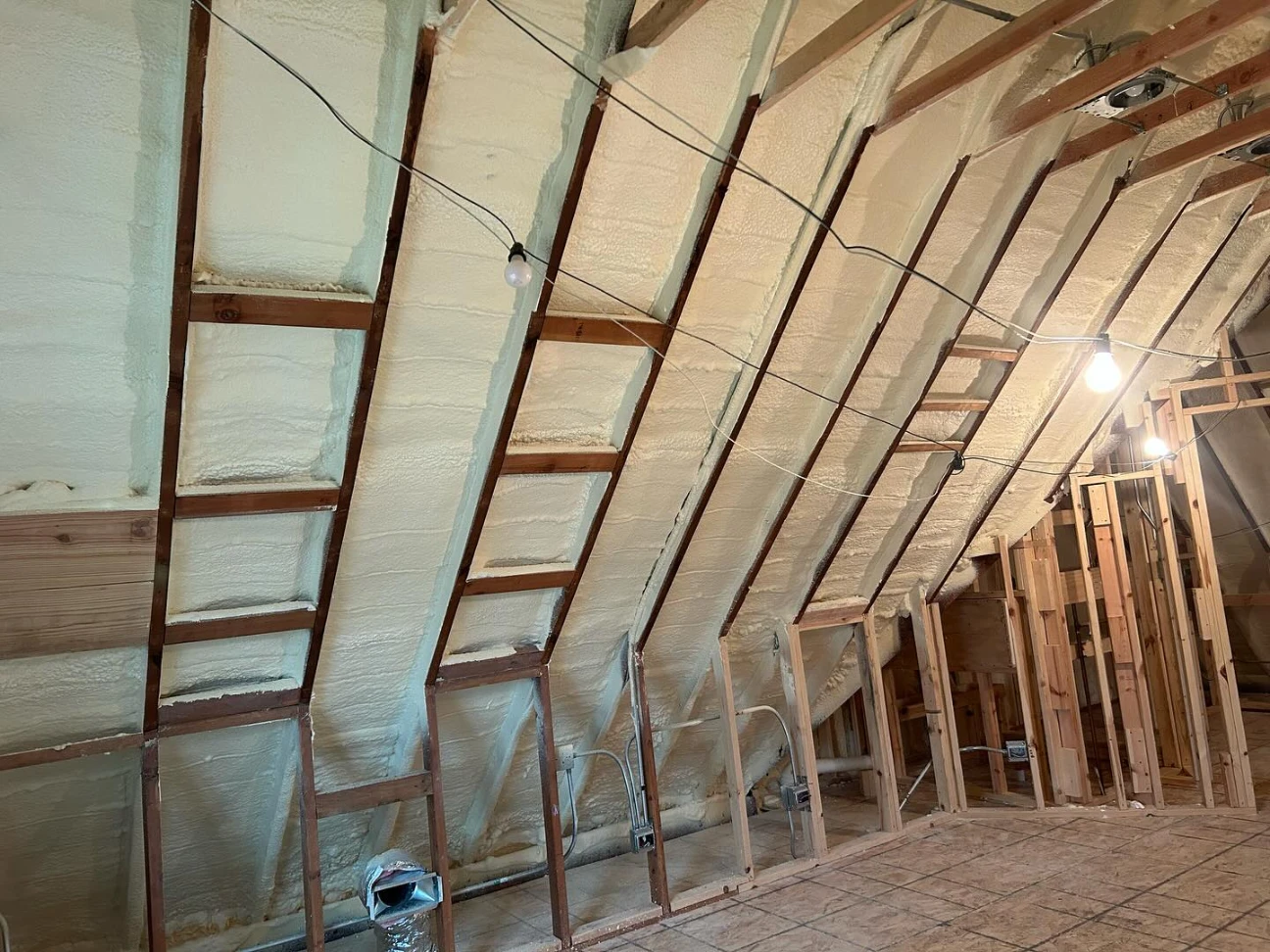
During the summer, the sun beats down on the roof, which can heat an attic to temperatures well over 130°F. This intense heat then radiates downward, warming the ceilings of the rooms below. When spray foam is applied directly to the underside of the roof deck, it helps stop the attic from getting so hot in the first place. By insulating the roofline, the foam blocks a large portion of the sun’s radiant heat before it can enter the attic space, which helps keep the entire house cooler.
Before deciding on spray foam insulation, it’s a good idea to evaluate a few key factors to determine if it is the right solution for your home and objectives.
Bonus Tip: Think about getting a professional energy audit for your home. An auditor can use tools like a blower door and an infrared camera to find the precise locations of major air leaks and insulation deficiencies. This information helps create a much more targeted and effective insulation strategy.
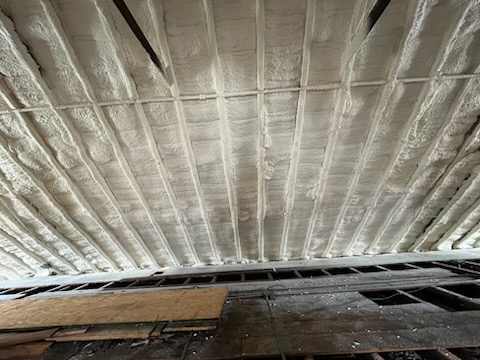
Spray foam insulation offers a robust defense against summer heat by establishing a nearly seamless air and thermal barrier. By stopping air leaks and resisting heat transfer, it helps create a stable, cool indoor environment that reduces the workload on your HVAC system and can lead to lower energy bills. Before making a final decision, carefully assess your home’s specific needs, your local climate, and your long-term goals.
Understanding your home’s unique challenges is the first step toward a more comfortable and energy-efficient space. If you have questions about whether spray foam is the right fit for your property, the team at South Chicago Insulation can provide a straightforward assessment. For a no-obligation consultation, you can send your questions to [email protected] or call (779) 803-8025 to speak with an experienced technician.
When installed correctly by a professional, spray foam insulation is exceptionally durable. It does not sag, settle, or break down over time like some other materials might. It holds its shape and thermal properties for the life of the building, which can easily be 50 years or more.
The spray foam industry has made significant advancements. Many modern foam products are water-blown, meaning they use water as the blowing agent instead of hydrofluorocarbons (HFCs) that have a high global warming potential. The substantial reduction in a home’s energy use over many decades also leads to a smaller overall environmental impact.
Yes, especially open-cell spray foam. Its softer, more flexible cell structure is excellent at absorbing sound waves. This can lead to a noticeably quieter home by dampening noise from outdoors as well as from room to room.
Professional installers mix two separate liquid components at the job site. This mixture is then sprayed onto the target surfaces, where it reacts, expands, and hardens into a solid foam. The work area must be well-ventilated, and occupants usually need to leave the home for a short period, typically around 24 hours, to allow the foam to cure completely.