Why Pole Barns Need Spray Foam Insulation Protection
Direct Answer Pole barns need spray foam insulation protection because traditional insulation methods fail to address the unique structural challenges…


The reliability of spray foam insulation in Chicago’s extreme weather comes down to three non-negotiable performance factors: its superior ability to create a continuous air barrier, its stable and high R-value, and its inherent resistance to moisture. The continental climate of Chicago brings intense cold, high winds from Lake Michigan, and a constant cycle of temperature fluctuation, all of which compromise traditional insulation materials. Spray polyurethane foam (SPF) addresses these issues by creating a monolithic seal that both insulates and air-seals the building envelope in a single application.
This comprehensive approach is particularly essential in a region that sees an average of 6,536 heating degree days annually, a figure significantly higher than the national average. When traditional insulation like fiberglass is subjected to the high winds common in the area, its thermal performance can drop substantially as air moves through it. Spray foam, by contrast, eliminates this air movement, ensuring the R-value, the measure of thermal resistance, remains consistent regardless of the wind and plunging temperatures outside, a key performance indicator noted by the U.S. Department of Energy’s Energy Star Program. This article provides a clear look at the practical attributes of spray foam that make it an expert-level solution for Chicago homes.
In a cold climate, the two largest causes of energy loss are air leakage and heat transfer through the structure. Most insulation types address the latter, but only spray foam effectively tackles both at once.
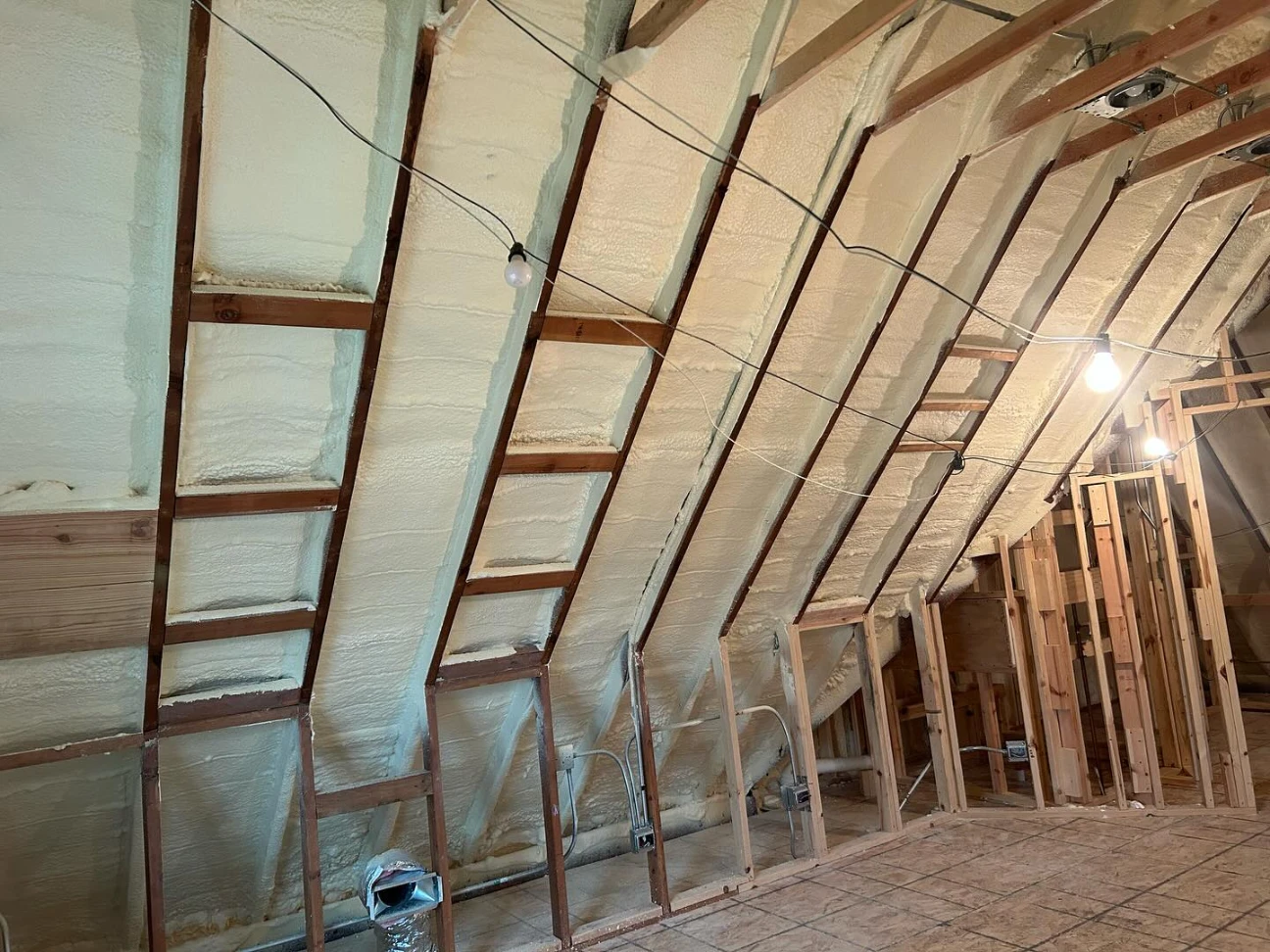
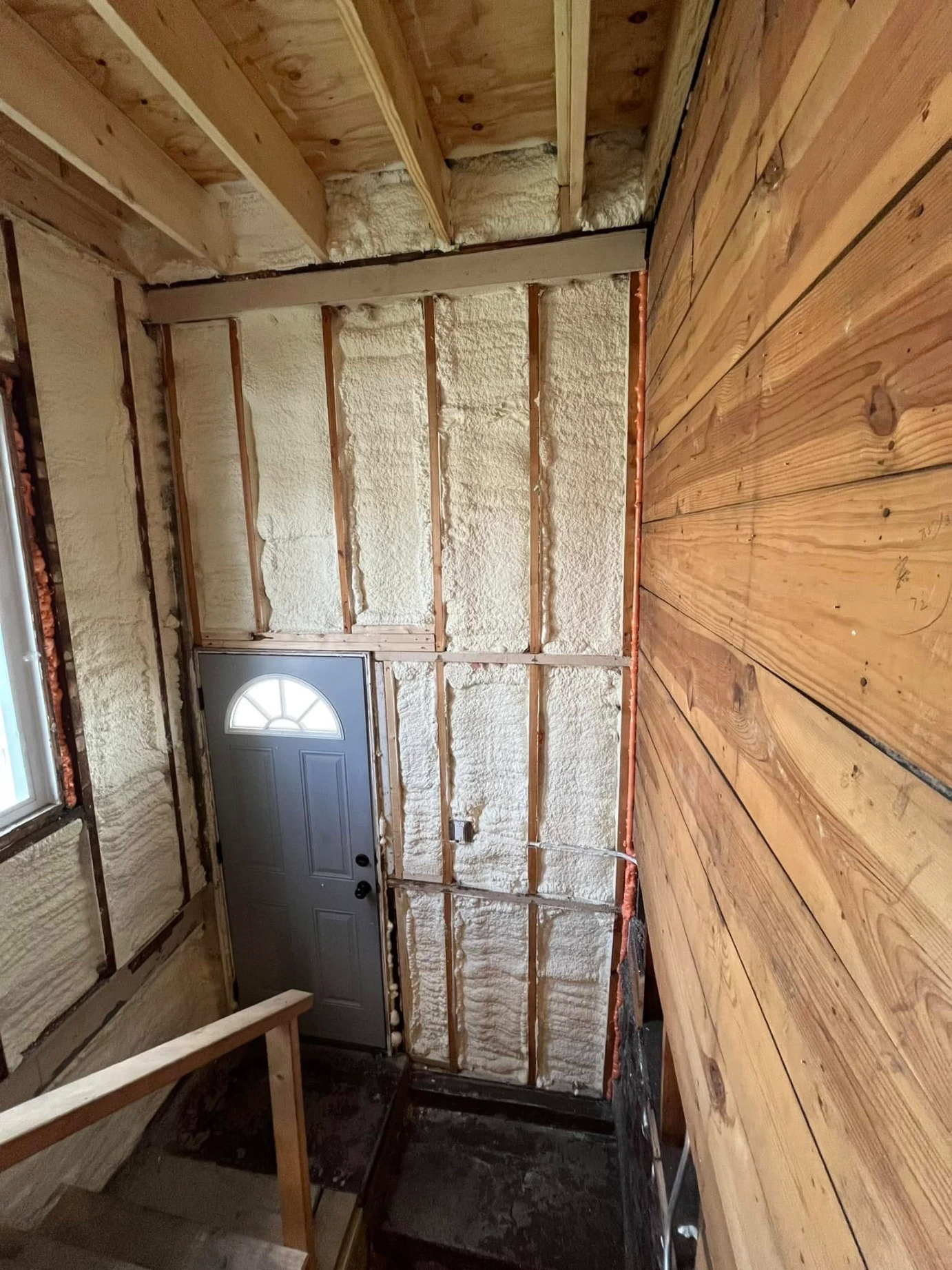
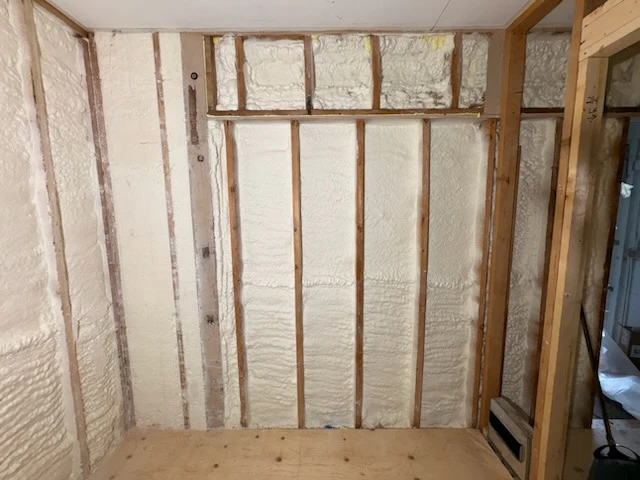
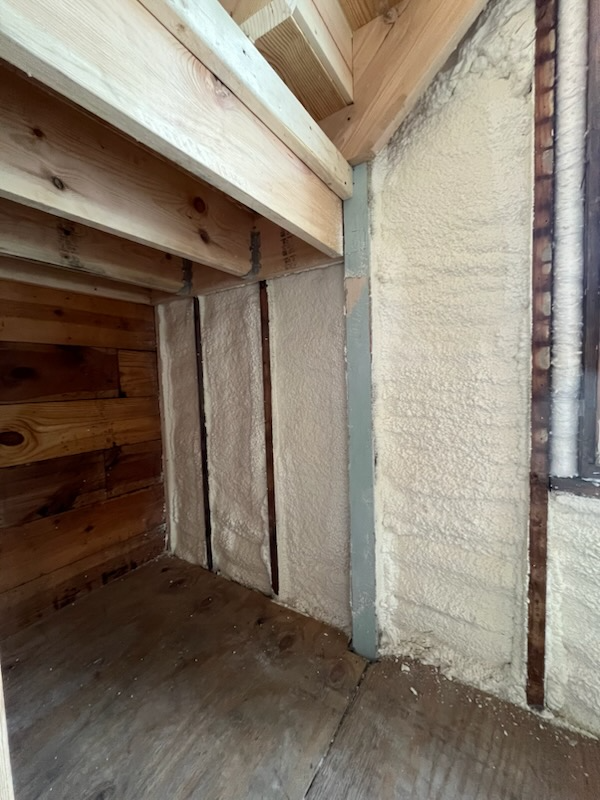
The real benefit of spray foam, particularly in an older Chicago home, is its expansion property. When the liquid mixture is applied, it expands many times its original size, filling every small gap, crack, and void in the wall, ceiling, or floor cavity. This process creates a seamless, airtight thermal enclosure, which is often referred to as an air barrier. Preventing air movement is critical because air leaks can account for a major portion of a home’s heat loss during the winter. By stopping air infiltration, spray foam minimizes drafts and cold spots, which translates directly into a more comfortable home and dramatically reduced heating costs.
Bonus Tip: Chicago’s freeze-thaw cycles cause building materials to shift and settle over many years. The flexibility of closed-cell spray foam allows it to maintain its sealing properties, holding the air barrier intact even when the structure slightly moves.
The R-value of an insulation material measures its resistance to heat flow. Spray foam insulation offers some of the highest R-values available per inch. Closed-cell spray foam, which is the denser variety, delivers thermal resistance values up to R-7.0 per inch, whereas standard fiberglass batts typically range between R-2.2 and R-2.7 per inch. This higher R-value means a contractor can achieve the high thermal ratings required by local building codes in a much thinner application.
A key piece of evidence comes from research supported by the U.S. Department of Energy, conducted by Oak Ridge National Laboratories. The research highlights spray foam’s superior performance in extreme cold, finding that SPF systems retained between 74% and 83% of their reported R-value at low temperatures. In the same test, fiberglass retained only 46% of its R-value. This stability proves that spray foam keeps working effectively when homeowners need it most, when the temperatures are at their lowest.
Chicago’s proximity to Lake Michigan and its harsh winter weather create an environment where moisture control is just as important as temperature control. Condensation and ice dams pose significant risks to structural integrity.
In the winter, warm, humid indoor air rises and can meet cold surfaces in the attic, leading to condensation. This moisture can ruin insulation, cause wood rot, and encourage mold growth. Closed-cell spray foam acts as a Class II vapor retarder (or an impermeable barrier at the correct thickness), meaning it controls the movement of water vapor through the building assembly. By eliminating warm air migration into the unconditioned attic space, spray foam insulation helps prevent the temperature fluctuations that cause ice dams to form on the roof edge.
Bonus Tip: The foam’s chemical makeup resists organic breakdown, meaning that, unlike cellulose or fiberglass, spray foam provides no food source for mold spores. To maintain optimal indoor air quality and prevent any potential issues, maintain interior humidity levels between 30% and 50% relative humidity after installation, a recommendation shared by stellrr Insulation & Energy.
The rigid nature of closed-cell spray foam, once cured, provides noticeable strength to the structure. This density allows it to increase the overall racking strength of walls and roof decks where it is applied. In a windy environment like Chicago, this extra rigidity helps the home resist compression from structural loads and high wind pressures.
Choosing the right material requires understanding the technical differences between the common options. Below is a comparison of insulation types, focusing on key performance metrics relevant to a cold, windy climate.
| Feature | Closed-Cell Spray Foam | Open-Cell Spray Foam | Fiberglass Batts/Rolls |
|---|---|---|---|
| R-Value Per Inch | R-6.0 to R-7.0 (Highest) | R-3.5 to R-4.0 (Medium) | R-2.2 to R-3.8 (Lowest) |
| Air Sealing | Excellent (Creates an airtight seal) | Excellent (Fills irregular spaces) | Poor (Does not stop air movement) |
| Moisture/Vapor Barrier | Yes (Acts as a vapor barrier) | No (Moisture permeable) | No (Can lose performance when wet) |
| Structural Support | Adds significant rigidity/strength | Minimal to none | None |
| Ideal for Chicago | Basements, crawl spaces, exterior walls, roof decks (extreme cold/moisture areas) | Interior walls (sound dampening), attics where breathability is a priority | Less severe climates or when combined with air-sealing measures |
Selecting insulation for a challenging climate demands a focus on long-term performance over initial cost.
A home’s ability to withstand Chicago’s extreme temperature swings, high winds, and moisture issues relies heavily on creating an effective, continuous thermal and air barrier. Spray foam insulation provides this comprehensive solution through its high R-value and unmatched air-sealing capabilities. Homeowners must evaluate their specific needs, long-term energy goals, and the unique challenges of their home’s structure. Understanding the difference between closed-cell and open-cell foam and prioritizing professional, quality installation are the steps that ensure a reliable, high-performance building envelope for decades.
For property owners seeking to create a truly resilient and energy-efficient building envelope, a consultation with insulation professionals offers clarity and a custom-tailored strategy. South Chicago Insulation provides experienced-based recommendations to help identify the optimal type and application of spray foam for a specific structure’s needs. Get in touch with an expert to discuss your project by calling (779) 803-8025 or emailing [email protected].
Homes insulated with spray foam maintain consistent temperatures for a much longer period. The airtight envelope significantly slows the rate of heat loss, essentially “sealing in” the conditioned air. This effect provides a much-needed buffer against dangerous temperature drops during utility outages, improving overall safety and resiliency in a severe winter event.
Closed-cell spray foam, when applied at the proper thickness, is dense enough to function as a Class II vapor retarder, eliminating the need for an additional, separate vapor barrier in most applications. This dual functionality simplifies the building assembly. Open-cell foam, however, is moisture-permeable and may require a separate vapor control layer depending on the specific application area and wall assembly.
Spray foam is an extremely durable and long-lasting insulation solution. Field studies of installations dating back more than 30 years show minimal degradation in thermal performance or structural integrity, even in buildings subjected to repeated extreme weather events. It will not settle, sag, or compress like traditional batt or loose-fill materials.
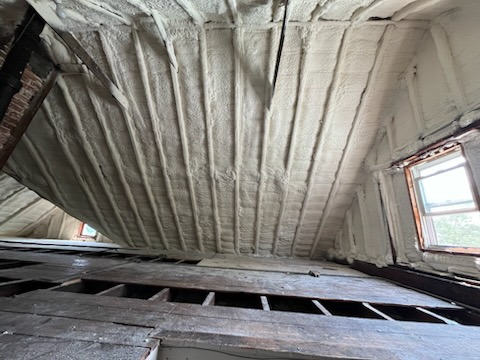
Spray foam is highly versatile for both new construction and retrofits. For existing walls, the material is often injected into the cavity. For existing attics, it is sprayed directly onto the underside of the roof deck or the attic floor, making it an ideal choice for enhancing the thermal performance of older homes across Chicago’s diverse housing stock.