Pole Barn Spray Foam Insulation Cost in New Lenox, IL: What Affects the Final Price
In New Lenox, IL, spray foam insulation for a pole barn typically ranges from $1.50 to $5.00 per square foot,…


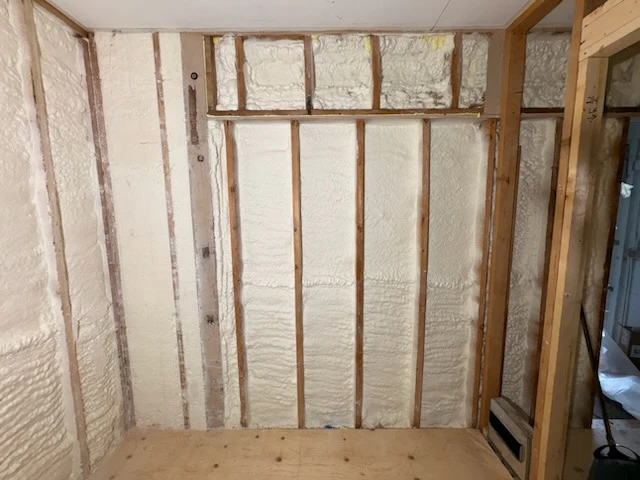
In New Lenox, IL, spray foam insulation for a pole barn typically ranges from $1.50 to $5.00 per square foot, with total project costs between $4,000 and $25,000 depending on the building size, foam type, and required thickness. For a standard 30×40 pole barn with 12-foot ceilings, most property owners across New Lenox and nearby communities like Frankfort, IL, Orland Park, IL, and Homer Glen, IL, can expect to invest between $5,500 and $12,000 for a full spray foam installation that meets Climate Zone 5A requirements. Based on recent project data for the area, the typical low project price is $8,000, the typical average is $14,000, and the typical high is $22,000.
Spray foam pricing for pole barns in New Lenox and surrounding areas, including Joliet, IL, and Lockport, IL follows national averages but carries some regional premiums due to the Chicago area’s higher labor costs and the specific demands of Climate Zone 5A. The per-square-foot rate you receive from contractors depends on whether they are quoting open-cell or closed-cell foam, how thick the application needs to be, and how accessible the surfaces are.
Open cell spray foam is the more affordable option, generally ranging from $1.00 to $1.50 per inch of thickness per square foot. It expands significantly upon application, filling cavities effectively, but its lower R-value per inch (approximately R-3.7) means you need more of it to hit code requirements in the New Lenox area.
Closed cell spray foam is denser, more moisture-resistant, and offers roughly double the insulating power per inch at about R-6.5 to R-7.1, according to Fine Homebuilding. It also adds structural rigidity to your pole barn, which matters in a region that sees heavy snow loads and high winds. The tradeoff is price: closed cell typically runs $2.50 to $5.00 per square foot installed.
| Foam Type | R-Value Per Inch | Cost Per Sq Ft (Installed) | Best Use in Pole Barns |
|---|---|---|---|
| Open Cell | R-3.4 to R-3.9 | $1.00 – $1.50 | Interior walls, conditioned workshops |
| Closed Cell | R-6.0 to R-7.1 | $2.50 – $5.00 | Roof decks, exterior walls, moisture-prone areas |
| Hybrid (Both) | Varies by zone | $1.50 – $3.50 | Full barn insulation balancing cost and performance |
Every Pole barn spray foam in New Lenox, IL project is different, even within the same zip code. Here are the factors that most often swing the final invoice up or down for property owners in New Lenox and nearby areas like Frankfort, IL, and Orland Park, IL.
This is the single biggest cost driver. Larger buildings have more square footage to cover, but they also benefit from some economies of scale. A 30x40x12 pole barn has roughly 1,200 square feet of ceiling and 1,440 square feet of wall space to insulate. A 40x60x14 structure nearly doubles those numbers. According to HomeAdvisor, the average pole barn spray foam project falls between $8,000 and $25,000 nationally, with New Lenox prices sitting in the upper half of that range. For our typical project pricing in the New Lenox area, a low-end project starts at $8,000, an average project comes in at $14,000, and a high-end project can reach $22,000.
New Lenox sits squarely in IECC Climate Zone 5A, which mandates minimum R-20 for walls and R-49 for ceilings in residential and light commercial construction. That ceiling requirement is demanding. To reach R-49 with closed cell foam alone, you would need roughly 7 inches of material. Most contractors use a hybrid approach: 2 to 3 inches of closed cell foam on walls and roof deck (for air sealing and moisture control), supplemented with fiberglass batts or blown-in insulation to reach the full R-value targets outlined by the Illinois Energy Conservation Code.
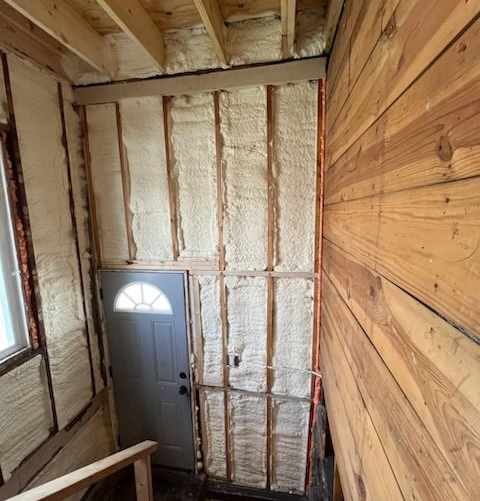
If you are building a new pole barn, the framing is exposed and accessible, which makes the spray foam application faster and cleaner. Retrofitting an existing barn often requires removing interior wall coverings, working around stored equipment, and dealing with dust and debris. Expect retrofit projects to run 15-25% higher in labor costs, based on data from RetroFoam of Michigan. This holds true for pole barn retrofits across New Lenox, IL, Homer Glen, IL, and Joliet, IL alike.
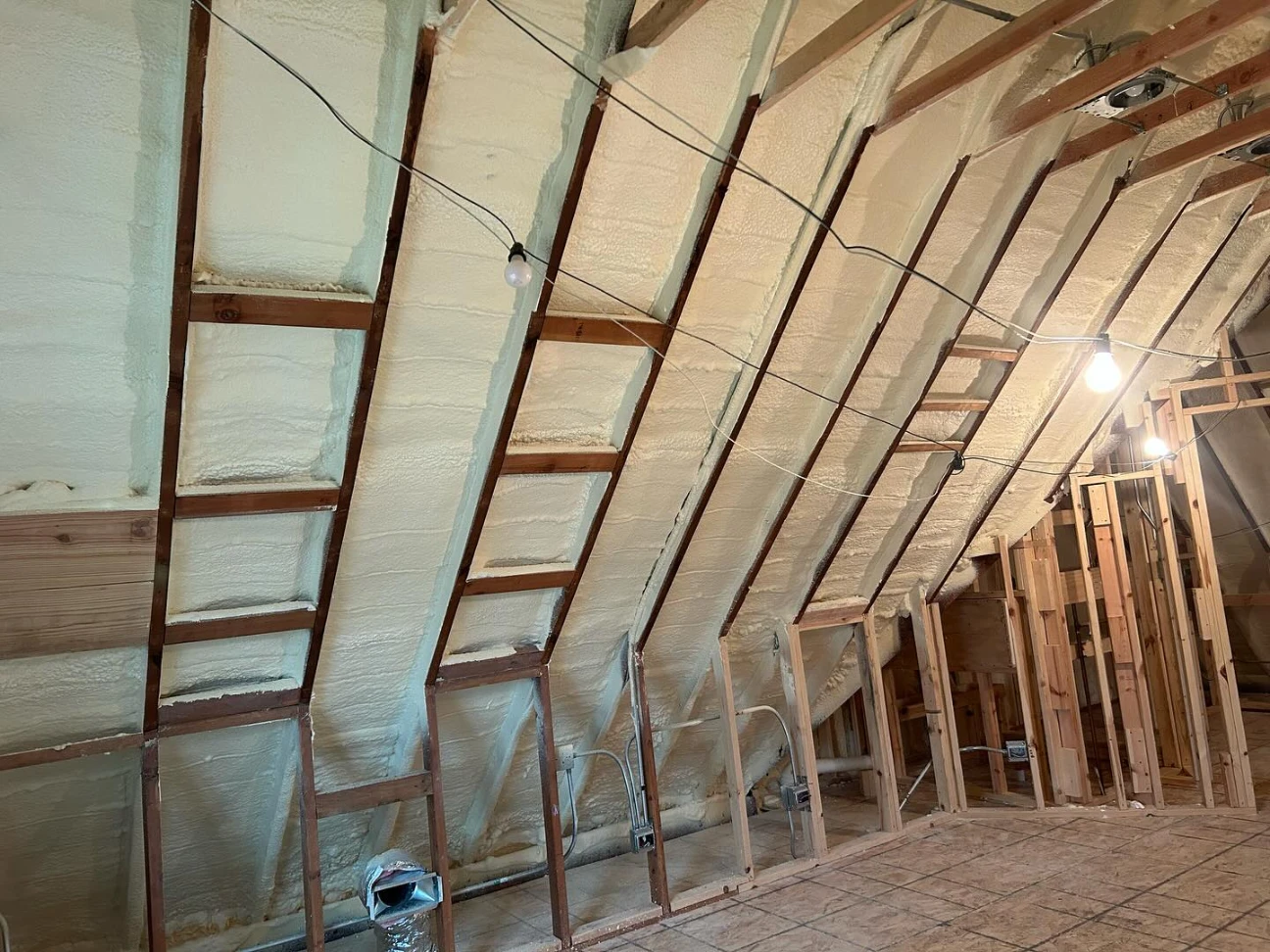
Vaulted or gambrel ceilings, mezzanine levels, and tightly framed areas all add time and material waste. If your pole barn includes a finished office space, bathroom, or loft, those areas require detailed cutting and shaping around obstacles, which increases per-square-foot pricing. Properties in more rural parts of Will County such as Lockport, IL and New Lenox, IL may also face additional access considerations depending on site conditions.
Experienced spray foam contractors in the Will County area who invest in high-quality rigs, proper ventilation, and trained crews charge more, but they deliver consistent coverage and proper thickness. Underbidding contractors may apply thinner layers or skip difficult-to-reach areas, leaving thermal gaps that undermine the entire project.
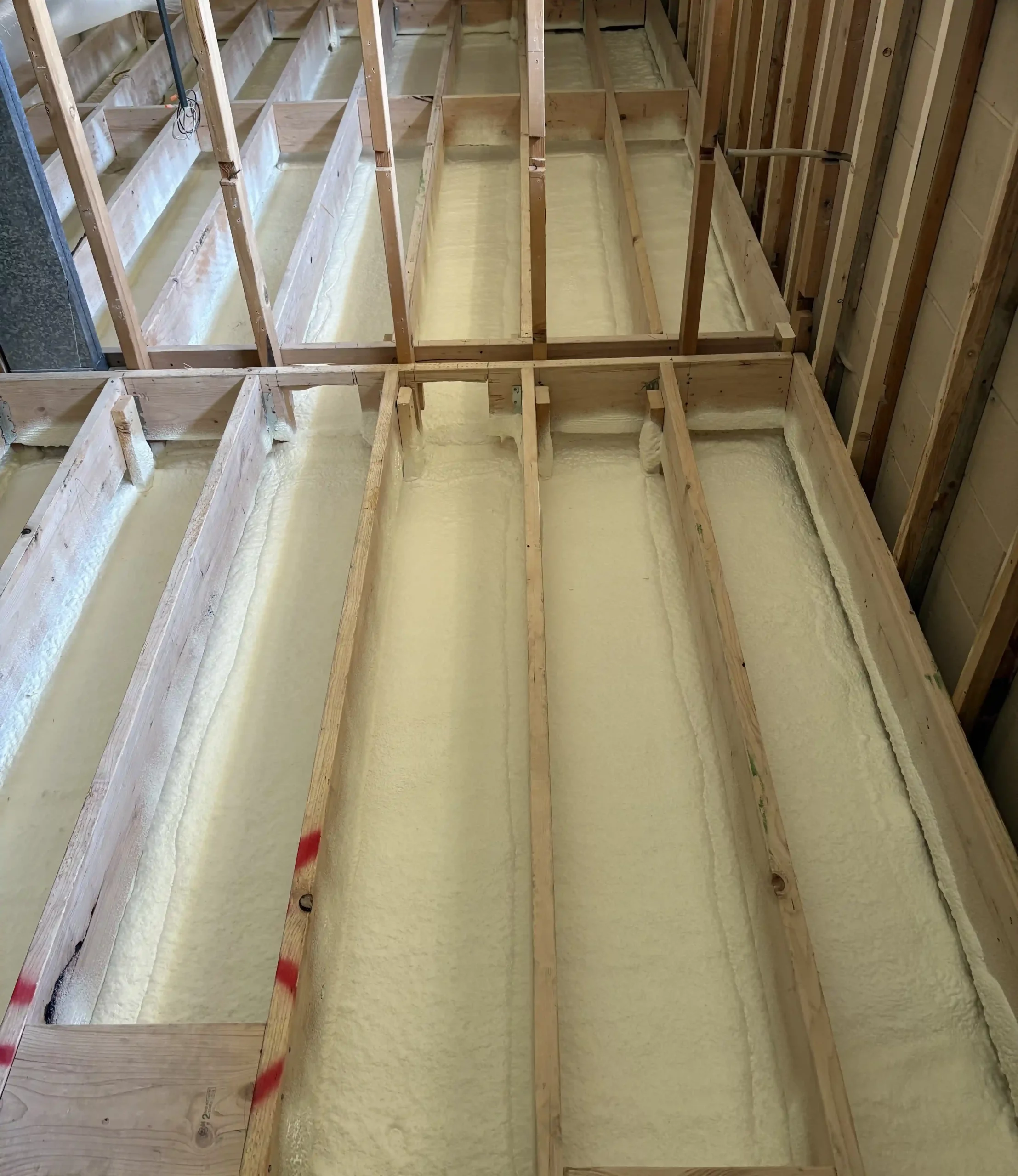
These figures represent realistic project ranges for the New Lenox area, accounting for Chicago metro labor rates and Zone 5A insulation requirements. Reflecting our typical project pricing, a low project starts at $8,000, the average project runs $14,000, and a high project can reach $22,000.
| Building Size | Typical Use | Estimated Range | Scenario |
|---|---|---|---|
| 30x40x12 | Workshop / Storage | $5,500 – $12,000 | 2″ closed cell walls, 3″ ceiling + supplemental insulation |
| 40x60x14 | Equipment Storage / Arena | $10,000 – $22,000 | Hybrid approach, full wall and ceiling coverage |
| 50x80x16 | Commercial / Agricultural | $18,000 – $35,000 | Full closed cell, climate-controlled interior |
| 30x50x12 | Barndominium Shell | $8,000 – $16,000 | Closed cell envelope, moisture barrier priority |
| 24x36x10 | Small Garage / Hobby Shop | $3,500 – $7,500 | Open cell walls, 2″ closed cell ceiling |
The decision between open cell and closed cell foam is not just about upfront cost. Each product serves a different purpose, and many pole barn owners throughout New Lenox, Frankfort, IL, Orland Park, IL, and Homer Glen, IL benefit from using both.
Open cell foam works well for interior partition walls and areas where sound dampening matters. It is flexible, lightweight, and expands to fill irregular cavities. However, it does not block moisture vapor, which makes it a poor choice for metal roof decks where condensation is a serious concern.
Closed cell foam is the go-to for pole barn roofs, exterior walls, and any surface exposed to temperature extremes or moisture. Its density creates an effective vapor barrier, and it bonds tightly to metal, wood, and concrete substrates. In New Lenox winters, where temperatures regularly drop below freezing, the vapor barrier quality of closed cell foam helps prevent condensation that can rot framing and rust metal panels.
Most contractors we work with recommend a minimum of 2 inches of closed cell foam on the roof deck and exterior walls, then supplementing with additional insulation layers to hit the R-49 ceiling and R-20 wall targets.
Here is what most pole barn owners in New Lenox, IL, Lockport, IL, and Joliet, IL do not think about until it is too late: an uninsulated or poorly insulated metal building in Illinois loses heat rapidly through its roof and walls, forcing heating systems to run almost continuously during winter months. The U.S. Department of Energy estimates that proper insulation can reduce heating and cooling costs by 15-30% in metal buildings.
For a pole barn heated to 55 degrees during winter months, inadequate insulation could mean $300 to $600 or more in wasted energy costs per heating season. Over a 10-year period, that adds up to $3,000 to $6,000 in unnecessary utility spending. In many cases, the energy savings alone pay back the insulation investment within 3 to 5 years—making that typical average project price of $14,000 a sound long-term investment.
Beyond energy costs, poor insulation leads to condensation problems. Moisture buildup on the underside of metal roofing causes rust, drips onto stored equipment and inventory, and creates conditions for mold growth. Replacing rusted roofing panels or dealing with water damage can easily cost several thousand dollars, far exceeding what you would have spent on proper insulation from the start.
Ideal candidates:
Less suitable situations:
Every pole barn is different, and online estimates only tell part of the story. Whether your property is in New Lenox, IL, Frankfort, IL, Orland Park, IL, Homer Glen, IL, Joliet, IL, or Lockport, IL, South Chicago Insulation works with you to evaluate building size, intended use, and code requirements before recommending the right foam type and thickness for each project. With typical project pricing ranging from a low of $8,000 to an average of $14,000 and up to a high of $22,000, we provide detailed, line-item quotes so you know exactly what you are paying for, with no hidden fees or surprises.
Contact us today to discuss your pole barn insulation project. Call us at (779) 803-8025 or email [email protected] to schedule a consultation.
Request a Quote | Schedule a Site Assessment
For Climate Zone 5A, a minimum of 2 to 3 inches of closed cell spray foam on the roof deck provides a solid vapor barrier and air seal (R-14 to R-21), which should then be supplemented with additional insulation to reach the R-49 ceiling requirement specified by the Illinois Energy Code.
Spray foam costs more upfront than fiberglass batts, but it provides a superior air seal, acts as a vapor barrier when using closed cell, and fills gaps and penetrations that fiberglass cannot reach. For metal pole barns where condensation is a major concern, spray foam delivers long-term protection that fiberglass alone cannot match.
Yes, ceiling-only insulation is a common cost-saving approach for barns used primarily for storage. However, if you plan to heat the space, uninsulated walls will still lose significant heat. A hybrid approach, insulating the ceiling to full code and adding 1 to 2 inches of closed cell foam to the walls, offers a practical middle ground.
For a typical 30×40 pole barn, most crews complete the spray foam installation in one to two days, depending on whether it is new construction or a retrofit. Weather conditions and drying time can add a half day to the timeline. The foam cures quickly, and the space is typically ready for interior finishing within 24 to 48 hours.
Closed cell spray foam does add measurable structural rigidity when applied to roof decks and walls. It adheres to framing and metal panels, creating a bond that can help resist racking and wind uplift. While it does not replace proper structural engineering, it is an additional benefit specific to closed cell products.