Why Pole Barns Need Spray Foam Insulation Protection
Direct Answer Pole barns need spray foam insulation protection because traditional insulation methods fail to address the unique structural challenges…


Yes, poor insulation is actively reducing the value of your Elmhurst commercial building. The loss isn’t just a hypothetical number; it shows up in tangible ways that directly affect your bottom line. Inadequate insulation leads to higher energy consumption, creates an uncomfortable environment for tenants, and can even cause long-term structural damage from moisture. These factors combine to lower your property’s net operating income (NOI) and, consequently, its market appraisal value.
This article breaks down the specific ways insulation deficiencies hurt your investment and what you can do about it. The information here is based on extensive experience helping commercial property owners in the Chicago area identify and resolve these exact issues. Understanding the connection between thermal performance and financial health is the first step toward protecting and increasing your property’s value.
The financial consequences of subpar insulation extend far beyond a high heating bill. They create a domino effect that can steadily erode a property’s worth over time.
The most immediate impact is on energy bills. Heating and cooling are among the largest operating expenses for a commercial building. In fact, a report from the U.S. Energy Information Administration shows that space heating and cooling together account for roughly 32% of the energy consumed in commercial buildings. When insulation is insufficient, your HVAC system has to run longer and work harder to maintain a stable indoor temperature, leading directly to inflated utility costs and a lower NOI.
An uncomfortable building is a building with unhappy tenants. Temperature fluctuations, drafts, and cold spots are common complaints in poorly insulated spaces. This discomfort can lead to decreased productivity for office tenants or a poor experience for retail customers. High tenant turnover increases vacancy rates, marketing expenses, and the costs of tenant improvements, all of which diminish the property’s financial performance and appeal to future buyers.
Poor insulation often contributes to moisture problems. When warm, moist indoor air meets a cold surface (like a poorly insulated wall or roof deck), condensation forms. This moisture can lead to:
These issues are not just cosmetic. They compromise the building’s structural integrity, leading to costly repairs that can far exceed the price of an insulation upgrade.
Modern property valuation increasingly considers energy efficiency. Appraisers and potential buyers look at operating costs as a key indicator of a building’s health. Buildings with high energy consumption are seen as less valuable. Furthermore, programs from ENERGY STAR demonstrate that energy-efficient buildings command higher rental rates and sale prices. A building that can’t pass an energy audit or achieve a good energy rating is at a distinct disadvantage in the competitive Elmhurst commercial market.
You don’t always need special equipment to spot the early warning signs of an insulation problem. Paying attention to your building’s behavior and tenant feedback can tell you a lot.
Bonus Tip: Check your HVAC maintenance logs. If the system is running almost constantly or requires frequent repairs, it’s likely overworking to compensate for poor thermal performance in the building envelope.
While physical signs are helpful, the only way to get a complete picture is through a professional commercial energy audit. An audit uses diagnostic tools like blower doors to measure air leakage and infrared cameras to visualize heat loss. This provides objective data that pinpoints exactly where your building is losing energy and what the most effective solutions are.
Selecting the right insulation depends on the building’s construction, climate zone, and specific application area (roof, walls, etc.). Here’s a look at some common materials used in the Elmhurst area.
| Insulation Type | Typical R-Value (per inch) | Common Applications | Key Characteristics |
|---|---|---|---|
| Spray Polyurethane Foam (SPF) | 6.0 – 7.0 (Closed-Cell) | Roofing, Walls, Unvented Attics | Excellent air and moisture barrier, adds structural rigidity. |
| Rigid Foam Board (EPS, XPS) | 3.6 – 5.0 | Exterior Walls, Foundations, Roofing | High compressive strength, moisture resistant, stable R-value. |
| Blown-In (Cellulose/Fiberglass) | 3.2 – 3.8 | Attics, Wall Cavities | Good for filling irregular spaces, cost-effective for large open areas. |
| Mineral Wool (Rockwool) | 3.0 – 3.3 | Interior/Exterior Walls, Ceilings | Excellent fire resistance and sound-dampening properties. |
Bonus Tip: Often, the best solution for a commercial building involves a hybrid approach. For example, using rigid foam board on the exterior walls and spray foam on the underside of the roof deck can create a highly effective, continuous thermal barrier.
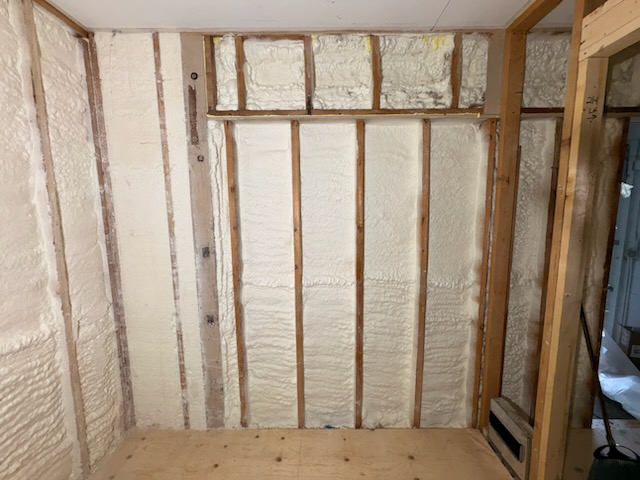
An insulation project is a significant investment, and careful planning is necessary to ensure a successful outcome and a positive return.
Your project must comply with local and state energy codes. The State of Illinois has adopted energy conservation codes that specify minimum R-value requirements for different parts of a commercial building. A qualified contractor will be familiar with Elmhurst’s specific requirements and ensure your upgrade is fully compliant.
Look beyond the simple payback period from energy savings. A proper ROI calculation should also include:
Not all insulation contractors are equipped to handle commercial projects. Look for a company that is licensed, insured, and can provide references for similar-sized projects in the area. They should understand commercial building science, HVAC systems, and how to execute a project with minimal disruption to your tenants and business operations.
Failing to address poor insulation is not a passive problem; it’s an active financial drain that chips away at your building’s value and profitability. By taking a proactive approach, you can stop the losses, lower your operating expenses, and create a more comfortable, durable, and valuable commercial property. The first step is to get a clear picture of your building’s current performance through a detailed assessment.
To understand how your building’s insulation is affecting its value, a professional evaluation is necessary. For a comprehensive assessment of your Elmhurst commercial property, contact the team at South Chicago Insulation. You can discuss your building’s specific needs by calling (779) 803-8025 or by sending an email to [email protected]. An expert can provide clear data on your property’s performance and recommend effective solutions.
For low-slope commercial roofs in this climate zone, building codes typically require an R-value of R-30 or higher. The exact requirement can depend on the specific roofing assembly and construction type.
Sometimes, but it’s not always advisable. If the existing insulation is wet, compressed, or moldy, it must be removed. Installing new material over damaged insulation can trap moisture and reduce the effectiveness of the new layer. A professional inspection is needed to make this determination.
The level of disruption depends on the scope of work. Exterior projects like adding continuous insulation to walls or re-roofing can often be done with minimal impact on tenants. Interior work, like insulating wall cavities, may require temporary relocation of occupants. An experienced contractor will work with you to create a phased plan that minimizes downtime.
Yes, federal tax credits for energy-efficient commercial buildings are sometimes available. The specifics of these programs can change, so it’s best to consult with a tax professional and your insulation contractor about current incentives like the 179D tax deduction.
Certain types of insulation, particularly mineral wool and dense-pack cellulose, are excellent at absorbing sound. Upgrading insulation in walls and ceilings can significantly reduce noise transfer between tenant spaces and from the outside, adding another layer of value to the property.