Why Spray Foam Helps Keep Indoor Air Fresher Year-Round
Spray foam insulation creates a continuous airtight seal that blocks outdoor pollutants, allergens, and moisture from entering your home while…


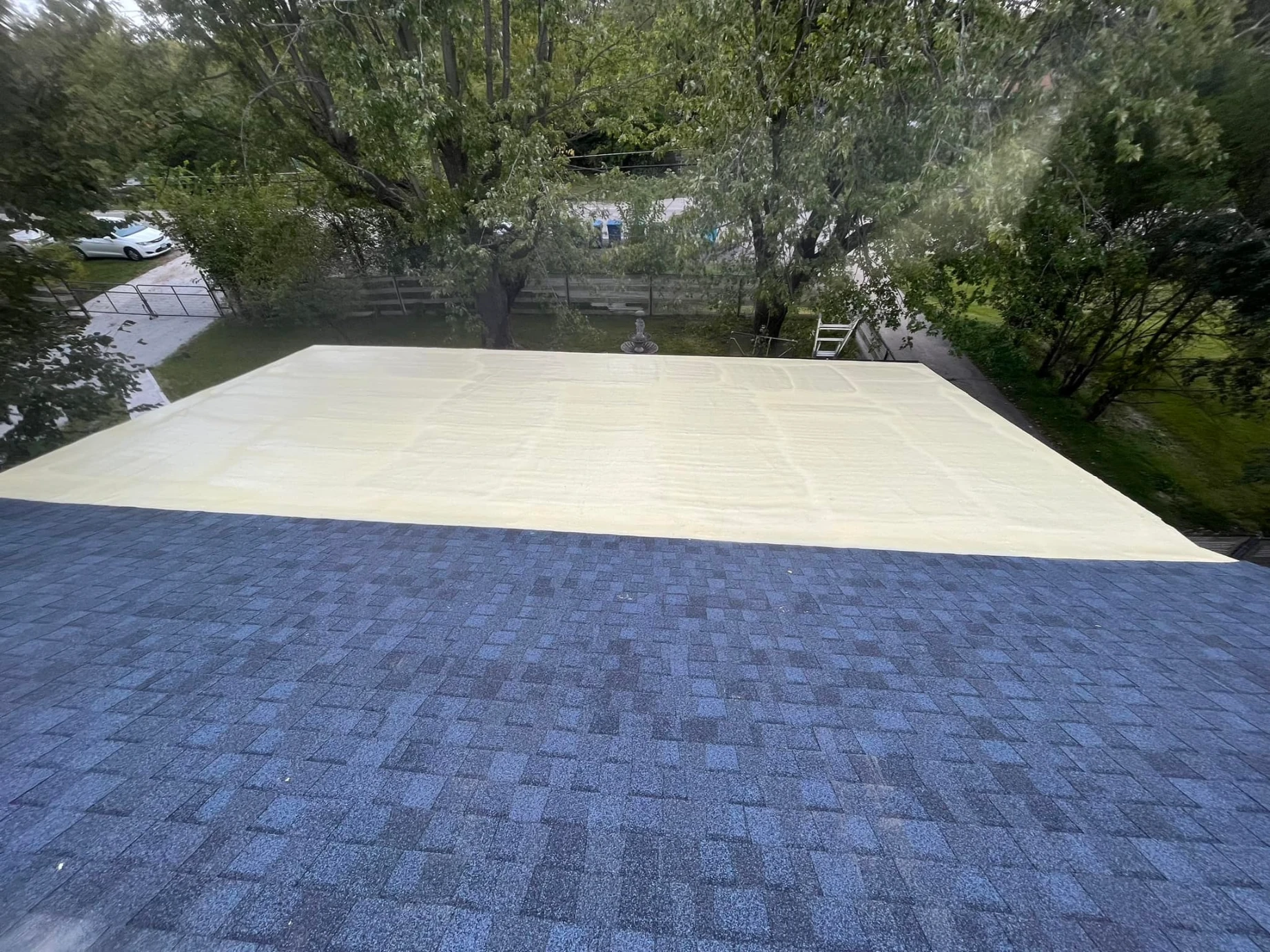
Calculating the square footage for commercial roof coatings requires measuring the roof surface area and accounting for additional material needed for penetrations, edges, and waste. The basic formula involves multiplying length by width for each roof section, then adding 10-15% extra for waste and overlap. Accurate measurements prevent material shortages and budget overruns while ensuring proper coating application.
This guide provides comprehensive instructions for measuring various commercial roof types, calculating material needs, and avoiding common calculation errors. South Chicago Insulation has applied these methods across hundreds of commercial roofing projects, helping property managers and contractors achieve accurate estimates that save time and money.
Before calculating square footage, identify the roof type and configuration. Commercial buildings typically feature flat roofs, low-slope roofs, or complex multi-level designs. Each requires a different measurement approach Buildings. Start by reviewing architectural drawings or visiting the site to understand the roof’s layout.
For flat roofs, the calculation appears straightforward: length multiplied by width. However, commercial roofs rarely consist of simple rectangles. They often include multiple sections, penetrations for HVAC units, parapet walls, and drainage systems that affect the total coating area National Roofing Contractors Association (NRCA).
Measuring tools impact accuracy. A laser distance measurer provides quick readings for accessible areas, while a measuring wheel works well for larger sections. For detailed measurements of complex areas, consider using drone photography with scaling software, especially for large commercial facilities where manual measurement presents safety challenges.
Begin with a rough sketch of the roof layout, dividing it into measurable sections. Number each section for reference. Measure the length and width of each rectangular or square section in feet. Record these measurements systematically.
For triangular sections, measure the base and height, then calculate the area using the formula: (base × height) ÷ 2. Circular areas around rooftop equipment require measuring the diameter and using the formula: π × radius².
After measuring all sections, document all rooftop penetrations and their dimensions. These include HVAC units, vent pipes, skylights, and roof hatches. Coating often extends several inches onto the flashing around these penetrations, so measure the perimeter and add the extra coating area.
Bonus Tip: When measuring parapet walls, don’t forget to include both the top surface and the interior face that may receive coating. These areas typically add 5-10% to the total square footage.
Professional roof coating application always includes a waste factor to account for material spills, uneven application, and overlapping coverage. Industry standards typically recommend adding 10-15% for simple roof designs and up to 25% for complex roofs with multiple penetrations.
The coating manufacturer’s coverage rate determines how much material you need. This rate varies by product type and application thickness. Most commercial roof coatings specify coverage in square feet per gallon at a particular dry film thickness (DFT).
| Coating Type | Coverage (sq ft/gal) | Recommended DFT (mil) | Additional Considerations |
|---|---|---|---|
| Acrylic | 100-200 | 20-30 | Good UV resistance, limited ponding water tolerance |
| Silicone | 100-150 | 30-50 | Excellent ponding water resistance |
| Polyurethane | 150-250 | 30-40 | Superior durability, impact resistance |
| Asphalt | 80-120 | 25-35 | Requires primer, temperature-sensitive |
Bonus Tip: In the Chicago climate, silicone coatings often perform best due to their excellent resistance to ponding water and freeze-thaw cycles. The area’s temperature swings demand materials with high flexibility.
Multi-level roofs require separate calculations for each level, plus additional measurements for vertical surfaces between levels. These transition areas often need coating to maintain waterproofing integrity.
Roofs with significant slopes demand adjustments to account for the actual surface area versus the horizontal projection. For low-slope commercial roofs (under 2:12 pitch), add approximately 3-7% to the horizontal area to capture the true surface area. Steeper slopes require trigonometric calculations.
Drainage systems affect coating calculations. Crickets and saddles (small triangular roof sections that divert water toward drains) need measurement and coating. Measure these carefully as they add complexity to the overall calculation.
Bonus Tip: Document all measurements with photographs and notes. This documentation proves invaluable if questions arise during installation or if warranty claims become necessary later.
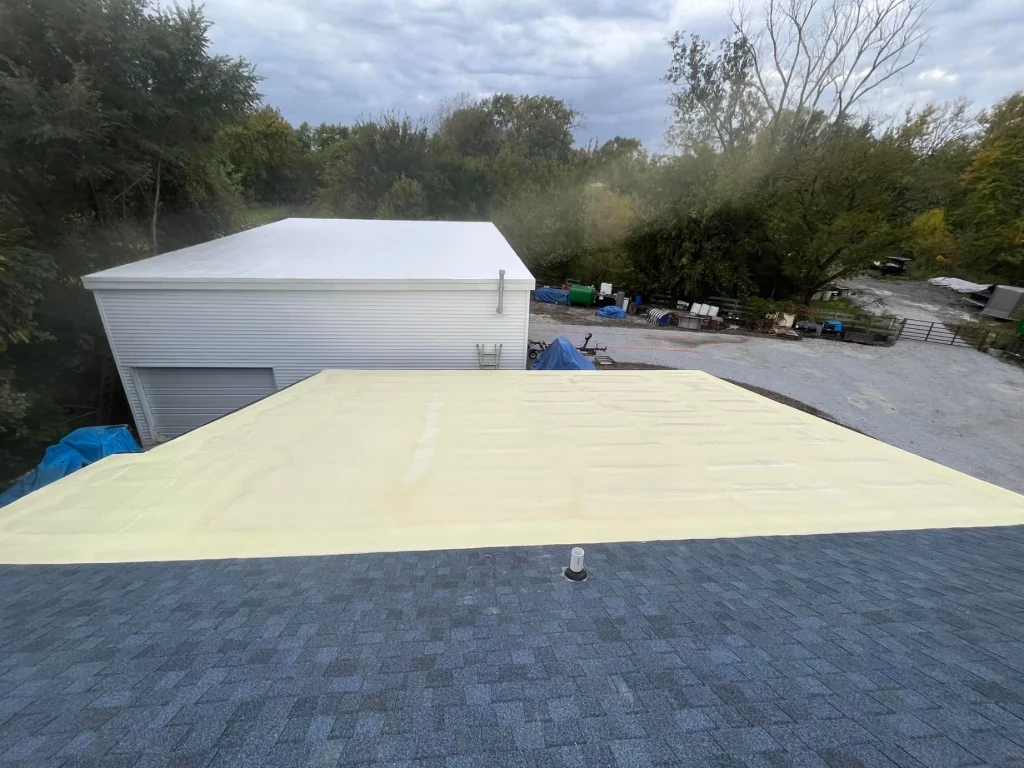
Material selection impacts your square footage calculations. Different coating products have varying viscosities and application requirements, which affect coverage rates. Always base calculations on the specific product you plan to use, not general industry averages.
Weather conditions during application affect material needs. High temperatures increase evaporation rates, potentially requiring more material to achieve proper thickness. Wind conditions can also cause overspray and material loss, increasing waste factors.
The existing roof condition influences preparation needs and material requirements. Aged, deteriorated roofs often need primer and additional coating layers to achieve the desired waterproofing performance. Factor these additional layers into your total square footage requirements.
According to data from Metal Roofing Alliance, commercial roof coatings can extend roof life by 10-20 years when properly applied, making accurate calculations critical for long-term performance and cost-effectiveness.
Accurate square footage calculation for commercial roof coatings involves systematic measurement of all roof surfaces, adding appropriate waste factors, and understanding how product specifications affect material needs. The process requires attention to detail, proper tools, and documentation of all measurements.
Before proceeding with any roof coating project, evaluate your specific roof configuration, local climate conditions, and the performance characteristics of your chosen coating system. These factors directly impact both the accuracy of your calculations and the long-term success of the coating application.
For complex commercial roofing projects requiring expert calculation and application guidance, South Chicago Insulation provides comprehensive measurement and coating services. Our experienced team understands regional climate challenges and coating system performance in the Chicago market. Reach out via email at [email protected] or call (779) 803-8025 to discuss your specific project needs and ensure accurate material estimation from the start.
Professional roof coating applications require measurements within 5% accuracy. Minor variations won’t significantly impact material costs, but systematic errors can lead to substantial shortages or overages. Double-check critical dimensions and verify calculations before ordering materials.
Consider professional measurement services for roofs exceeding 50,000 square feet, facilities with complex geometries, or when safety concerns limit access to roof areas. The cost of professional measurement often prevents larger calculation errors that could cost thousands in material waste.
Extreme temperatures can change coating viscosity, affecting spread rates. High humidity may slow curing and require application adjustments. Consult the manufacturer’s technical data sheets for temperature application ranges and potential coverage rate adjustments.
Laser distance measurers offer excellent accuracy for direct line-of-sight measurements within 200 feet. For larger areas, drone-based photogrammetry can achieve measurements within 1-2% accuracy while improving safety by reducing roof access time.
For projects extending beyond one month, recalculate material needs before each phase. Weather exposure may have changed surface conditions, and price changes might affect the most cost-effective ordering strategy.